
A minute introduction to the main process of aluminum forging_News Center Co., Ltd._Jiangsu Tiannan Aluminum Forging Co., Ltd. 
在线客服 在线客服邀请中...
关闭

您好,现在客服正邀请与您通话,请留下您的联系方式,客服将尽快与您取得联系。

 点击提交代表您同意《服务条款》《隐私政策》

Jiangsu Tiannan Aluminum Forging Co., Ltd.

We specialize in manufacturing aluminum (aluminum alloy forging) automotive p...

13914379111
 

News Category
  • No Category
Home > News Center Co., Ltd. > A minute introduction to the main process of aluminum forging
News Center Co., Ltd.
A minute introduction to the main process of aluminum forging
Publish Time:2022-10-27        View Count:75         Return to List

The application of aluminum forging in the electric vehicle industry is increasing, and magnesium aluminum alloys are widely used across various sectors, ranking second only to steel in production. The aluminum forging industry encompasses casting, forging, and die casting technologies. Different processes meet various application needs and possess a range of excellent characteristics. By altering the metal's structure, the performance of magnesium aluminum alloys can be effectively enhanced. Let's take a look at the main processes of aluminum forging.

Characteristics of Aluminum Forging

The internal structure is dense, uniform, and defect-free, offering significantly higher reliability. High-precision forgings can be produced in a variety of complex shapes, with minimal machining allowance. The machining allowance for magnesium alloy and aluminum alloy stretched plates is around 20%, significantly reducing labor and costs.

2. Excellent thermal conductivity. Aluminum die forging has a narrow temperature range and strict requirements for initial and subsequent forging temperatures. The performance characteristic of heat-processed die forging is that magnesium aluminum alloys do not undergo isomorphous transformation. By controlling the forging mechanical parameters, the metal structure is improved, resulting in a uniform and continuous distribution of metal flow lines along the forging shape, enhancing the mechanical properties.

3. Aluminum alloy wheel hubs feature high density, free from pores and pinholes, and excellent surface treatment properties. The coating is even, with strong adhesion, and the colors are harmonious and aesthetically pleasing. The sporty aluminum alloy wheels offer good machinability, resulting in lightweight, high strength-to-weight ratio, excellent toughness, fatigue resistance, corrosion resistance, good thermal conductivity, and ease of processing.

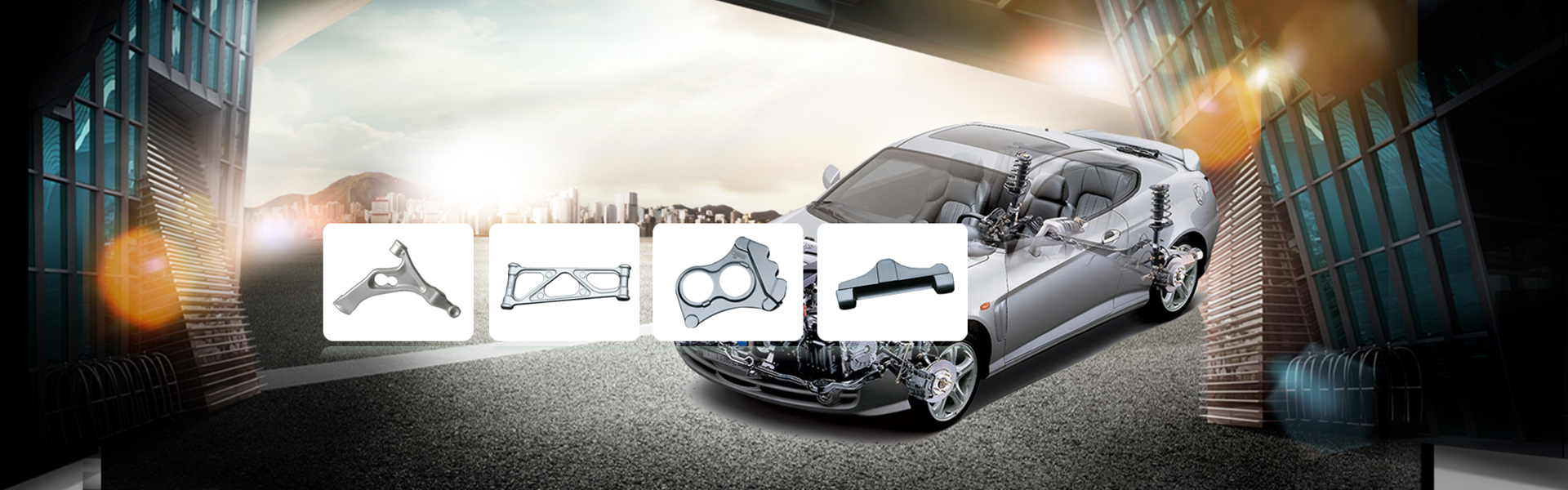
Due to the above characteristics of aluminum die forging, to reduce the overall vehicle weight, magnesium铝合金 forging technology can be utilized for the steering mechanism and sheet materials, and the rear shock absorber can also be made extensively with magnesium铝合金 materials, thereby significantly reducing the weight of the entire vehicle.

Aluminum forging plays a crucial role in the industry. Magnesium-aluminum alloys are also commonly used for forging, capable of producing various forgeable low-carbon steels. Forgings are predominantly safety-related components, often manufactured in bulk, and demand high intrinsic material quality.

Aluminum forgings offer unparalleled advantages over other castings, such as aesthetics, lightness, and corrosion resistance, making them highly favored by users. Particularly since the trend of automotive lightweighting has taken hold, cast magnesium-aluminum alloy forgings have found widespread application in the automotive industry.

Aluminum forgings have a lower density and higher specific strength compared to cast iron and cast steel. Therefore, they can reduce the weight of structures under the same load conditions, and are thus widely used in the manufacturing of aviation and power machinery, as well as transport equipment. Magnesium-aluminum alloys exhibit good surface luster and corrosion resistance in both air and freshwater, making them suitable for the production of household appliances. Due to the excellent corrosion resistance of pure aluminum in oxidizing acidic media such as nitric acid and acetic acid, aluminum forgings are also used in the chemical industry. Parts requiring good thermal conductivity, such as heat exchangers in chemical production, cylinder heads and pistons in internal combustion engines, and power machinery, are also well-suited for the manufacture of magnesium-aluminum alloys.


 Click submit means you agree to《Service terms》《Privacy policy》

13914379111