
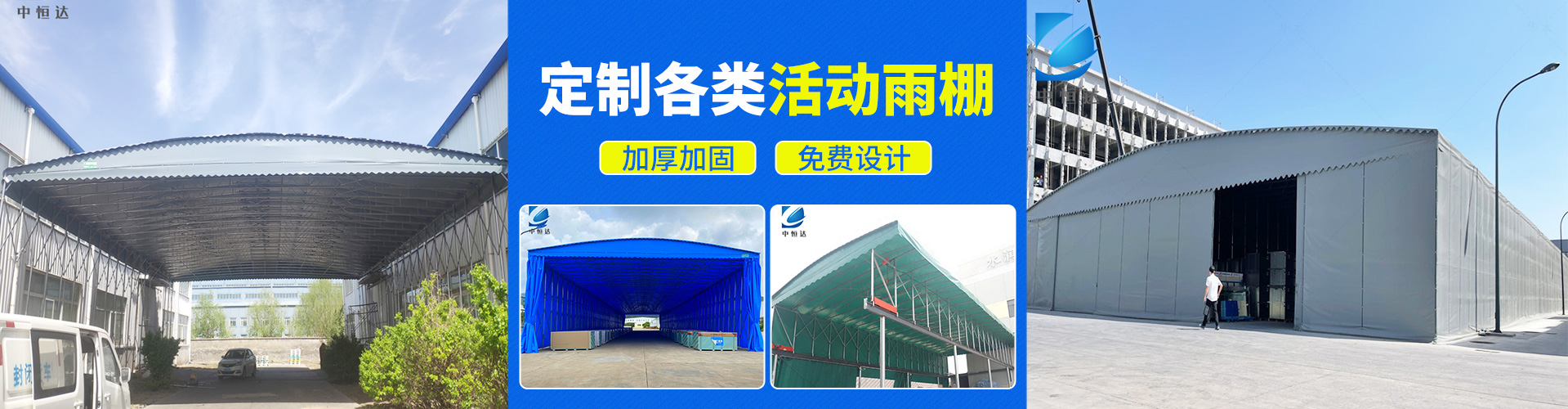

Electric sliding canopies are increasingly popular in public venues, institutions, and residential communities, where many are installed to provide parking for vehicles. There are various types of canopies, but the electric sliding canopy stands out due to its lightweight and distinctive design, as well as its superior functional advantages. As for membrane structure canopies, they have secured a place in current urban development plans. Looking at their long-term prospects, they possess certain advantages due to the relatively new construction material of electric sliding canopies, which often impacts construction planning!
1. Processing preparation and material cutting are based on the construction drawings for layout. During layout and numbering, welding shrinkage and machining allowance must be reserved, and a sample is made according to the layout. Steel straightening: Before cutting steel, it must be straightened, and the deviation value after straightening should not exceed the allowable deviation value specified by the standard to ensure the quality of material cutting. Hot-processed steel sections are first hot-processed, and then holes are numbered after cooling. Pre-buried steel plate components and other whole machine cutting, drilling, and anti-corrosion paint treatment.
2. Measurement and Layout: Measure the embedded part's elevation centerline based on the civil construction elevation benchmark line, and inspect for elevation and lateral deviations. Analyze the findings to determine the adjustment and treatment plan for the spacing of the embedded parts. Mark the top elevation line of the embedded parts by popping a chalk line along the outer edge of the floor slab above.
3. Embedded Item Installation: Locate the embedded item installation, drill the installation. Request for correct positioning of embedded items, and secure installation. Elevation deviation not exceeding 9mm, lateral displacement not exceeding 20mm.
4. Hoist Arm Assembly Welding: The hoist arm assembly is welded, requiring inspection of the welding joints and adjustment of the design slope of the hoist arm before welding can proceed. Once the side hoist arm is correctly positioned and welded, the other side hoist arm is set in place and spot-welded. Then, using these two hoist arms as a reference, draw the high and low elevation lines of the hoist arm. Weld the remaining hoist arms one by one. Additionally, weld seamless steel pipes.
When extending electric sliding canopy steel, first weld the ends and straighten it. When using H-beam joints, to ensure the tight fit between the H-beam joint and the pre-buried steel plate, the edges should be beveled according to the design requirements. The weld joints should be fitted with starting plates at both ends of the weld, which should be made of the same material and have the same shape as the welded parts. After welding, the starting plates should be cut off with an oxygen acetylene torch and ground smooth.
5. Calibration Exam: First inspect the quality of the site connections after installing the suspension arm device. Important checks include the verticality of the suspension arm face; side sag on the vertical face of the suspension arm under compression; and the gradient of the suspension arm. Ensure that the suspension arm meets the design load requirements and overall stability specifications.
6. Connect receiving force cables: Position the rod benchmark line and elevation line, pre-install the requested components, and weld the railing.
7. Stainless Steel Glass Claw Assembly Welding: Pop out the longitudinal and transverse lines and design elevation according to the design specifications, clamp with fixtures, perform spot welding for positioning, assembly complete, weld the glass claw base.
8. Rust Prevention Coating: slag and splashes should be removed, and the stainless steel components of the membrane structure ceiling should be coated with multiple layers of anti-rust paint. The thickness of the coating and paint film should comply with the design requirements or the specifications of the construction standards. The paint on the inside of the L-shaped steel should not be missed.
9. Laminated Glass Processing and Manufacturing Equipment: The electric sliding canopy combines design requirements with actual measured dimensions to determine the glass size, as well as its horizontal and vertical positions, for manufacturer processing and manufacturing. Equipped with stainless steel glass clamps, the glass is commonly fixed with adjustments, ensuring standards of level, perpendicular, and flat surfaces. Deviations must not exceed the specified tolerance limits.
10. Adjustment Exam: The point glass undergoes an overall adjustment exam, with the adjustment standards being horizontal, vertical, and flat surfaces. Deviations must not exceed the designated tolerance.
11. High and Low Sealing: Thoroughly clean the gaps between glass panes; the membrane structure ceiling should be free of water, oil stains, paint, rust, cement mortar, dust, etc. Ensure the bonding surface is well cleaned and dried. To adjust the depth of the seam and prevent three-side adhesive, apply protective tape on both sides of the seam to prevent contamination of the glass. Apply the sealing glue simultaneously, and after injecting, level the nominal seam and remove excess glue. Once the glue injection is complete, remove the protective tape; if necessary, wipe the glass with a solvent. Avoid contamination with dust and scratches before the glue has fully cured.
12. Patch Exam: Local Patch Examination
13. Clearing the Scene: Maintenance and Cleansing Operations
14. Completion and Acceptance: Completion and Acceptance
For the engineering construction of electric retractable canopies, the installation is generally slightly different from traditional engineering construction. In terms of membrane structure construction for such situations, the required construction products and techniques are crucial to the project's assembly. Therefore, relevant inspection and handling procedures must be conducted for the project, both before and after construction!
