

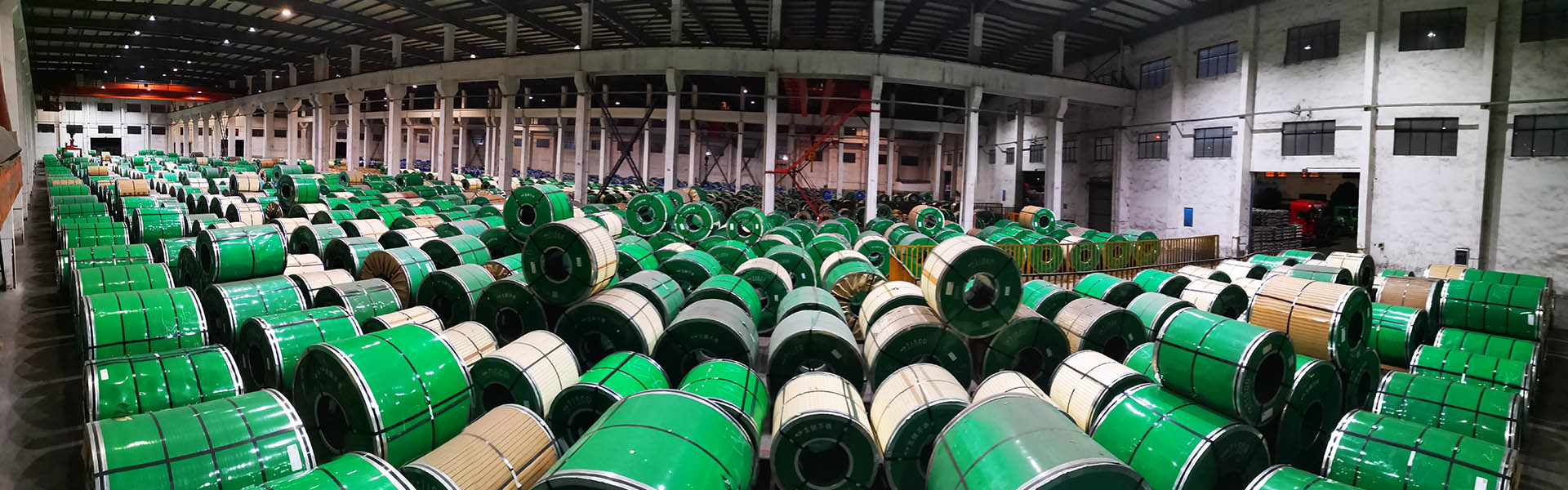

In our daily lives, stainless steel is a very common material, and items like stainless steel pots, pans, and bowls are frequently used in everyday life. The application range of stainless steel is vast, from small stainless steel accessories to building materials. However, stainless steel is merely a general term for a category of materials. Generally speaking, the most common types of stainless steel are 304 and 306, but what is the difference between the two? Are there any methods to distinguish between them?
Firstly, let's address the issue of food-grade stainless steel. It's common to encounter individuals purchasing stainless steel items and questioning whether 304 is food-grade. In terms of material, stainless steel 304 does indeed meet the food-grade standard. In the market, there are three common types of stainless steel that reach food-grade: 304, 316, and 430. 304 is typically used for household small appliances or cups, while 430 is the material used for cutlery. However, it's important to note that "food-grade" doesn't solely refer to the material being food-grade; it also includes the standards of its manufacturing process.
Next up is the issue of corrosion resistance. Different grades of stainless steel inherently have varying levels of corrosion resistance, otherwise we wouldn't have the distinction between 304, which is suitable for everyday household appliances, and 316, which is used in equipment. So, is 316 stainless steel's corrosion resistance better than 304's in general? There isn't a significant difference between them, but when the chloride ion content in the medium is very high, 316 stainless steel is slightly superior to 304 and more appropriate. This is likely why 316-grade stainless steel is chosen for equipment.
How can you distinguish between different types of stainless steel? First, you can identify them by color. Stainless steel that has been acid cleaned will have a silver-white surface, appearing very shiny. In contrast, stainless steel that has not been acid cleaned will have a slightly darker color, and the colors displayed by different types of stainless steel can vary significantly.
Secondly, magnets can be used to differentiate stainless steel. Since stainless steel containing chromium can be attracted by magnets in any state; however, high-manganese stainless steel is non-magnetic; the situation with chromium-nickel-nitrogen stainless steel is slightly more complex, as some can be attracted by magnets while others cannot. Therefore, it is still quite easy to distinguish between different types of stainless steel.
Here's a brief introduction to stainless steel 304 and 316 by our editor. It's clear that different types of stainless steel contain varying compositions and are not identical. Moreover, their applications and functions differ significantly among different types.
Choosing the right stainless steel is something we need to pay attention to in daily life, not something to be chosen arbitrarily. It's essential to confirm whether it meets food-grade standards and whether it can be reasonably used in everyday life. What are your thoughts on different types of stainless steel? Feel free to leave a comment below and engage in a discussion with the editor.
