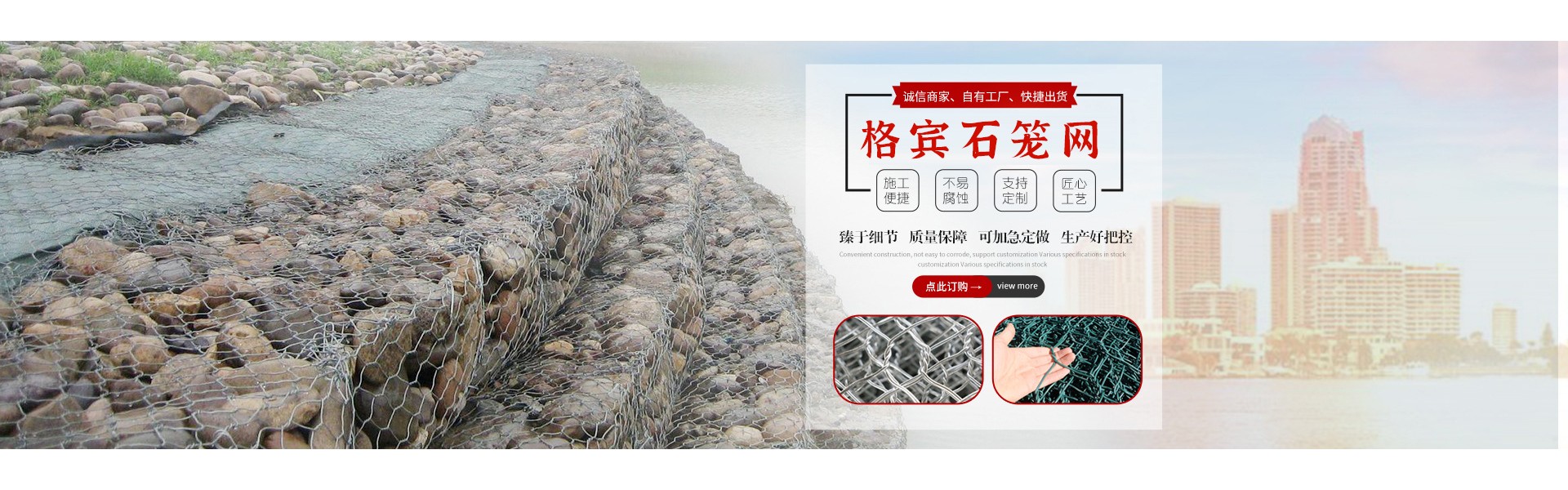
Harmony between humans and nature is the guiding principle of ecological hydraulic engineering and also a key policy for river management projects. With the continuous development of social and economic activities, people's demands for the environment, particularly water environments, are increasingly high. The ecological improvement of river channels is therefore imperative. As a result, the ecological stone笼 mesh has emerged as a new method for river ecological slope protection.
It boasts advantages such as simple construction, low cost, and benefits to ecological environment recovery, which have been applied in multiple river management projects in Tieling City, yielding positive results. Concrete, dry-stacked stone, and mortared stone, among other hard materials, play a crucial role in traditional riverbank slope protection projects. Although they do satisfy the riverbank slope's resistance to erosion to some extent.
Requirements for stable embankments and safety measures, however, have disrupted the organic connection between the river channel and the land-based ecosystem, separating the aquatic ecosystem from the terrestrial food chain, thereby negatively impacting the river's ecological environment. This has made it difficult for vegetation at both ends of the embankment to grow, and it has also deprived fish and amphibians of resting and breeding conditions. The self-purification ability of the water body has also decreased due to the separation from the biological community, making it more susceptible to decay.
The gaps between the stones in the gabion mesh are artificially laid or naturally accumulated soil, creating conditions for the growth of natural plants. This not only strengthens the integration of the gabion mesh structure with the natural rock strata but also promotes the flora and fauna of the region, restoring the original ecosystem. The ease of assembly and the diverse color options of the slope protection gabion mesh structure.