
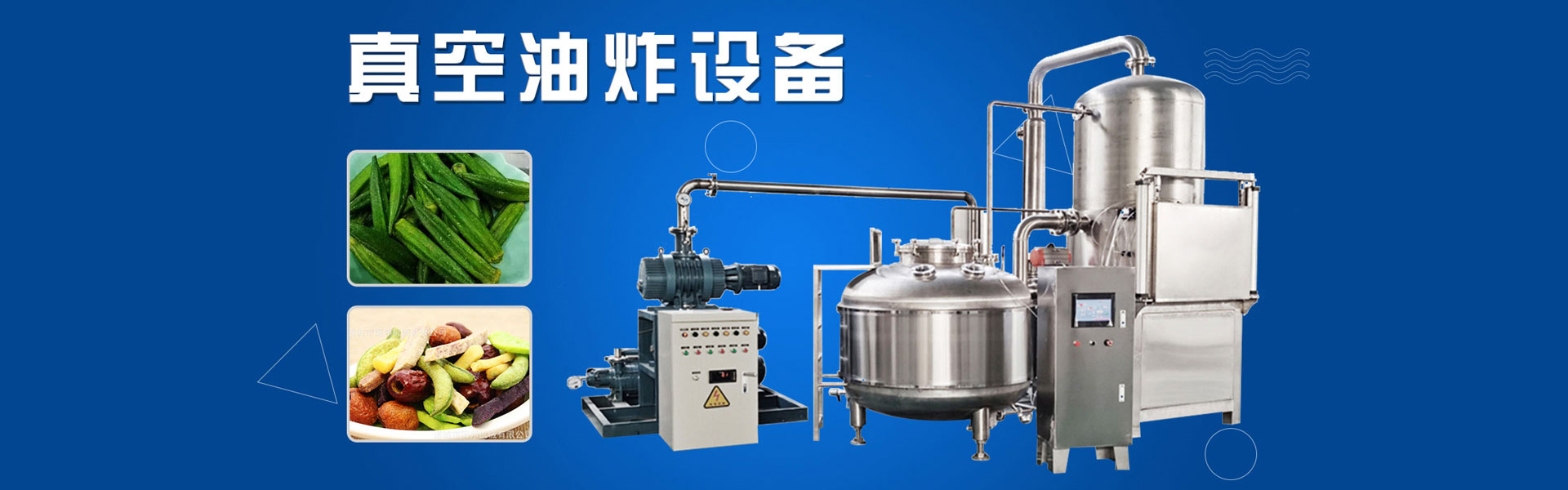
1. An integrated design for heating, frying, oil storage, deoiling, dehydration, and oil filtration is achieved under vacuum conditions, resulting in low oil content in the products. The products remain in a vacuum state, and food processing under these relatively oxygen-poor conditions can alleviate or even avoid the hazards caused by oxidation reactions, such as rancidity of fatty acids, enzymatic browning, and other forms of oxidative deterioration. In a vacuum state, using oil as the heat transfer medium, the moisture within the food (free water and some bound water) evaporates rapidly and is expelled, leading to the formation of a loose and porous structure.
2. Automatically controls temperature and pressure (vacuum level), preventing overheating and overpressure, ensuring product quality and safe production.
3. The oil extraction process utilizes variable frequency speed control, suitable for all products with both low and high oil content.
4. The oil-water separator system cools and separates evaporated water and oil, reducing pollution in the water cycle, enhancing the reuse rate of water, and minimizing oil loss.
5. Oil Filtering System: The system includes upper and lower oil tanks, a double-chamber heating system, and separate heating control. It circulates and filters the oil during frying, ensuring the oil remains clean and reduces waste.
The machine is made of 304 stainless steel, featuring high efficiency, stable performance, and easy installation and use.
The advantages of vacuum frying food
Color Retention: By using vacuum frying, the frying temperature is significantly reduced, and the oxygen concentration in the frying pot is also greatly decreased. Fried foods are less prone to discoloration, browning, and color change, thus maintaining the original color of the ingredients. For instance, kiwifruit is prone to heat-induced browning; using vacuum frying can preserve its green color.
Preservation of Aroma: Utilizing vacuum frying, the raw materials are heated in a sealed vacuum state. Most of the flavor components in the raw materials are water-soluble and do not dissolve in fats. As the raw materials dehydrate, these flavor components become further concentrated. Consequently, the vacuum frying technique effectively preserves the inherent aroma of the raw materials.
Reducing Oil Degradation: Oil deterioration involves oxidation, polymerization, and thermal decomposition, primarily due to hydrolysis when water or steam comes into contact with oil. During vacuum frying, the oil is under a vacuum, causing dissolved gases in the oil to quickly escape in large quantities. The resulting steam pressure is lower, and the frying temperature is reduced, significantly lowering the degree of oil degradation.