

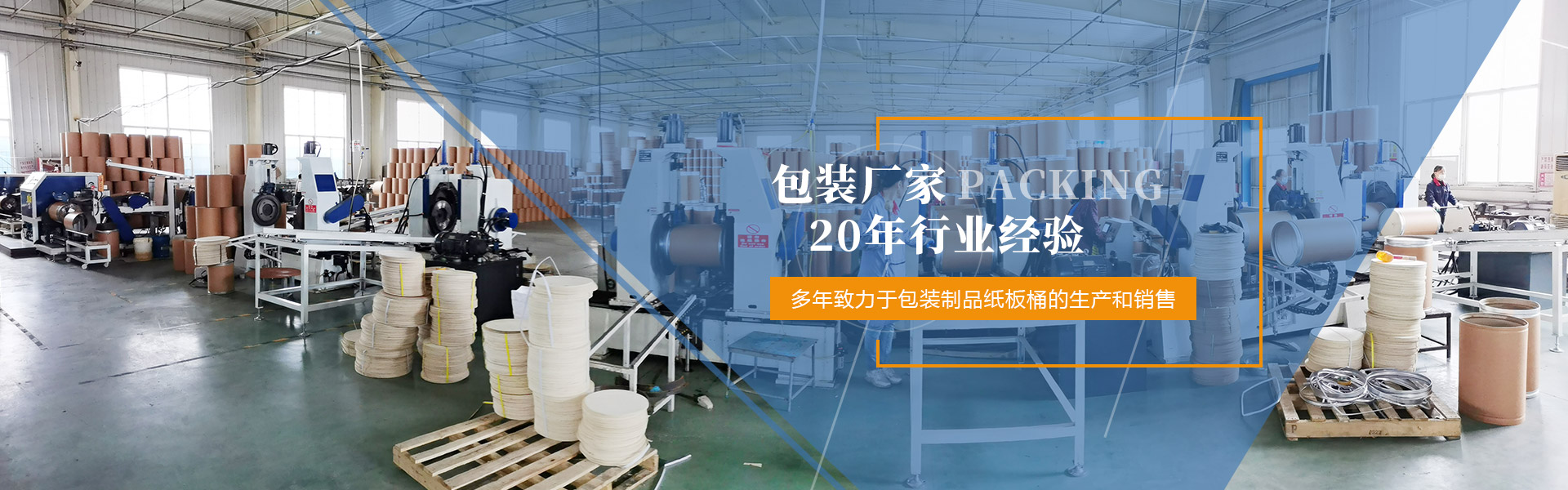


During transportation, the cardboard drum's heavy load and significant deformation lead to the separation of the drum body from the bottom; primarily manifested by the disconnection of the bottom of the cardboard drum from the plywood or cardboard, causing leakage of goods. The reason is that when the bottom cover of the cardboard drum is made of plywood...
During transportation, cardboard drums often suffer from heavy loads and significant deformation, leading to separation between the drum body and the bottom. This is primarily manifested as the detachment of the cardboard drum bottom from the plywood or cardboard, causing leakage of contents. The reason is that when the bottom cover of the cardboard drum is made of plywood, the plywood thickness is uneven, with most not meeting national standards. Additionally, the bonding strength between layers of plywood is low, making it easy to detach from the drum body. The tolerance for the plywood cutting size is not accurately controlled; therefore, cutting sizes should be strictly controlled within the tolerance range, and quality supervision should be implemented.
Another significant reason is the issue with the cardboard drum production equipment; the connection between the drum body and the bottom is primarily achieved through the sealing and forming process. Therefore, the operation of the forming and sealing equipment will affect the overall quality of the cardboard drums. Regular checks should be conducted on the dimensions of various parts of the sealing mold, as the locking ring mold's vertical plane may deviate when closing the cardboard drum bottom, leading to inconsistent tightness of the drum bottom's connection, thereby affecting the fit between the bottom and the body of the drum.
Cardboard drums are paper products and require attention to the following points during storage:
Store in a cool, dry place indoors and avoid moisture.
Do not stack heavy items on top, as this may cause the corrugated paper drum to deform.
3. Be cautious to prevent contact with acidic substances during storage to avoid corrosion of the corrugated paper drum.
4. Ensure storage areas are cleaned regularly to prevent infestation.
5. Be vigilant of fire sources and prominently display "No Open Flame" signs.
