
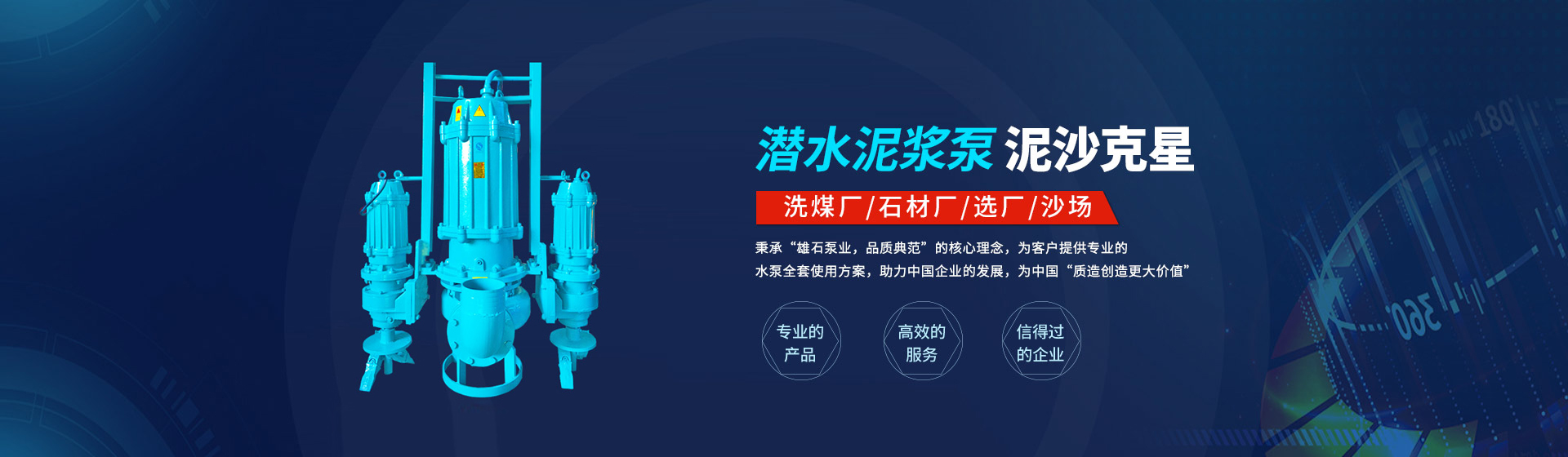

To ensure that submersible slurry pumps operate without issues, it's crucial to use them correctly and perform regular maintenance. Otherwise, problems are bound to arise sooner or later. What specific reasons could lead to a submersible slurry pump not pumping? Listen to the explanation from the submersible slurry pump manufacturer below.
One: There is air in the pipes and pumps.
1. The slurry pump was not adequately filled with water before operation, leaving a small amount of air remaining in the pump chamber.
The packing of the slurry pump has been worn for a long time, or the packing is too loose, causing a large amount of slurry to spray out from the gap between the packing and the pump shaft sleeve. The result is that external air enters the pump through these gaps, affecting the suction efficiency.
3. Prolonged submersion of pipes underwater can lead to erosion of the water-cooled walls, creating holes. After the pump operation, the water level continues to drop, and these holes eventually emerge to the surface, allowing air to enter the pipes through them.
4. Minor cracks in the pipeline can occur at the connection between the water pipes and pumps, allowing air to enter.
The slurry pump speed is too low.
1. Human factors. Some users, after damaging the original motor, randomly attached other motors, resulting in issues such as low water flow, few positive readings, or even no water output at all.
2. The impeller of the slurry pump has moved significantly, causing direct friction with the pump body, or there is damage to the bearing.
Section 3: Excessive Inhaled Volume
Some water sources are deep, and others are located in relatively flat terrain, but the suction lift standards that the pumps can accommodate are overlooked, resulting in insufficient water intake or complete failure to draw water. The vacuum level that can be established at the slurry pump's suction inlet is limited; under vacuum conditions, the water flow height is approximately 10 meters, but slurry pumps must never create a vacuum. Excessive vacuum can cause the water inside the pump to vaporize easily, which is detrimental to the operation of the slurry pump. Therefore, slurry pumps must be installed within the permitted suction range, and steps should not be omitted for convenience during installation.
The resistance loss in water flow through import and export pipelines is too great.
Some individuals directly measure, even if the vertical distance from the water surface to the pump impeller is slightly less than the pump's height, it cannot continue to increase or elevate the water volume. The reason is that the pipeline is too long, with too many curves, and contains too much water. Due to the excessive length and numerous curves of the pipeline, there is significant water resistance loss. Some users randomly employ slurry pumps with larger pipeline diameters, which also have an impact on the lift.
V. Factors Affecting Others
1. Unable to open the bottom valve. Usually due to an extended retention time in the pump, the bottom valve gasket may stick together, or the valve without a gasket may melt.
2. Bottom valve filter screen clogging. Or the bottom valve is submerged in the underwater sludge layer, causing filter clogging.
3. Severe wear on the overcurrent components. The impeller blades, sheath, and protective plate, after long-term use, have affected the slurry pump's functionality.
Valves and check valves experiencing malfunctions or blockages can lead to reduced flow rates, even to the point of not being able to pump slurry.
5. Pipeline leaks also affect water extraction.
