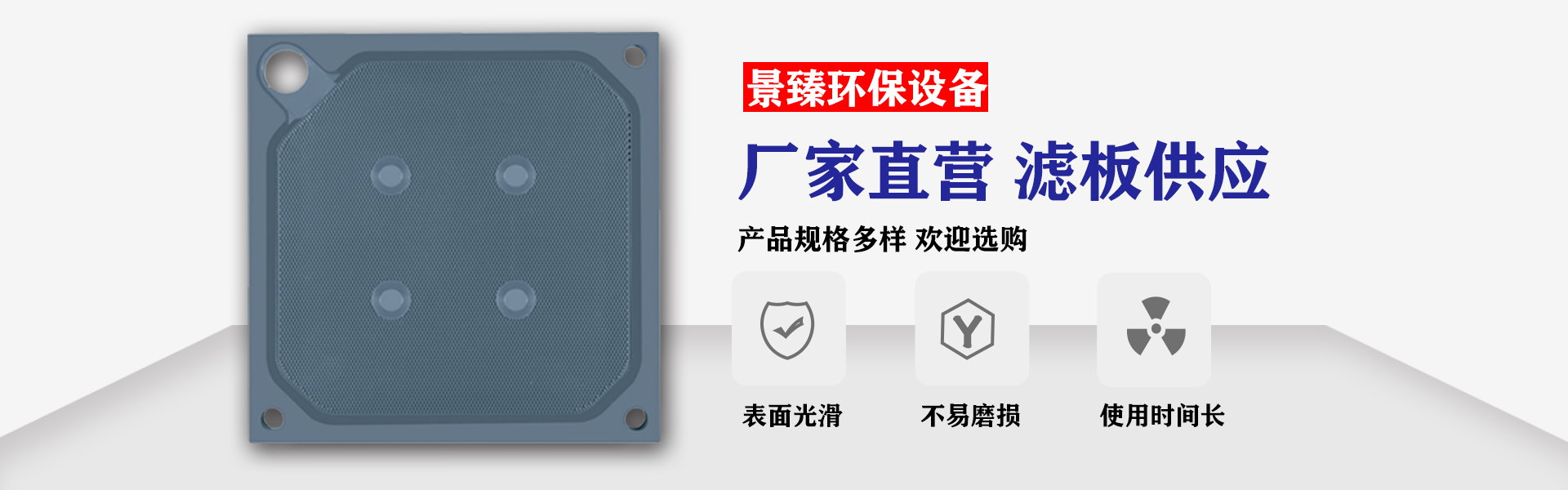
What are the structural characteristics of the box filter press plate?
The thickness of the filter plates for the pressure filter is approximately 60 to 85 millimeters. Each filter plate is square in shape, and the inner sides on both sides are reduced by 40 millimeters, creating a depression of about 25 millimeters. The projections do not exceed 8 millimeters, and they can be either circular or strip-shaped. The effect is that the filter plates of the pressure filter have good contact with the filter cake during the re-filtering process, thereby supporting the function of the filter cake.
The box press filter is positioned at the center of the filter plate, and a hole is used to open it, which is the feed tube, typically with a diameter of 100 millimeters. The filter press manufacturer must fill the filter chamber with material before squeezing the diaphragm, so that the filter plate can be opened post-compression for discharge, to prevent the diaphragm from bursting. It is essential to regularly check the compressed air管道 during operation. In case of a tube disconnection or severe leakage, the inlet valve should be immediately closed, and the exhaust valve opened.
After repair, the unit can be used again. For actual operation instructions, please consult the manufacturer. Below or around the depression, there is a drainage hole that connects to the drainage pipe to expel the filtered liquid from the device. Both are the same. Typically, there are two layers of filter cloth between the filter plate and the filter cloth, connected by filter tube sleeves smaller than the holes on the filter plate, thus including a filter mesh. The filter plate structure of the box filter press is also different. It has two types of filter plates: standard filter plates and boundary filter plates. The boundary filter plates are square half strips used to embed into the filter plates. These two types of filter plates are placed alternately in the filter chamber of the plate and frame filter press.