

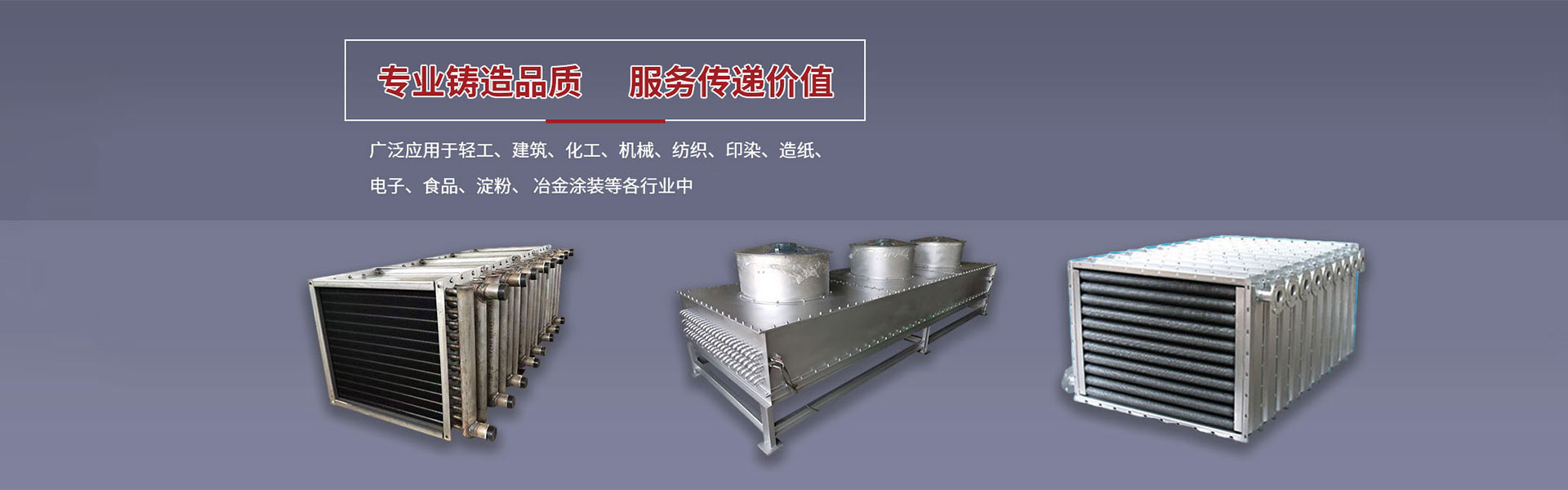

Please welcome Wuxi Xuelang Hongda Thermal Energy to introduce the basic types and practical applications of heat transfer oil radiators.
Thermal Oil RadiatorA thermal dissipation device, primarily transferring heat through thermal oil. It operates by drawing heat from the heat source under the suction force of the thermal oil.CoolerThe heat exchanger achieves its cooling effect by circulating heat-conducting oil, which absorbs heat and dissipates energy as the external air flows over the oil pipes.

Basic Types of Thermal Oil Radiators
Direct-type radiator
The straight-tube radiator is one of the basic forms of heat-conducting oil cooling. It is characterized by the unidirectional flow of oil tubes and a right-angle relationship between the oil tubes and the radiator. Its main advantages are simple structure, high heat dissipation efficiency, and high-temperature resistance. However, its drawbacks include uneven cooling of the oil tubes, slow speed, and limited heat dissipation area.
2. Annular Semi-Tube Heat Exchanger
The annular semi-tubular radiator is composed of several semi-tubes with varying diameters and pipes connecting them. Its advantages include uniform oil tube size, better cooling performance, larger heat dissipation area, and greater contact area between the oil tubes and pipes. However, the disadvantages are the relatively high cost and the semi-tubes being susceptible to contamination.
3. Tube-fin heat sink
The Vortex Tube Heat Exchanger is a novel cooling method, utilizing a design structure featuring vortex tubes, pipes, flanges, oil tubes, and pipe design. It creates a vortex within the tube to mix high and low temperatures. Its advantages include excellent heat dissipation, relatively simple structure, easy installation, long service life, and good resistance to biofilm, sulfides, and oxides. However, the drawbacks are that the vortex tube design is complex, the manufacturing process is intricate, and production costs are higher.
4. Wavy radiator
The corrugated radiator is a new type of heat exchanger. It enhances the surface area of the oil tube using corrugated pipes and specified wave peaks, thereby improving heat dissipation efficiency. Its advantages include a large heat dissipation area, high efficiency, low resistance, and thermal equilibrium. However, the manufacturing process of the corrugated pipes is complex, has lower corrosion resistance than stainless steel and other composite metals, and has a limited service life.
Actual Applications of Thermal Oil Radiant Heaters
Thermal oil radiators are widely used in industries such as chemicals, textiles, food processing, and plastic processing. They serve as cooling equipment for electric heating systems, oil product processing, distillation, coal-fired boilers, gas-fired boilers, HVAC systems, offices, and production workshops. Specific applications include:
Coal-fired boilers, gas boilers, heating systems, and other hot water supply equipment
In modern heating systems, thermal oil radiators are used as heat dissipation equipment in various boilers, water heaters, and heating systems. By dissipating the heat emitted from the heat source within the radiator, it then circulates to individual rooms and offices, achieving the heating effect.
Chemical Industry

In the chemical industry, heat transfer oil radiators are commonly used as cooling equipment during the production process. Chemical production equipment, such as...Reaction kettleEvaporators and other equipment generate a significant amount of heat during operation. Without the use of a thermal oil cooler for heat dissipation, it can directly impact production quality and efficiency.
Textile Industry
Thermal oil radiators are also widely used in the textile industry. As dyeing and finishing equipment, drying equipment, and other machinery used in textile production require energy conversion, the large amount of heat generated would not only raise the production environment's temperature but also pollute the environment if not processed through a radiator.
4. Plastic Processing Industry
In the plastic processing industry, due to the continuous heating required for processing equipment during operation, failure can occur quite frequently without the use of radiators, severely impacting production efficiency. The use of radiators effectively reduces the temperature of the processing equipment.
In summary, the thermal oil radiator is a type of heat dissipation equipment that boasts high stability, excellent heat dissipation performance, and a long service life, making it widely used. In the future, with the advancement of science and technology, the thermal oil radiator will continue to play a crucial role in heat dissipation across various industries.
