

Today, the Zhengzhou Cement Pipe manufacturer introduces you to the construction techniques of Zhengzhou's rainwater and sewage pipeline systems.
1. Two rows of rainwater drainage pipes are proposed to be laid beneath the motorway, while two rows of sewage pipes are planned to be installed under the pedestrian walkway. As the construction methods for rainwater and sewage pipes are essentially the same, this construction design will uniformly introduce the construction methods for both types of pipes.
2. Construction at the subgrade filling site includes pipeline and manhole work, which coordinates with the subgrade filling process. When the subgrade filling exceeds the top of the sewage pipeline by 0.5 meters, the trenching begins, followed by the installation of the sewage pipeline and manholes, after which the subgrade construction continues. Upon reaching the grade of the subgrade filling to the bottom surface of the graded gravel layer, the construction of the stormwater pipeline and manholes commences. Mechanical excavation is used for the trenching, with a slope of 1:0.25.
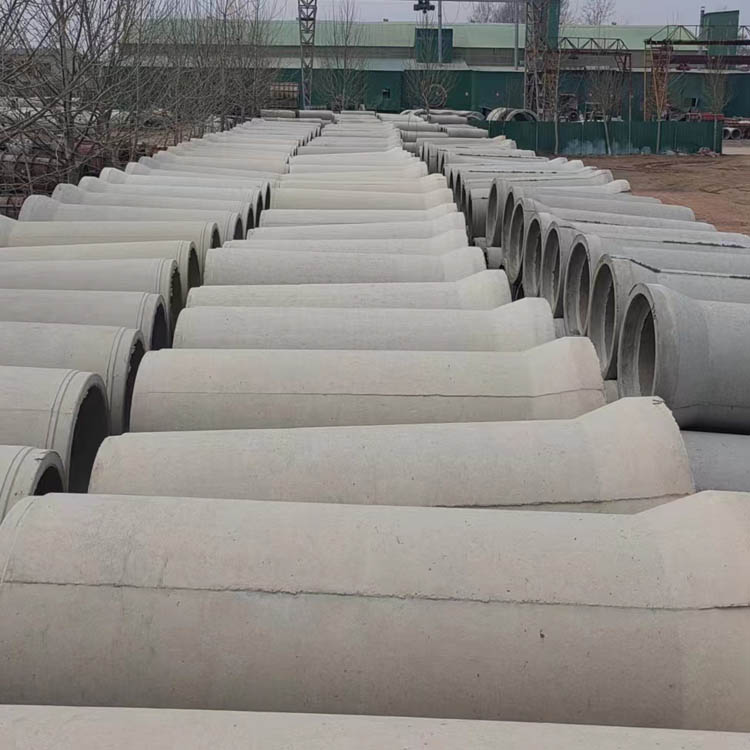
3. At the subgrade excavation site, after the road trench has been excavated, the pipeline trench is then dug for the construction of waste and rainwater pipelines and inspection wells. The pipeline trench is mechanically excavated with a slope ratio of 1:0.25, and pipes are manually hoisted into position.
4. After the excavation of the pipeline trench, the bearing capacity of the trench foundation must be determined. This determination is carried out using the heavy compaction method. The fine sand cushion layer can be laid only when the foundation bearing capacity meets the design requirements. If the foundation bearing capacity does not meet the design specifications, the trench must be filled with碎石 cushion layer for treatment, and then the foundation bearing capacity can be re-determined.
5. Henan Concrete Pipe Manufacturer conducts measurement and alignment for rain and sewage pipelines. Generally, a central pile is set every 20 meters. For drainage pipeline alignment, a central pile is typically set every 10 meters. Central piles should be installed at pipeline inspection wells and where pipe diameters change. In necessary cases, protective piles or control piles should be set. After the drainage pipelines are leveled, a longitudinal section of the pipeline should be drawn. The measurement work for the drainage pipeline should have a formal measurement record book, with careful and detailed records.
