
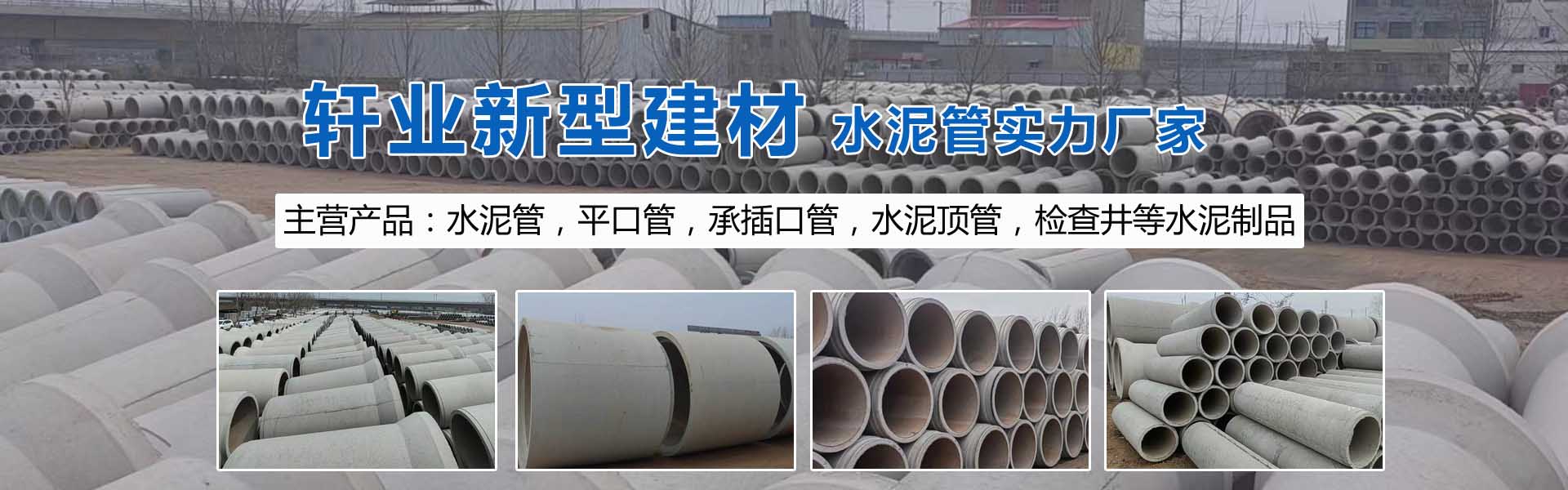

Next, let's introduce the types of Zhengzhou cement pipes available.
Steel pipe with spigot and socket connection
The joints are sealed with rubber rings (sliding rubber rings provide better sealing than rolling ones), which belong to flexible connections. The insertion depth of the joints is 1.5 (80-100mm), and the relative angle is favorable. The joints can withstand uneven settlement of the foundation, and the depth of the pipe base pit is difficult to control. When the backfilling of the joints is not tight, they exhibit good seismic performance.
2. Plain Cement Pipe
Plain-end cement pipes, also known as reinforced concrete pipes, are a type of cement pipe made from a hard substance composed of cement and steel. The curing process of plain-end cement pipes can continue in moist soil, with their strength and hardness increasing over time. Therefore, many drainage pipes now utilize such pipes, which offer corrosion resistance and durability.
Flexible end-locked reinforced concrete cement pipes
The interface utilizes a sliding rubber ring for sealing, providing a flexible connection. The insertion depth of the interface is approximately 135mm, deeper than the socket. The interface has a relative angle of 1.5° and boasts excellent seismic performance, effectively resisting uneven settlement of the foundation. The base can be constructed using sand and stone or concrete foundations, with faster and better installation speed than the socket.
4. Directional Bored Pipe for Cement
Cement pipe jacking is an underground construction method that has developed following shield tunneling. It does not require surface excavation. During the jacking process, the tool pipe or tunneling machine is propelled through the soil layer from the working shaft to the receiving shaft by the force of the main jacking cylinder and the intermediate room between the pipeline. Simultaneously, pipelines are buried between the two shafts to facilitate the construction of underground pipelines without excavation.
