
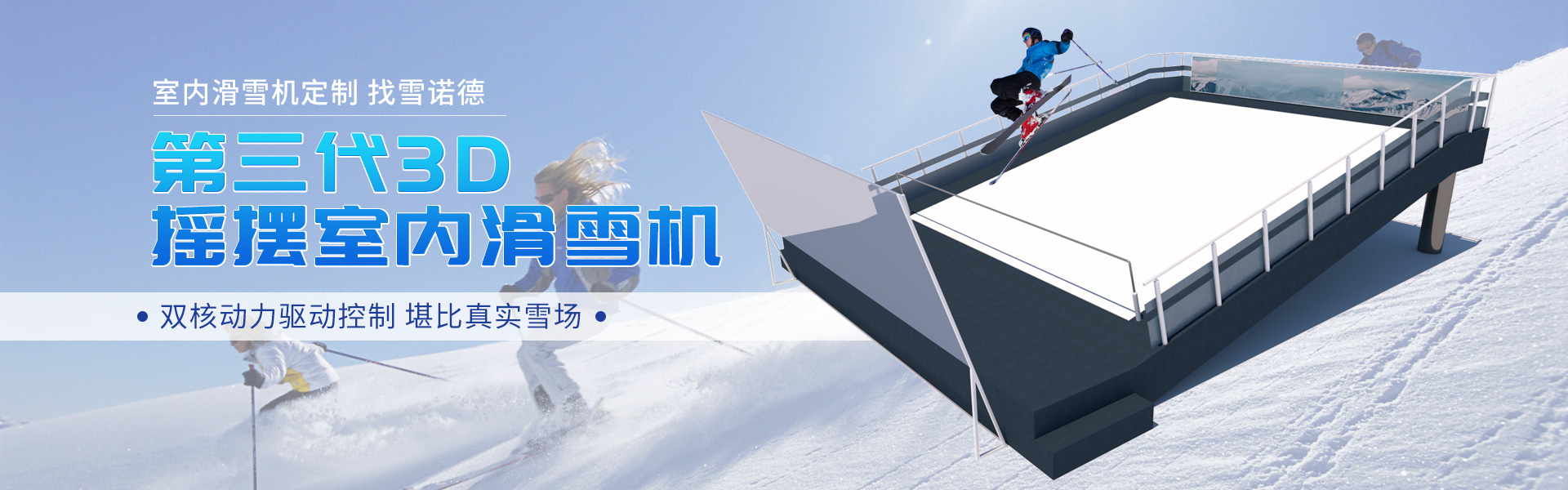

As the preparations for the 2022 Winter Olympics progress, the call for "letting 300 million people participate in winter sports" has gained traction, making skiing increasingly popular among the general public. Indoor ski simulators are also beginning to catch the public eye.
Originating in the Netherlands, indoor ski simulators were first adopted by the Dutch national team for indoor training in 1991. They were introduced to China around 2015 and have since gradually gained popularity in the skiing market. Due to limitations in venue and season, skiing has been restricted, but the arrival of indoor ski simulators has provided more training options. What are the advantages and disadvantages of indoor ski simulators compared to real snow?
Advantages:
1. Low Error Tolerance: Indoor ski simulators have a lower error tolerance compared to real snow. Some ski moves can be smoothly executed on real snow even if they're not perfectly executed, with the worst being a less impressive form. However, on a ski simulator, even a slight change in your movement can lead to a fall. More rhythmic moves and stable pressure control are required, which, once mastered, lead to more precise movements. Ideal for beginners and those advancing in difficulty.
2. Greater frictional resistance than real snow: On ski machines, you have to exert more effort, which leads to quicker muscle fatigue. It's much more tiring than real snow and also easier to form muscle memory, with movements being quite laborious to recall.
3. More Time on the Slopes: For beginners, the beginner's slope takes just 1-2 minutes to reach the bottom, requiring a cable car ride back up, wasting most of the time on the ascent. With a ski lift, you can keep gliding, where an hour on the slopes might equal the distance covered in two to three days. This efficiency boost benefits both learners and instructors alike.
Flaw:
1. High barriers: As mentioned, the low tolerance for errors makes it especially easy to fall, leading many to give up halfway. However, most people who go to the ski machine are beginners learning, and since everyone falls, there's no need to feel embarrassed.
2. High Costs: Compared to a ski lift lesson, which can cost several hundred dollars and lasts only 30-60 minutes, hitting the slopes for a full day is much more economical. However, the purposes differ—some for learning, others for fun. Plus, don't expect to ski for longer; trust me, beginners will be feeling the burn in their legs after just 30 minutes.
3. Rather monotonous: On the ski machine, no matter how fast you glide, it remains relatively stationary, which can be rather monotonous compared to real snow. However, as mentioned earlier, the goal is different. Once you've laid a solid foundation, you'll be able to glide particularly smoothly on real snow.
