
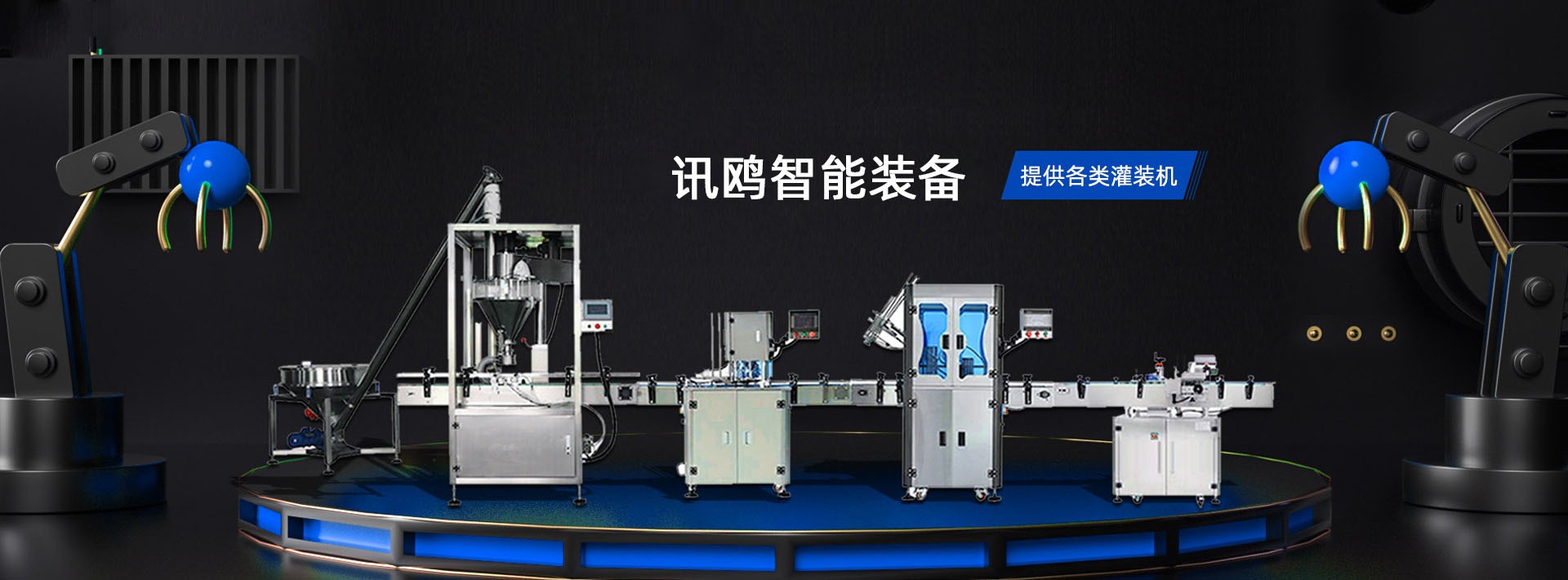
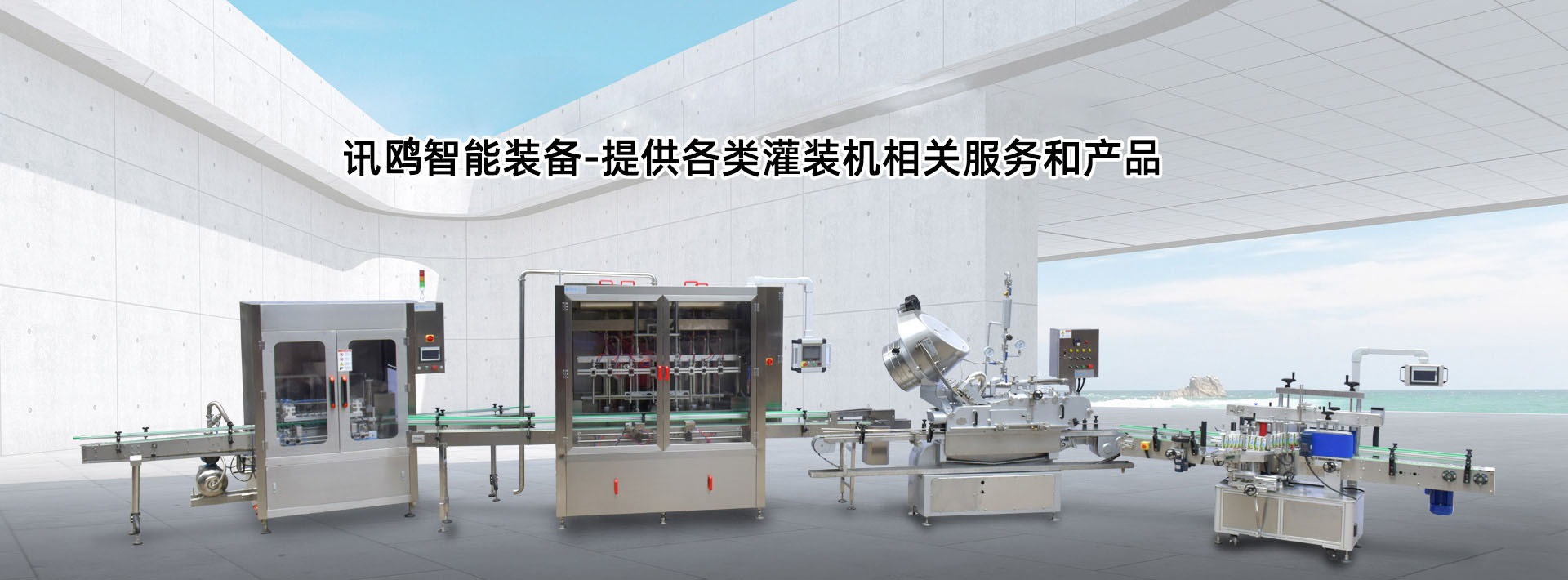

The linear filling machine is a model with a simple structure. Although its production capacity is far less than that of the rotary filling machine, it is widely used due to its ease of adjustment and strong adaptability. Particularly for the filling of small batches of various products, it showcases its superior advantages.
The linear filling machine typically operates under atmospheric pressure and utilizes multiple filling heads for batch灌注. Bottles are conveyed by a flat chain, moving periodically in batches with the help of locators, where the filling process is completed during pauses.
In linear filling machines, the exceptional adaptability to filling containers is achieved by eliminating the bottle screw, star wheel, and bottle support mechanism typically found in rotary filling machines. Even irregularly shaped bottles can be accommodated with ease. When changing the filling container, simply adjusting the guide rods on the sides of the chain conveyor is sufficient to provide effective guidance.
The inline filling machine consists of two main parts: the filling body and the chain conveyor. The filling body is composed of the灌注机构(injection mechanism), storage tank, interlock control sensors, and positioners.
In the linear filling machine, the filling process is carried out in batches with positioning. The entire process is of intermittent cyclic nature. Here, the automatic detection and positioning device plays a crucial role, directly affecting the smoothness of the filling operation.
Utilizing the automatic detection and positioning device ensures precise injection without error and prevents misinjection when there are no bottles or insufficient bottles. The installation of locator W2 comes in two forms: one with an adjustable rod designed for blocking; the other with an adjustable rod that applies a pressing force when extended, directly against the bottle, to restrict its movement.
Linear filling machines typically perform atmospheric pressure filling, with the filling valve controlled by an electric switch, akin to an electric shut-off valve. Moreover, the filling head is usually designed in a fixed configuration, mounted on a lifting frame, and adjusted for height using a handwheel to accommodate different bottle shapes.
During operation, the filling valve solely serves to open and close the liquid circuit, while the control of the filling volume is handled by a metering device. The starwheel screw-type flowmeter is utilized as the metering device, which abandons the traditional graduated cylinder or piston meters, eliminating the need for a braking clutch and transmission mechanism. It features only two passive starwheels that work in coordination.
The use of a starwheel reciprocating flow meter achieves extremely high filling accuracy, with filling errors controlled within ±0.5%. Compared to traditional piston meters, the starwheel reciprocating flow meter eliminates the waste of piston return time, meaning no dead travel, thus reducing the filling cycle time. For changes in capacity, the starwheel reciprocating flow meter requires no complex adjustments like the piston meter; simply input the set value on the PLC control panel. Its measurement range is unlimited, particularly suitable for large-volume filling. The starwheel reciprocating flow meter, with fewer moving parts and adjustments, minimizes the risk of traditional filling machine malfunctions, ensuring stable operation. The metering of the starwheel reciprocating flow meter is suitable for viscous or non-viscous materials with a viscosity of 2 Pa·s or less, including juices, honey, edible oils, syrups, and wines.
For the filling of adhesive materials, the issue of excess liquid dripping from the filling head should be considered to prevent contamination of the filling bottles and conveyor belts. After the filling head completes the injection and closes, it is difficult to avoid excess liquid adhering to the nozzle and dripping, especially with adhesive liquids. To address this, a return suction channel for excess liquid can be designed within the filling head, connected to a vacuum unit, which relies on vacuum suction to recover the excess liquid during valve closure.
