

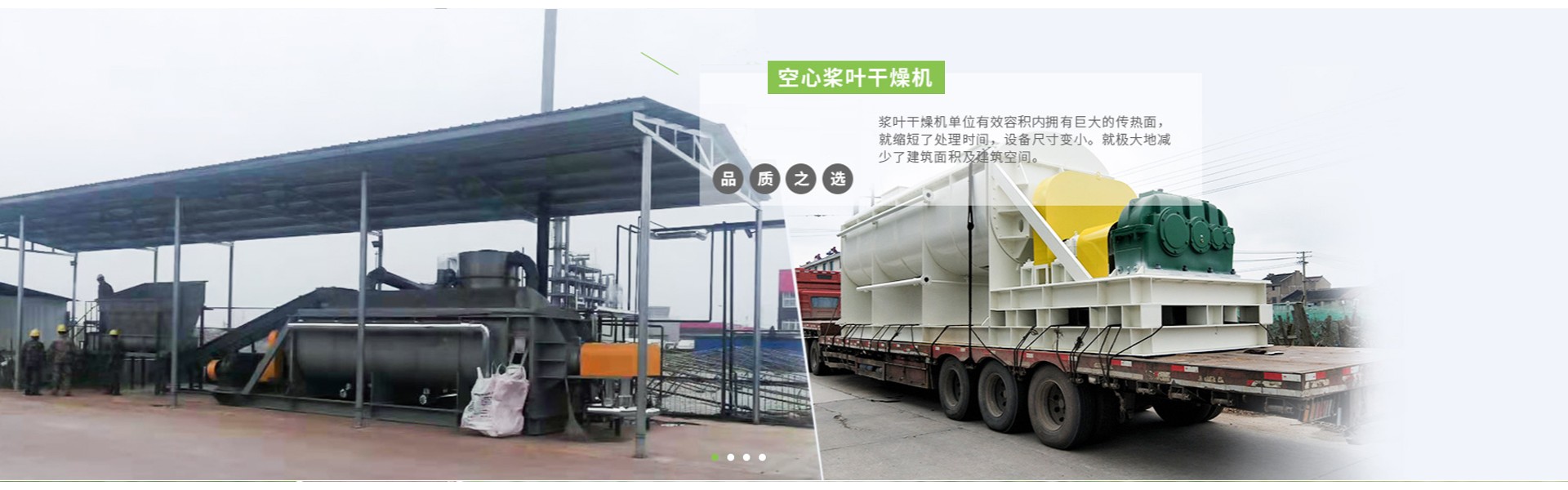

We understand that among various sludge types, oil-containing sludge is particularly challenging to dry due to its high oil content. Especially in our country, where drying equipment is still in the phase of expansion and development, the technology for drying oil-containing sludge is not yet mature. This article introduces the application of the hollow blade dryer in the drying of oil-containing sludge.
Before delving into the use of paddle blade dryers for treating oil-contaminated sludge, let's first understand what oil-contaminated sludge is. It refers to solid waste containing oil that is produced during the extraction, transportation, refining, and oil-containing wastewater treatment processes in the petroleum industry. The oil content in sludge typically ranges from 10% to 15%, with water content between 40% and 90%. Oil-contaminated sludge contains a large amount of toxic substances with a foul odor, such as benzene compounds, phenols, anthracene, and pyrene. In China's petrochemical industry, a significant amount of oil-contaminated sludge is produced annually. If not treated, this sludge not only pollutes the environment but also wastes resources. The country has listed the oil-contaminated sludge produced by refineries and other industrial facilities as a national hazardous waste.
Effective treatment of oil sludge involves incineration, but prior to incineration, the sludge must be dried. After drying with a hollow blade drier, the volume is reduced, making it easier to crush, and then it is sent to the incinerator for combustion. A second incineration process nearly eliminates various harmful substances and recovers thermal energy. Of course, the hollow blade drier is also environmentally friendly and energy-efficient during the drying process.
So, using a hollow paddle dryer for the drying of oily sludge is a good choice.
