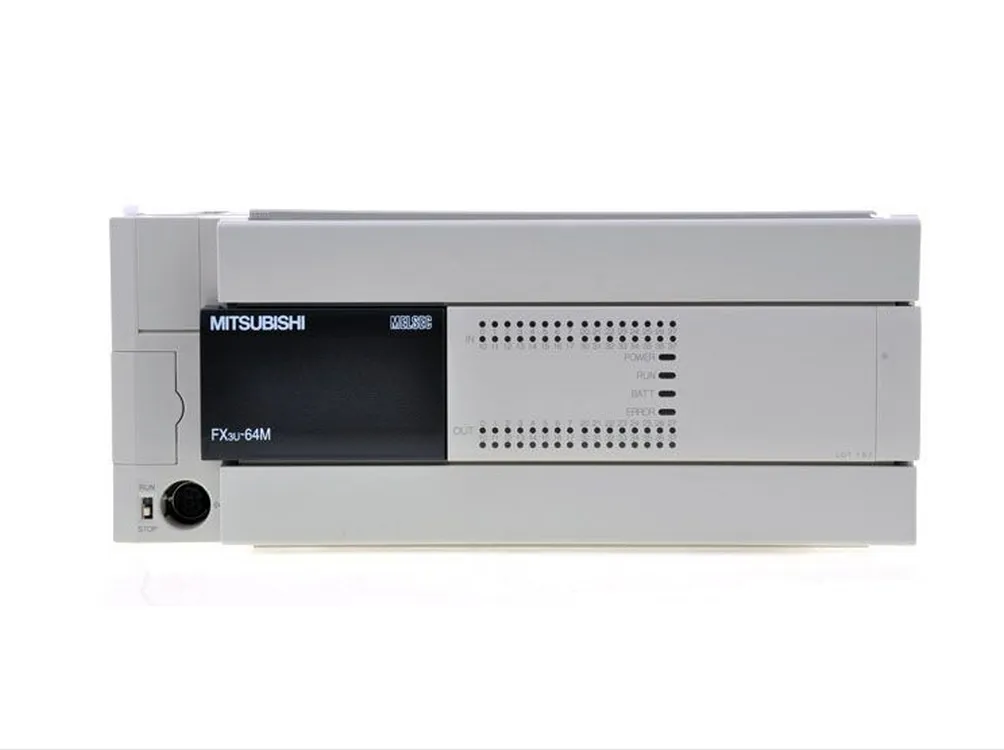

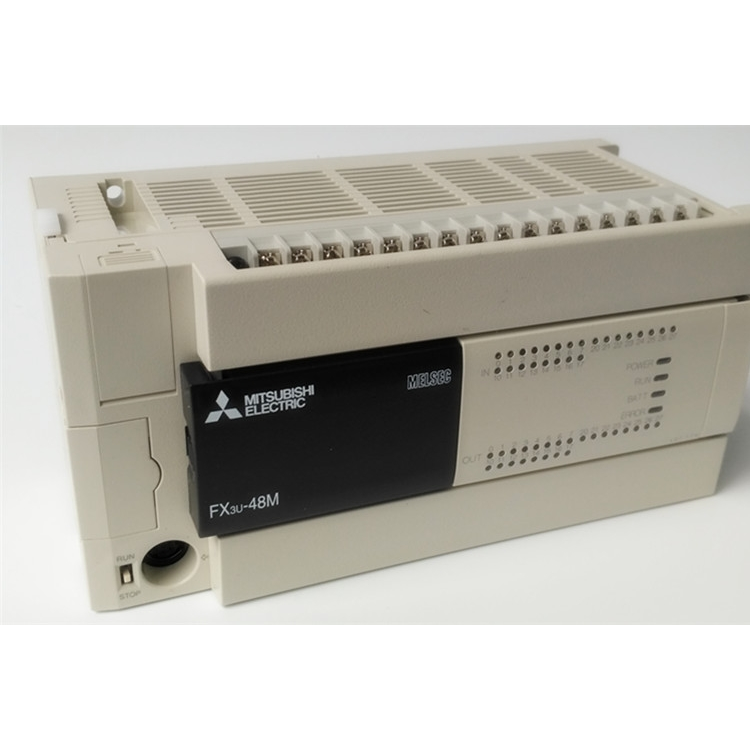
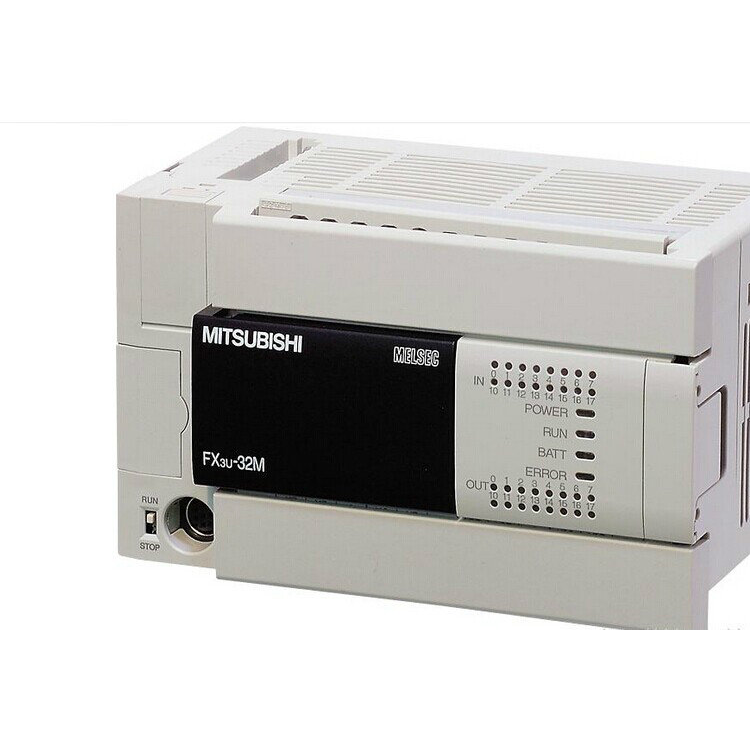
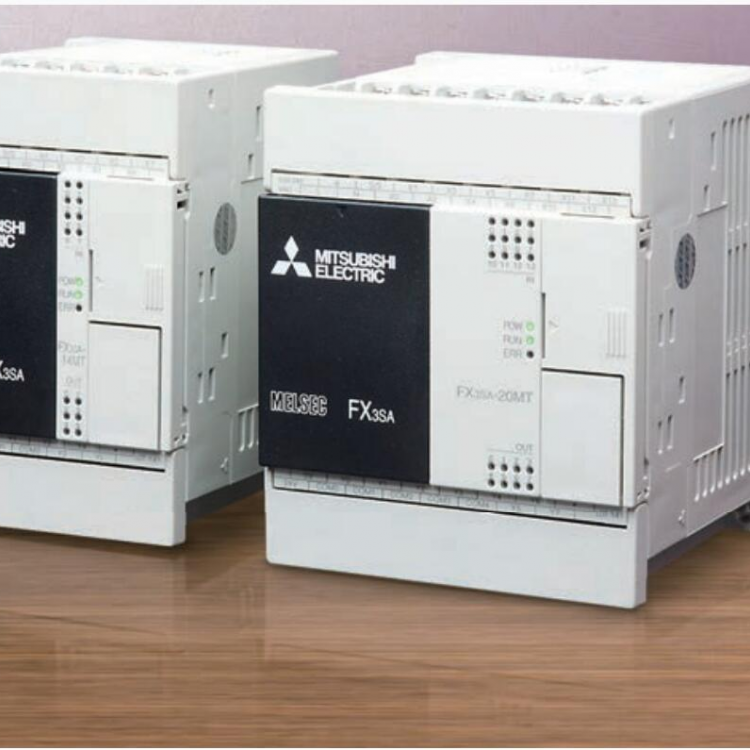
Mitsubishi FX3U-128MT/ES-A PLC Module Brand New Original Packaging
Mitsubishi PLC Selection - Element One:IO Points
Mitsubishi PLCMaximum number of I/Os that the control system can interface with.
Mitsubishi PLC FX series commonly used basic unit main units include: FX1S, FX1N, FX1NC, FX2N, FX2NC, FX3U, FX3UC, FX3G, and FX5U, totaling 9 series.
Each series features models with different input/output point counts, such as 10, 14, 16, 32, 48, 64, 80, and 128 points.
Mitsubishi PLC SelectionElementsTwo:Storage Capacity
Storage capacity for the application. Expressed in K steps. Each instruction in a written program consumes a certain number of steps.
Mitsubishi PLC SelectionElementsThree:Scanning speed
This performance parameter may be unclear to beginners, and not knowing it doesn't hinder learning PLC programming. However, when working on projects with higher precision requirements or more program steps, a faster scan and processing speed is essential. In such cases, this performance parameter must be considered. You can check the PLC's scan speed in the hardware manual. Here are the performance parameters found in the FX3U hardware manual. Basic instructions take 0.065us per instruction, and with a large number of program instructions, this accumulates a significant amount of time. Additionally, in scenarios with high precision demands, a faster scan cycle speed is required, making this performance parameter particularly important.
Mitsubishi FX3U-128MT/ES-A PLC Module, brand new and original.
| FX3U CPU |
| FX3U-16MR/ES |
| FX3U-16MT/ES |
| FX3U-16MT/ESS |
| FX3U-32MR/ES |
| FX3U-32MS/ES |
| FX3U-32MT/ES |
| FX3U-32MT/ESS |
| FX3U-48MR/ES |
| FX3U-48MT/ES |
| FX3U-48MT/ESS |
| FX3U-64MR/ES |
| FX3U-64MS/ES |
| FX3U-64MT/ES |
| FX3U-64MT/ESS |
| FX3U-80MR/ES |
| FX3U-80MT/ES |
| FX3U-80MT/ESS |
| FX3U-128MR/ES |
| FX3U-128MT/ES |
| FX3U-128MT/ESS |
| FX3U-16MR/DS |
| FX3U-16MT/DS |
| FX3U-16MT/DSS |
| FX3U-32MR/DS |
| FX3U-32MT/DS |
| FX3U-32MT/DSS |
| FX3U-48MR/DS |
| FX3U-48MT/DS |
| FX2NC-32EX-DS |
| FX2NC-32EX-D/UL |
| FX2NC-16EYR-T |
| FX2NC-16EYR-T-DS |
| FX2NC-16EYT |
| FX2NC-16EYT-DSS |
| FX2NC-16EYT-D/UL |
| FX2NC-32EYT |
| FX3U CPU |
| FX3U-16MR/ES |
| FX3U-16MT/ES |
| FX3U-16MT/ESS |
| FX3U-32MR/ES |
| FX3U-32MS/ES |
| FX3U-32MT/ES |
| FX3U-32MT/ESS |
| FX3U-48MR/ES |
| FX3U-48MT/ES |
| FX3U-48MT/ESS |
| FX3U-64MR/ES |
| FX3U-64MS/ES |
| FX3U-64MT/ES |
| FX3U-64MT/ESS |
| FX3U-80MR/ES |
| FX3U-80MT/ES |
| FX3U-80MT/ESS |
| FX3U-128MR/ES |
| FX3U-128MT/ES |
| FX3U-128MT/ESS |
| FX3U-16MR/DS |
| FX3U-16MT/DS |
| FX3U-16MT/DSS |
| FX3U-32MR/DS |
| FX3U-32MT/DS |
| FX3U-32MT/DSS |
| FX3U-48MR/DS |
| FX3U-48MT/DS |
| FX2NC-32EX-DS |
| FX2NC-32EX-D/UL |
| FX2NC-16EYR-T |
| FX2NC-16EYR-T-DS |
| FX2NC-16EYT |
| FX2NC-16EYT-DSS |
| FX2NC-16EYT-D/UL |
| FX2NC-32EYT |
Mitsubishi FX3U-128MT/ES-A PLC Module, Brand New Original Packaging
Mitsubishi PLC SelectionElementsFour:Output Type
Mitsubishi FX Series PLCThe output types include Relay Output (MR), Transistor Output (MT), and Thyristor Output (MS).
Transistor-type MT performance parameters are divided into drain and source types.
Mitsubishi PLC Output Type:
Relay Output: R
T-junction transistor output:
Thyristor Output
Commonly used are MR and MT types. For beginners learning, it is recommended to choose the transistor output type. The transistor output type supports sending high-speed pulses and driving stepper and servo drives. In project control, for output with a higher load or less than 6 switching times per minute, it is suggested to use relay output type. Its maximum output load is 2A/1 point and it has strong anti-interference capability.
Mitsubishi PLC SelectionElementsFive:Command Function
A PLC that supports a wider and more comprehensive set of instructions makes it more convenient for programmers during the coding process. For instance, the FX2N PLC does not support certain positioning instructions like DRVI, DRVA, etc. Additionally, the FX3U PLC supports CRC verification, whereas the FX2N PLC does not. The supported instructions for each PLC model can be viewed in the instruction list of the corresponding programming manual.