

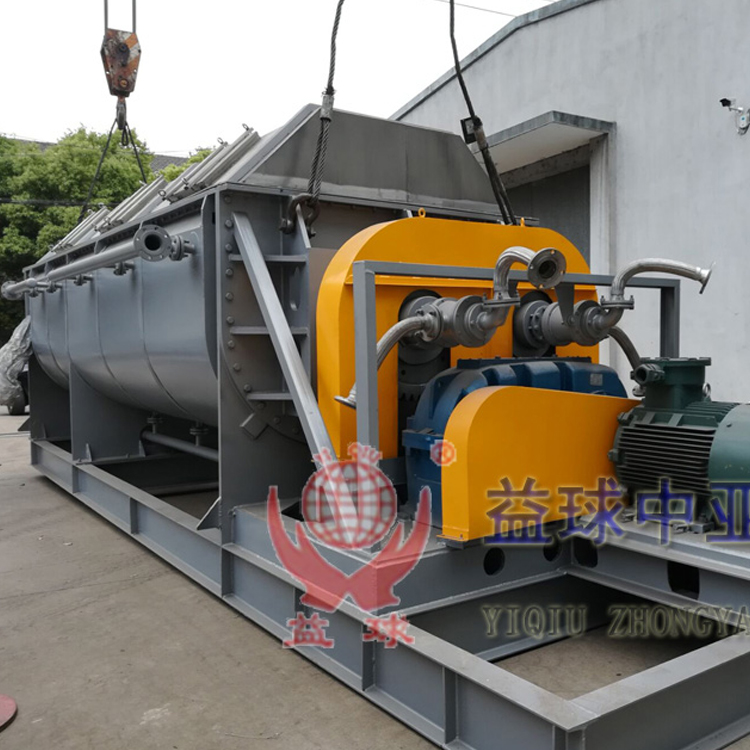

I. Main types of sludge handled:
Wastewater sludge, municipal sludge, chemical sludge, kaolin, oil sludge, textile sludge, pulp sludge, pigment sludge, electroplating sludge, etc.
II. Sludge Composition:
Sludge is primarily composed of low-grade organic matter such as amino acids, humic acids, bacteria and their metabolic products, polycyclic aromatic hydrocarbons, heterocyclic compounds, organic sulfur compounds, volatile malodorous substances, and organic fluorides. Additionally, it contains inorganic substances and heavy metals like lead. Sludge is the largest byproduct generated from wastewater treatment, typically with a moisture content of 80-90%. More than 10 tons of sludge can be produced from every 10,000 cubic meters of wastewater treated (calculated based on sludge with a moisture content of 80-90%).
III. Key Characteristics of Sludge:
Municipal wastewater treatment plants typically produce sludge with moisture content ranging from 65% to 90%, which is a mixture of solid or fluid substances. The solid components mainly consist of organic residues, bacterial bodies, inorganic particles, colloids, and flocculation agents. It is a complex blend predominantly composed of organic components, containing potentially valuable organic matter and various trace elements.
(1) Physical Properties
Sludge is composed of suspended solids in water that have been bonded and aggregated in various ways, featuring a loose structure, irregular shape, high specific surface area, and porosity, as well as high water content and poor dewatering properties. Visually, it exhibits a branched and network-like structure resembling fur.
(2) Chemical Properties
Biological sludge is primarily composed of microorganisms, including mixed domestic silt.WastewaterFibers, solid particles from animal and plant residues, as well as potentially adsorbed organic matter, metals, pathogens, and eggs. Sludge also contains substances necessary for plant growth and development.A variety of trace elements required to maintain the normal growth and development of plants, as well as organic matter capable of improving soil structure.
(3) The form and properties of water in sludge
Mud moisture exists in four forms: surface adsorbed water, interstitial water, capillary-bound water, and internal combined water. Capillary-bound water further divides into fissure water, pore water, and wedge-shaped water. Water adsorbed by surface tension is classified as surface adsorbed water. Interstitial water typically accounts for 65% to 85% of the total moisture in sludge and is the primary target for sludge concentration. Capillary-bound water: It cannot be separated by concentration alone, requiring high mechanical force and energy to separate, such as vacuum filtration, pressure filtration, centrifugal separation, and extrusion, which can remove this moisture. Various types of capillary-bound water make up approximately 15% to 25% of the total moisture in sludge. Internal combined water: Refers to moisture contained within the microbial cell bodies in sludge, its amount correlating with the proportion of microbial cell bodies in the sludge. Removing this moisture necessitates breaking the cell membrane, causing cell fluid to leak out, transforming internal combined water into external liquid. Internal combined water generally constitutes only a small percentage of the total moisture in sludge.