

Among the numerous power cables, there is one capable of transmitting electricity between 10KV and 35KV. This is the high-voltage cable, which plays a leading role in the main artery of power transmission. Let's take a look at the types of high-voltage cables together below.
Types of High-Voltage Cables
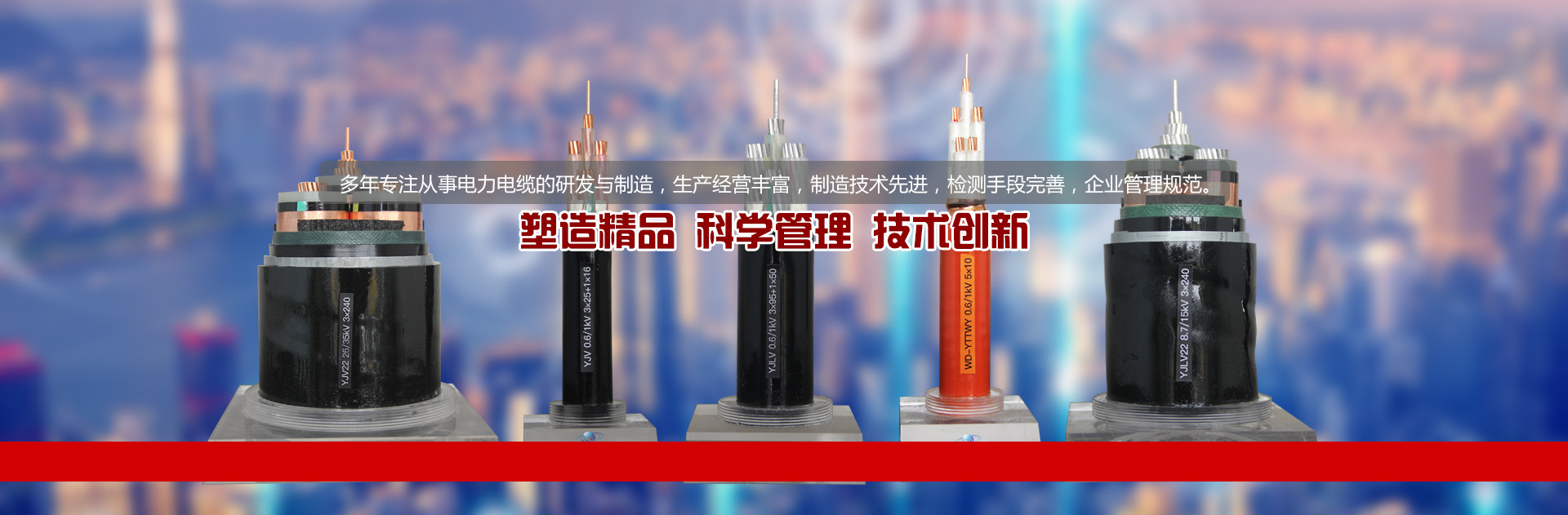
The main types of high-voltage cables include YJV cables, VV cables, YJLV cables, and VLV cables.
YJV Cable is a cross-linked polyethylene insulated polyvinyl chloride sheathed power cable (copper core).
VV Cable, also known as Polyvinyl Chloride Insulated and Sheathed Power Cable (Cu Core)
YJLV Cable is a cross-linked polyethylene insulated, polyvinyl chloride sheathed, aluminum-core power cable.
VLV cables are fully named as Polyvinyl Chloride Insulated Polyvinyl Chloride Sheathed Aluminum Core Power Cables.
Due to the superior electrical conductivity of copper conductors, an increasing number of engineering projects are using copper-core power cables as the main power supply lines, while the application of aluminum-core power cables is less frequent, especially in higher voltage power systems where copper-core cables are more commonly chosen.
Structure of High-Voltage Cables
The components of a high-voltage cable, from inside to out, include: conductor, insulation, inner sheath, filling material (armor), and outer insulation. Of course, armored high-voltage cables are primarily used for underground installation, capable of withstanding high pressure on the ground while also protecting against damage from other external forces.
Standard Specifications and Applications of Common High-Voltage Cables
NA-YJV, NB-YJV, Cross-linked polyethylene insulated polyvinyl chloride sheathed A(B) class flame-retardant power cables can be laid in indoor, tunnel, and pipeline environments requiring flame resistance.
The NA-YJV22, NB-YJV22, cross-linked polyethylene insulated steel tape armored polyvinyl chloride sheathed A(B) class flame-retardant power cables are suitable for underground laying when flame retardancy is required, but not for laying in conduits.
NA-VV, NB-VV, flame-retardant power cables with polyvinyl chloride insulation and sheath (Type A/B) can be installed in indoor, tunnel, and pipeline environments requiring fire resistance.
NA-VV22, NB-VV22, Flame-retardant power cables with steel tape armoring and polyvinyl chloride (PVC) sheath, Class A(B)
Ultra-high voltage cables are a type of power cable that emerged with the continuous development of cable technology. Generally serving as a central link in large-scale transmission systems, ultra-high voltage cables are a high-tech variety of high-voltage cables, primarily used for long-distance power transmission.
Editor's Note: While high-voltage cables offer numerous benefits, it is crucial to prioritize electrical safety and opt for reputable cable manufacturers when making purchases.
