
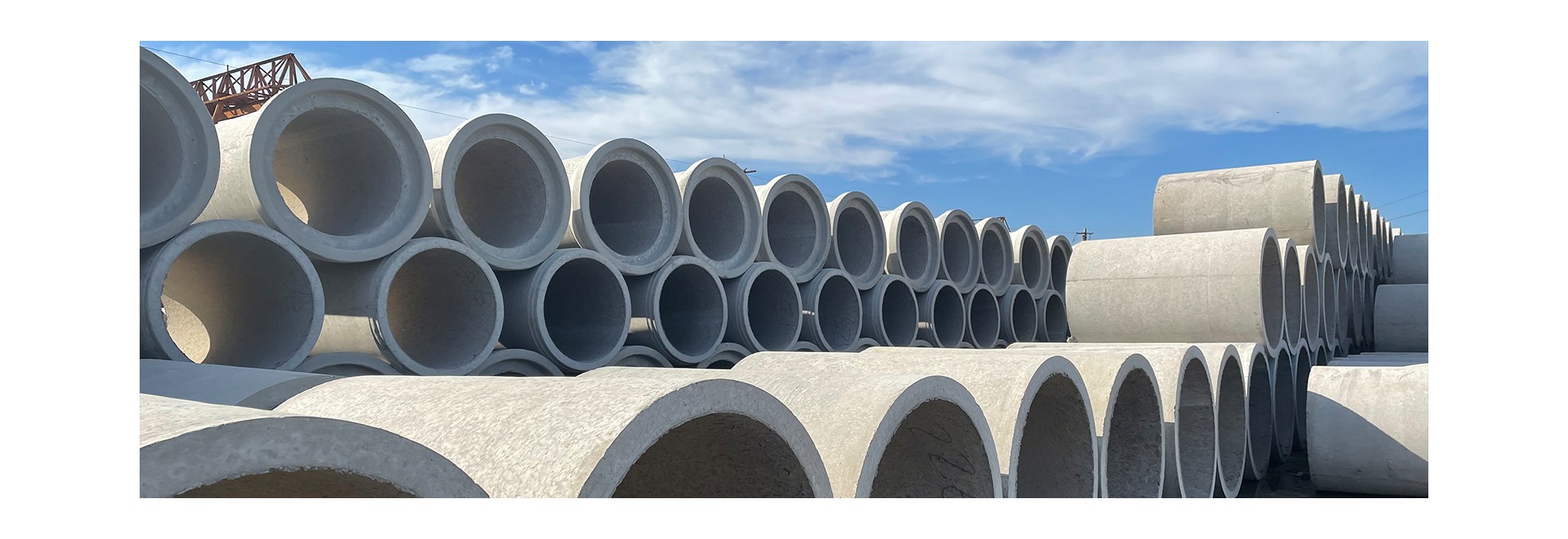
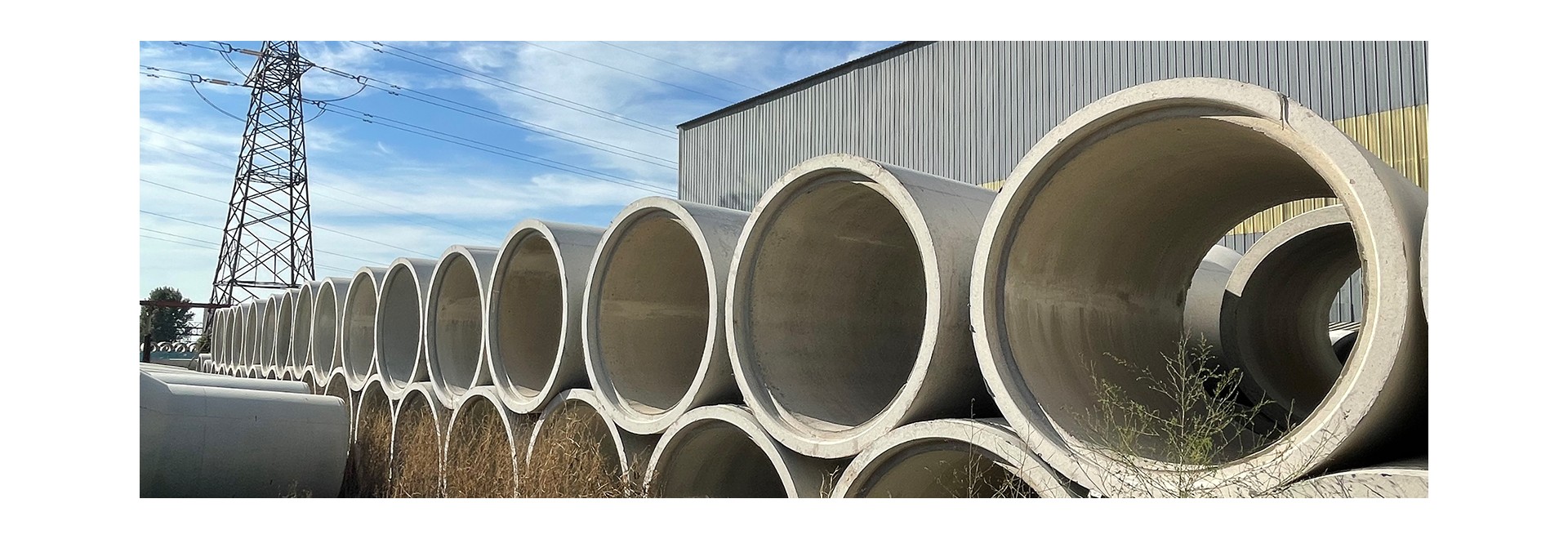


How to Install Cement Drainage Pipes with Socket and Spigot Connections?
1. The positioning of Tangshan socket and spigot cement drainage pipes is particularly crucial. For easy installation, the center point should be the pipe cushion. From the center point, pull a line equal to the outer diameter of the pipe material, and establish the positioning rod at the two points. It is necessary to clean the oil and debris from the inner surface of the socket and the outer surface of the spigot thoroughly. Select the appropriate rubber ring according to the pipe diameter, place the textured side of the "△" rubber ring over the spigot outer wall, and insert it onto the stop胶 platform. After insertion, apply lubricant evenly to the rubber ring and the inner surface of the socket.
2. Thoroughly mix the lubricant before use to prevent sedimentation of dry matter, which could affect pipe installation. Ensure adequate lubrication on the facing and the rubber ring sliding surface, and install promptly to avoid the lubricant drying out prematurely, which may cause the rubber ring to twist due to a dry facing, leading to leakage at the joints or the rubber ring rolling against the sliding surface. If forced to close at this point, the compression ratio of the rubber ring increases, making it prone to pipe rebound or socket explosion.
3. When laying pipes, they should be installed from downstream to upstream, with the spigot facing downstream and the socket facing upstream. When a half-section pipe is needed due to the limited distance of the well section, the half-section pipe should be placed on both sides of the manhole inlet and outlet, with the half-section pipe having a socket placed in the direction of the manhole's outlet. When using a hand chain hoist to close the pipe sections, one end of the hand chain hoist is secured with a steel wire rope and a block of wood, while the other end serves as the fixed reactive force. When closing the pipe sections, both hands holding the hand chain hoist should be placed at the horizontal diameter of the pipe section. The hook should be hooked onto the socket wall of the pipe sections being closed. The reactive end of the hand chain hoist can be secured with a steel wire rope, buckle, etc., to a temporary stake or an already installed pipe section. Both hands holding the hand chain hoist should pull simultaneously to close the pipe sections.
4. When positioning the pipe joints and relaxing the steel wire ropes, recheck the elevation and centerline of the pipe sections, ensuring the gap between the joints is 9mm to 15mm. For drainage pipes that require water-tightness tests, conduct the test according to the methods specified in Section 10.3 of the "Code for Construction and Acceptance of Water Supply and Drainage Pipelines" (GB50268), and implement the acceptance standards as per the "Beijing City Standard for Quality Inspection and Evaluation of Municipal Drainage Channels."
5. Backfill soil must not contain weeds, broken bricks, wood pieces, etc., and should not have large stones, cobblestones, or frozen soil blocks. The compactor should uniformly layer and compact the backfill along both sides of the pipe; during compaction, do not damage the pipe and ensure that the pipe does not shift. The production process of socket-type reinforced concrete drainage pipes employs CNC operation, including automatic spot welding for meshing, robotic mesh laying, vibration extrusion molding, and immediate demolding—all performed fully automatically. Compared to similar products using traditional domestic techniques, this process offers significant advantages in terms of product quality, production efficiency, and installation technology.
News Center Co., Ltd.
