
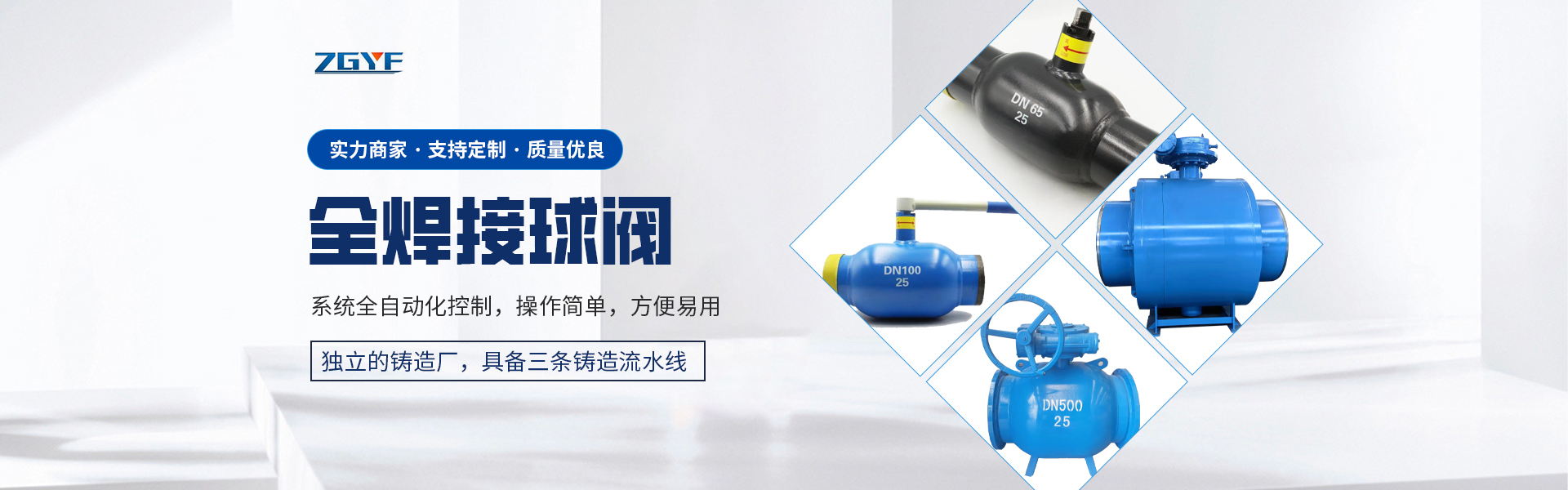
The soft-sealed globe valve is powered by compressed air, and the ball rod rotating the ball 90 degrees achieves full open to full close action. Valve seat types: T, F, C. Accessories for use include air filter-regulating valves, limit switches, and solenoid valves.
In demanding applications, cutting-off capabilities are often required for control valves, making the cutting function a crucial operational feature and an intrinsic quality indicator (for classifications and standards, refer to relevant materials). In field use, issues such as poor cutting-off performance and excessive leakage are common. Besides increased leakage due to reasons like blockages and excessively low allowable pressure differences, the majority of cases are caused by structural defects in the control valve and improper selection.
The main components of soft-seated butterfly valves, including the protective valve body, cover, disc, and frame core, are made of spheroidal cast iron. The valve stem of the soft-seated butterfly valve typically uses martensitic stainless steel, while austenitic stainless steel can be used for higher requirements. The valve stem nut is recommended to be made of a high-performance copper alloy. The rubber for the disc and seal ring is suggested to be EPDM, or NBR can be used for direct contact with air or water. Standard components that come into direct contact with air or water should be made of austenitic stainless steel, while other parts can be made of ordinary carbon steel. During storage and transportation of the valves, for those that require packaging with protective coatings, it is recommended to use polyurethane foam for product packaging protection and isolation. The exposed flange holes at both ends should be equipped with end caps to prevent dirt from entering and to protect against sunlight or ozone that could accelerate the aging of rubber sealing parts.
The maintenance personnel for soft-seated butterfly valves share similar skill requirements with instrument maintenance staff. The maintenance personnel should meet the following conditions:
1. Familiar with maintenance procedures for control valves and technical requirements of the control valve product manuals.
Familiar with the structure, operating principles, and technical requirements for disassembly of control valves.
3. Understand the role of the corresponding control valves in the production process and familiarize with the requirements of the production process for the control valves.
4. Proficient in operating the instruments and equipment required for control valve maintenance.
Analysis and Solutions for Soft Sealed Gate Valve Failures
1. The soft-sealed gate valve body and cover connection is leaking.
Damage on the法兰 sealing surface should be corrected.
(2) Damaged gasket, replace with a new one.
2. Soft-sealed gate valve spindle transmission is not agile
(1) The packing is too tight; the nuts on the packing cover should be appropriately loosened.
(2) The packing cover is misaligned, causing the valve rod to jam. Gently turn the nuts on the packing cover uniformly to restore the cover to its normal position.
(3) There is damage to the threads on the valve rod and the valve rod nut; they should be removed and replaced.
Item 3: Soft-sealed gate valve packing leakage
The filler cover is too loose; the nut used to tighten the compressed filler cover can be evenly tightened.
(2) Insufficient filling rings; increase the filling material.
(3) Fillers should be replaced due to long-term use or improper storage. When replacing, ensure that the joints between each ring are staggered by 1200 degrees.
4. Soft-seated gate valves: sealing surface between the gate plate and valve seat
(1) The sealing surface is interlaced with dirt, which can be washed off.
(2) In case of damage to the sealing surface, it should be resurfaced. If necessary, it can be re-soldered and machined. The resurfaced sealing surface must be flat, with a roughness not less than 0.4.
