

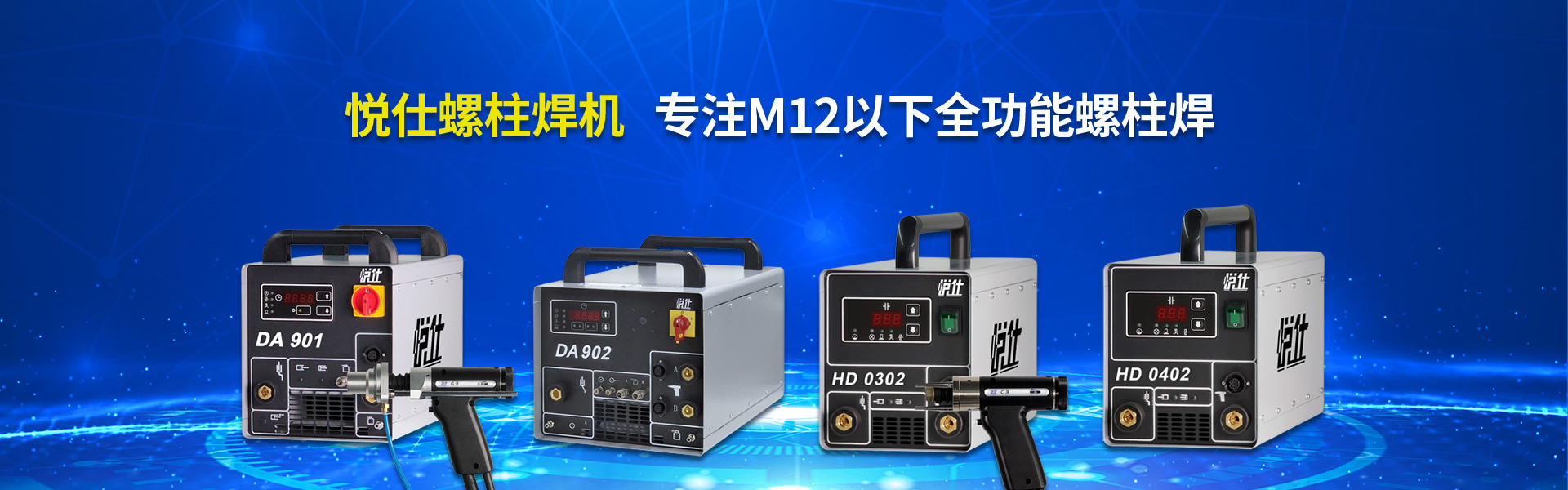

The stud welding machine is suitable for welding various metal materials, including combinations of the same metal and dissimilar metals. Below are some common material combinations and explanations of their welding effects:
Combination of the same metal
Steel and steelThe stud welder excels in steel-to-steel welding, demonstrating consistent weld quality and high strength.
Aluminum and AluminumThe stud welding machine is also suitable for aluminum-to-aluminum welding, featuring a rapid welding process and excellent weld quality.
Stainless Steel & Stainless SteelThe stud welding machine achieves excellent welding results in stainless steel-to-stainless steel applications, with even and dense weld seams.
2. Combination of Different Metals
Steel and Aluminum:
Welding EffectThe thermal expansion coefficient and melting points of steel and aluminum differ significantly, which often leads to defects such as cracks and gas pores during welding. However, by optimizing welding parameters (such as current, time, and pressure) and selecting appropriate filler materials, stud welding machines can achieve excellent welding between steel and aluminum.
Cautionary NotesWelding heat input must be strictly controlled to prevent overheating of aluminum and insufficient melting of steel.
Stainless Steel & Copper:
Welding EffectStainless steel and copper have significant differences in thermal conductivity and coefficient of linear expansion, which often lead to thermal cracks and deformation during welding. Bolt welding machines can achieve effective welding between stainless steel and copper by precisely controlling welding parameters.
Cautionary NotesAppropriate welding techniques, such as preheating and controlling the welding speed, are required to minimize welding stress and distortion.
Other exotic metal combinations:
The stud welding machine can also be used for welding dissimilar metals such as steel with copper, and aluminum with copper. The welding effect depends on the specific material combination, welding parameters, and process measures.
Welding Parameter Optimization
Welding CurrentAdjust welding current based on bolt diameter and material combinations to ensure stable arc and weld quality.
Welding TimeMaintain control over welding time to avoid both excessive and insufficient durations, ensuring proper formation and solidification of the weld.
Electrode PressureAdjusting the electrode pressure ensures a tight contact between the stud and the base material, which is conducive to stable arc formation and weld seam development.
In summary, stud welding machines are suitable for welding various metal combinations, including steel and aluminum, and stainless steel and copper, among other dissimilar metals. By optimizing welding parameters and selecting appropriate process measures, excellent welding results can be achieved. In practical applications, it is necessary to set welding parameters and select processes reasonably based on the specific material combinations and welding requirements.