

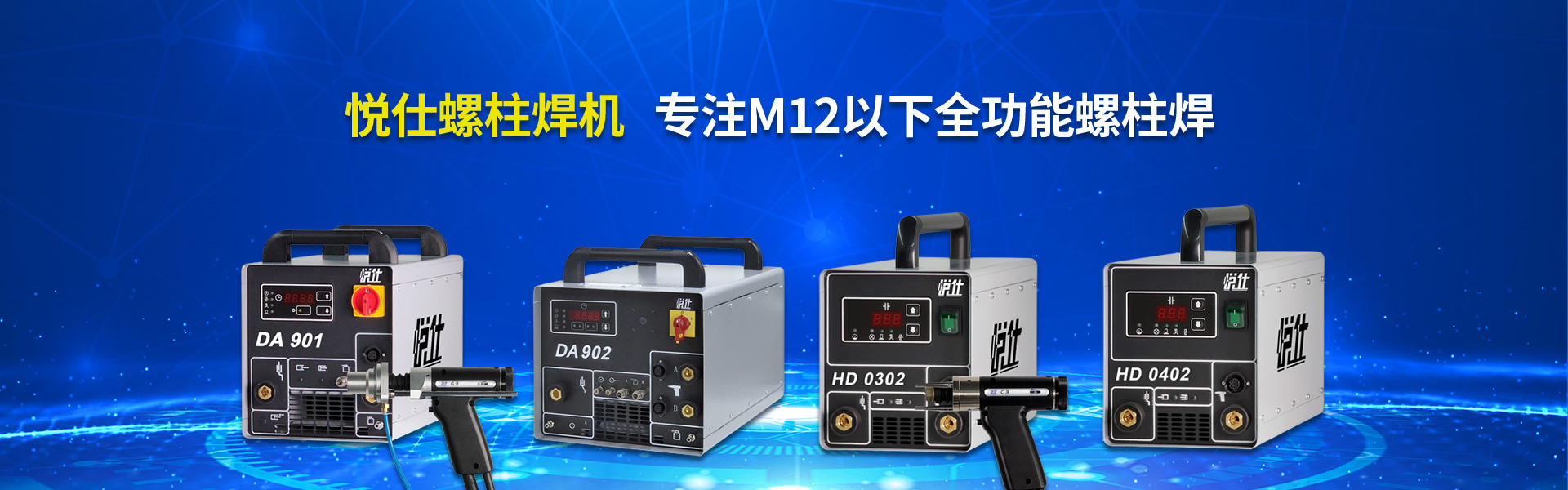
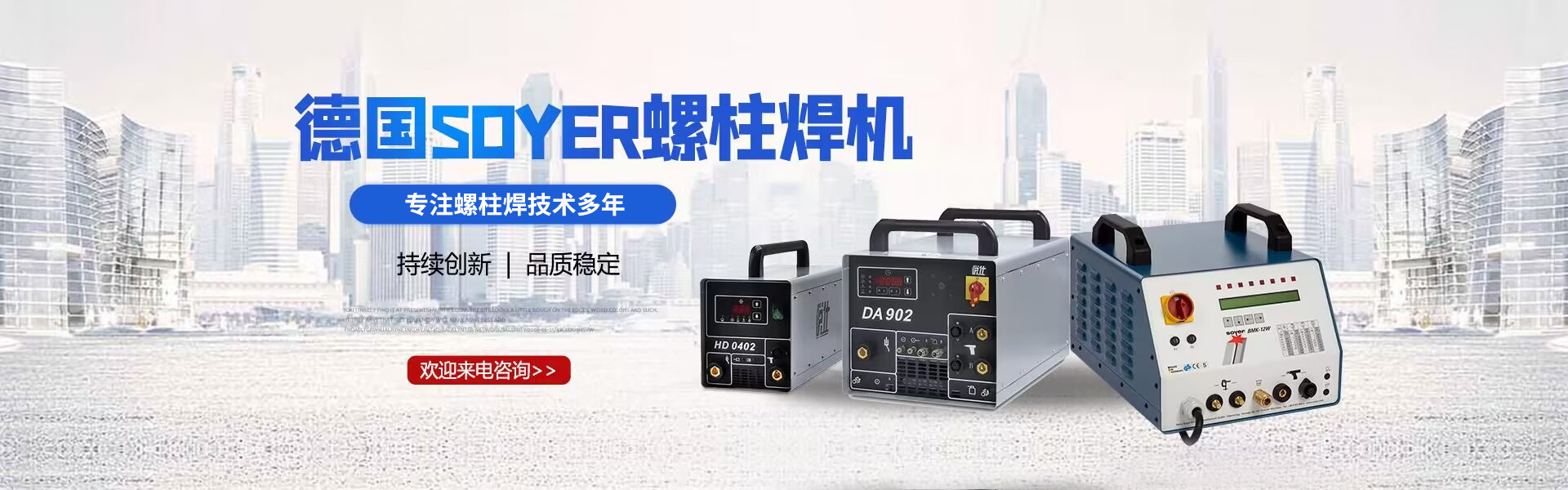

The core parameters and selection methods for the energy storage stud welding machine are as follows:
Core Parameters
Storage Capacity (Joules, J)
The total energy released per welding cycle directly affects the amount of bolt melting.
ScopeTypically ranging from a few hundred joules (for small devices) to tens of thousands of joules (for large industrial equipment).
Example:M6 steel bolts require 1000-1500J, while M12 aluminum bolts may need 3000-4000J.
Welding Current Peak (Ampere, A)
The instantaneous value of the released current determines the arc temperature and melting efficiency.
ScopeFrom hundreds to thousands of amperes (higher currents required for aluminum welding, for instance).
Example:Steel bolts require approximately 1000A, while aluminum bolts may need 1500-2000A.
Welding Time (Milliseconds, ms)
Arc duration affects heat input and weld quality.
Scope1-10ms (too short can cause false welding, too long increases the heat-affected zone).
Example:Welding time for thin plates is 1-3 ms, while for thick plates or high thermal conductivity materials, it should be extended to 5 ms or more.
Electrode Pressure (Newtons, N)
The pressure exerted by the electrode on the stud during welding affects the contact resistance and welding stability.
ScopeFrom tens to thousands of tons (adjustable according to the bolt diameter).
[Please provide the Chinese content to be translated into American English.]M6 bolts require approximately 300-500N, while M10 bolts need 800-1000N.
Parameter Selection Method
Select Bolt Material
Steel screw boltMedium energy storage (1000-3000J), high current (1000-1500A), short welding time (1-3ms).
Aluminum Anchor BoltsHigher energy storage (2000-5000J), high current (1500-2500A), and slightly longer duration (3-5ms).
Copper Screw StudsEnergy storage (>5000J), ultra-high current (>2500A), requires optimized heat dissipation.
Adjust according to the bolt diameter
Diameter IncreaseStorage capacity, peak current, and welding time all require simultaneous increases.
ExampleM6 to M12 bolts, energy storage requirements must increase from 1500J to over 3000J.
According to the thickness of the base material
Sheet metal (<3mm)Low energy storage, short welding time to prevent burn-through.
Thick Plate (>5mm)Higher energy storage and appropriate extension of welding time are required to ensure sufficient penetration.
Reference Equipment Recommendations
The equipment will provide a parameter comparison table (such as a "material-diameter-energy storage" corresponding table).
SuggestionBefore first use, adjust parameters through trial welding and observe weld seam quality (such as penetration depth, spatter condition).
Practical Skills
Trial Welding MethodFirst, perform a small energy storage weld test, gradually increasing until the end face of the stud is fully melted and the base material does not overburn.
Monitor SplatterIf there is excessive splashing, it may indicate too much current or a prolonged duration; if there is a cold solder joint, it suggests insufficient energy storage or current.
Consult manufacturersComplex working conditions (such as dissimilar metal welding) can seek technical support from equipment suppliers to obtain customized parameters.
By scientifically selecting parameters, we ensure stable welding quality while avoiding equipment overload or welding defects.
