

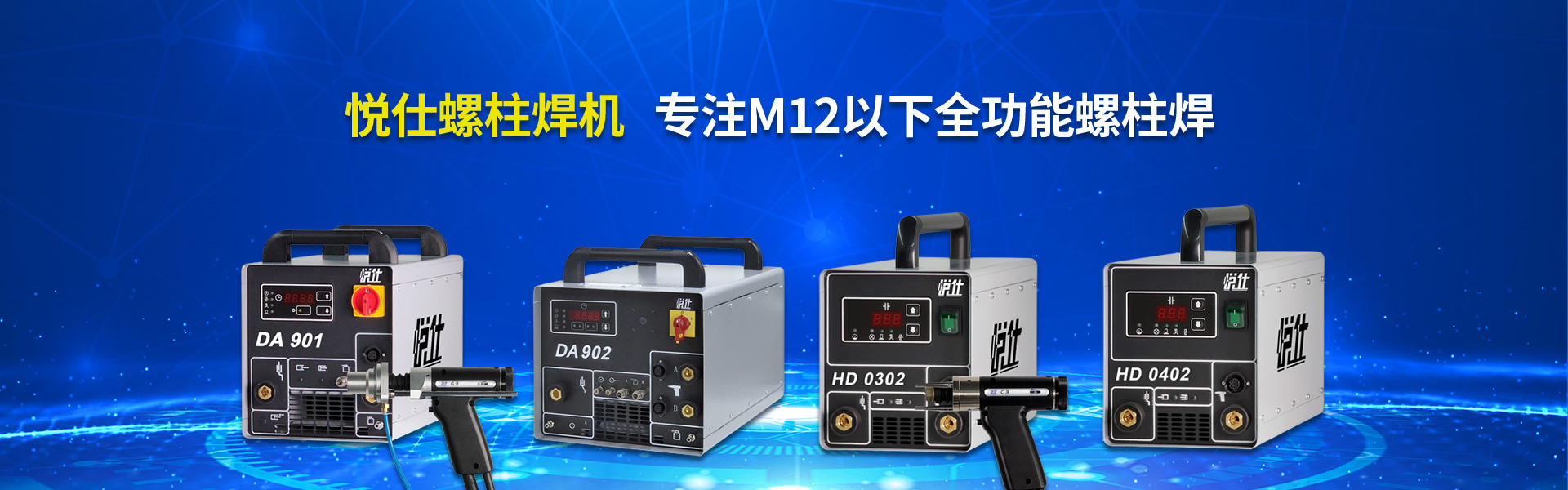
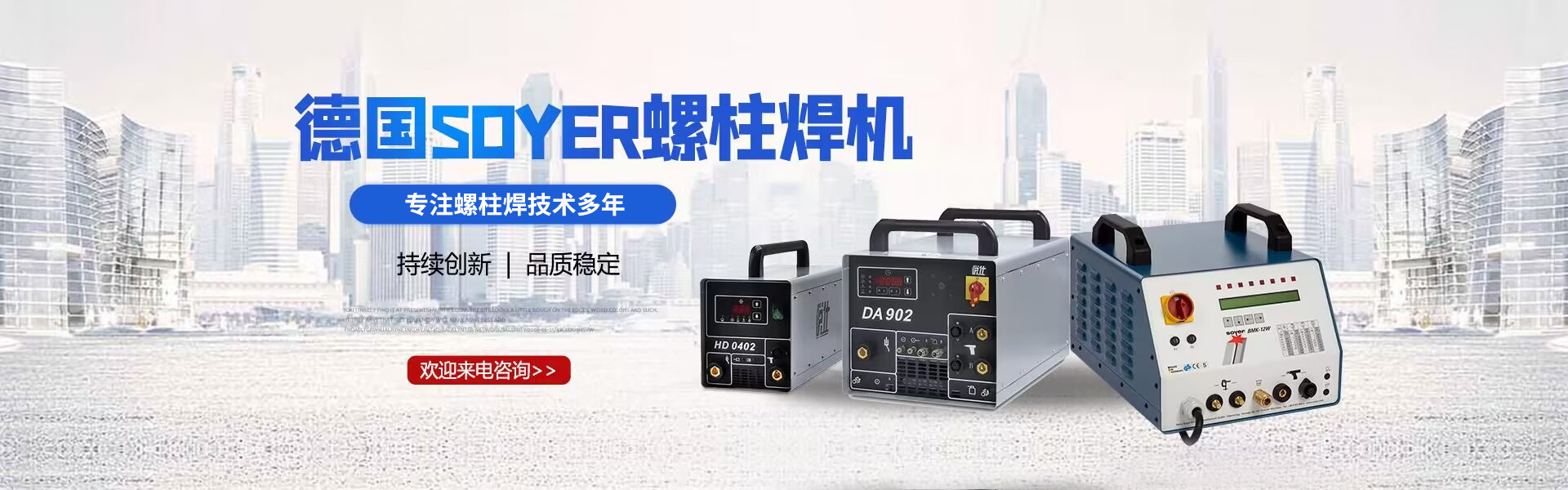
The principle of the energy storage stud welding machine is based on the storage and instantaneous release of electrical energy. The specific process is as follows:
Energy Storage PhaseThe device stores electrical energy as electric field energy or magnetic field energy by converting grid power through internal large capacitors or inductors. This process is similar to charging a "super battery," but it is much faster, typically completing in milliseconds.
Energy ReleaseWhen initiating welding, the stored energy is instantaneously released through a precisely controlled circuit. At this moment, the current peak can reach thousands of amperes, passing through the welding circuit in a very short time (usually 1-5 milliseconds) to produce a high-temperature electric arc.
Welding FormingThe high temperature of the arc (reaching thousands of degrees Celsius) rapidly melts the end of the stud and the contact surface of the base material, forming a molten pool. Under the action of electrode pressure, the stud and base material achieve metallurgical bonding, resulting in a high-strength weld after cooling.
Core Strengths:
Energy ConcentrationHigh-energy instant release ensures stable welding quality, effectively melting materials with high thermal conductivity, such as aluminum and copper.
Small Heat Affected ZoneDue to its short-acting nature, the base material experiences an extremely narrow heating range (typically <1mm), which prevents deformation or changes in performance, making it suitable for precision component welding.
No fill material required.The welding process relies on the bolt's own material, eliminating the need for welding rods or wires, simplifying the process and reducing costs.
Analogical Understanding:
Just like "lightning welding"—wherein the immense energy of lightning is released instantaneously to naturally weld (like lightning fusing sand grains), energy-storing stud welders achieve a similar effect in a manually controlled manner, with high efficiency and precision.