


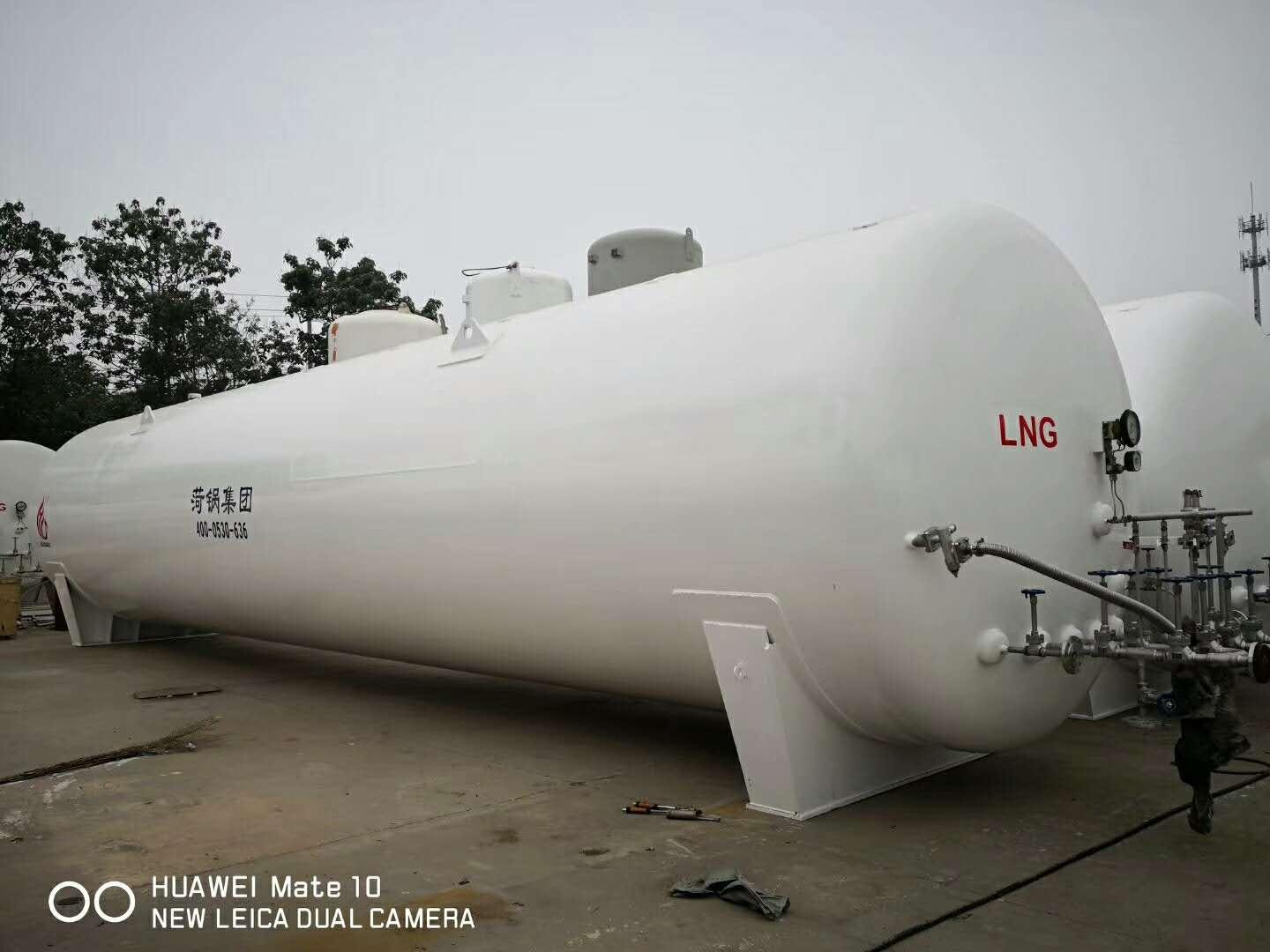
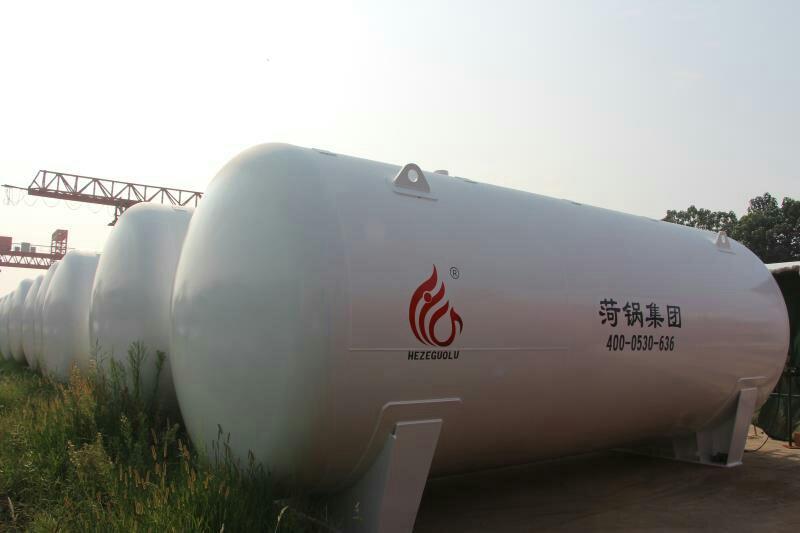
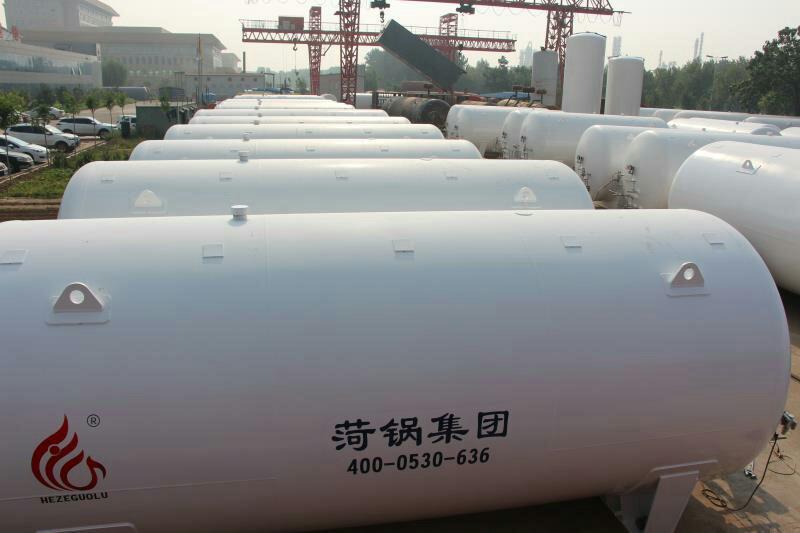
Shandong Heze Babjehec Boiler Factory Liquefied Natural Gas Storage Tanks - High Quality and Competitive Prices
Product Description
Brand Hebei Pot Group Model CFW-60/0.8
Material: Stainless Steel, Diameter: 2916mm
Application Range -162℃ Volume 60000L
Wall Thickness: 8mm, Outer Dimensions: φ2916*14929mm
Origin: Shandong Heze

Heze LNG Storage Tank, Low-Temperature Oxygen/Nitrogen/Argon Carbon Dioxide Storage Tank, 60 Cubic Meters LNG Storage Tank
Low-temperature LNG storage tanks are high-vacuum insulated stainless steel pressure vessels designed for the storage, transportation, and use of liquid natural gas. These containers are manufactured in accordance with GB18442 standards and are used for reliable and cost-effective transportation and storage of low-temperature liquids, as well as for on-site storage and supply of low-temperature liquid gases across a wide range of applications.
With the development of low-temperature liquid storage and transportation, the insulation technology of low-temperature containers is becoming increasingly refined. To maintain the storage and transportation of low-temperature liquids and the temperature for low-temperature refrigeration, insulation measures must be taken for the low-temperature environment. Only under insulating conditions can low temperatures be maintained. Insulation can reduce vaporization loss or create conditions for long-distance transportation of low-temperature liquids.
Low-temperature insulation methods can be divided into two main categories: general insulation and vacuum insulation.
(1) Common insulation is an older, traditional method of insulation, involving the application of solid, porous insulation materials on the exterior of equipment, containers, and pipes. The voids within these insulation materials are filled with air or other gases under atmospheric pressure.
(2) There are three basic types of vacuum insulation: high vacuum insulation, vacuum powder insulation, and vacuum multilayer insulation.
Principles of Pressure Increase and Decrease in LNG Tanks
Boost Pressure:
As LNG is used, the liquid level in the tank continuously decreases, and the increased gas phase space causes the tank pressure to continually drop. The flow rate of LNG gradually slows until it stops. Therefore, during normal operation, it is necessary to continuously replenish the tank with gas to maintain the tank pressure within a certain range. This process is called pressurization. As shown in the diagram, the pressurization of the tank is achieved by an automatic pressurization system composed of an autonomous pressure regulator and a small air-temperature type vaporizer. When the tank pressure falls below the set value of the automatic pressurizer, the regulator opens, and the liquid in the tank slowly flows into the pressurization vaporizer due to the liquid level difference, and the gas produced by the vaporization of the liquid flows through the regulator and the gas phase pipe to replenish the tank. The continuous replenishment of the gas raises the tank pressure, and when it exceeds the regulator's set value, the regulator closes. At this point, the pressure in the pressurization vaporizer will prevent further liquid inflow, and the pressurization process ends.
Relief Valves: (Overpressure Protection)
LNG slowly evaporates during storage due to heat loss from the tank environment, causing the tank pressure to gradually increase and ultimately posing a risk to tank safety. Therefore, it is necessary to control the pressure limit by releasing the gas inside the tank. This is done by installing a regulator on the gas phase pipeline of the tank. When the tank pressure rises to a set value, the pressure relief valve slowly opens to release the tank gas. Once the pressure drops below the set value, the automatic regulator closes automatically. It should be noted that the regulator mentioned here is not the commonly used gas regulator. Generally, regulators rely on the action of the control valve at the outlet end, but this regulator operates based on the control valve at the inlet end, similar to the commonly used vent valve. Additionally, it must withstand low temperatures. The released gas is usually not released into the atmosphere; instead, subsequent processes recover and utilize it. This portion of gas is abbreviated as BOG.
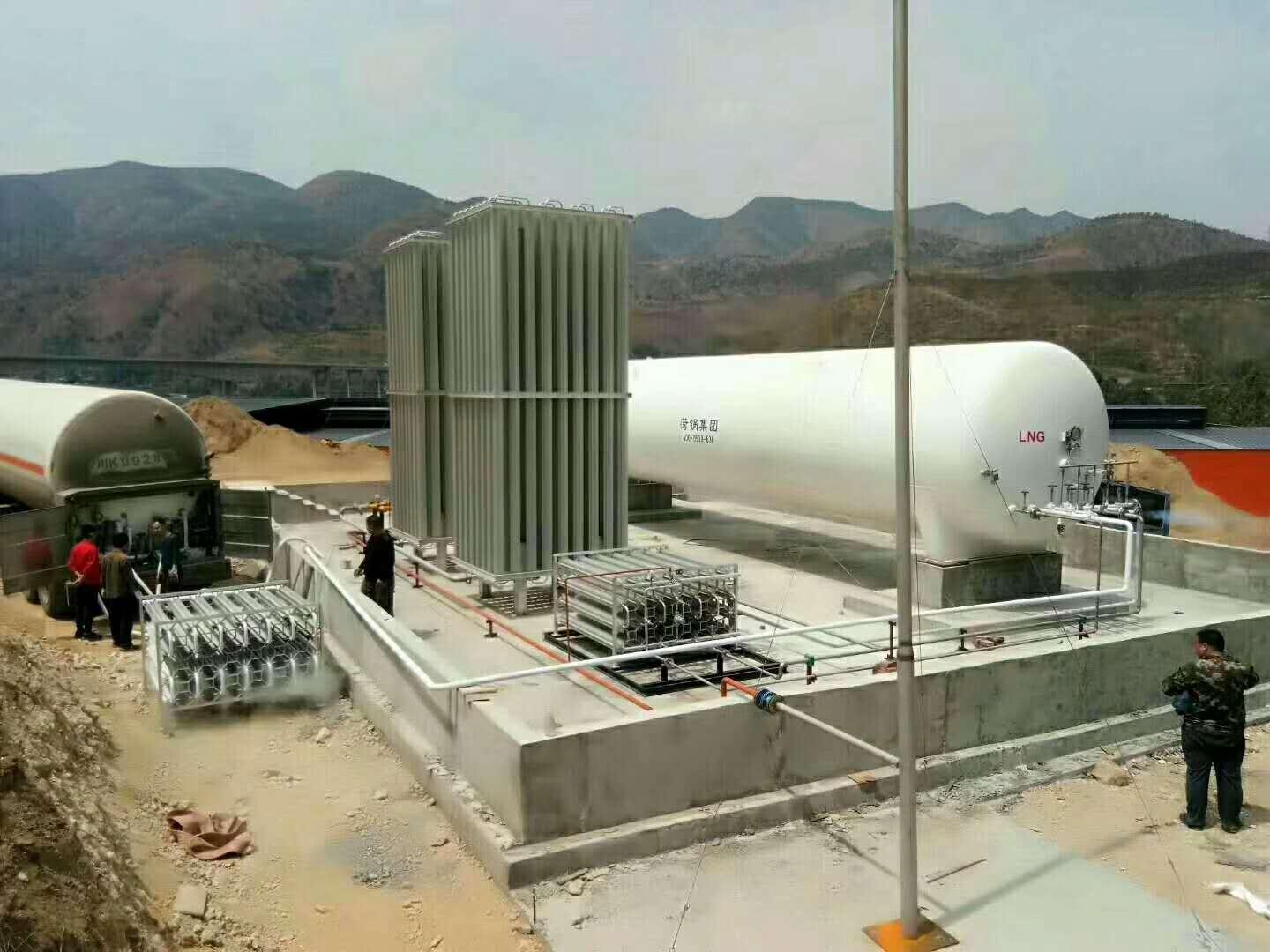
Heze LNG Storage Tank, Low Temperature Oxygen Nitrogen Argon Carbon Dioxide Storage Tank, 60 Cubic Meters LNG Storage Tank
Product Description
Brand Huoguo Group Model CFW-30/0.8
Material: Stainless Steel, Diameter: 2916mm
Application Range -162℃ Volume 30000L
Heat Exchange Area - See drawing in sq. m, Ambient Temperature - See drawing in °C
Wall Thickness: 8/10mm, Outer Dimensions: 2916*8289mm
Origin: Shandong Heze
Horizontal LNG Storage Tank 30 Cubic LNG Storage Tank 60 Cubic LNG Storage Tank 100 Cubic Natural Gas Storage Tank

Double-walled low-temperature LNG storage tanks, with the inner shell storing low-temperature natural gas liquid, withstands the pressure and low temperatures of the medium. The material of the inner shell is SS30408. The outer shell serves as a protective layer for the inner shell, maintaining a certain gap to form an insulating space. It bears the gravitational loads of the inner shell and the medium, as well as the vacuum negative pressure of the insulating layer. The outer shell does not come into contact with low temperatures and is made of container steel. The insulating layer is mostly filled with pumice sand, and high vacuum is drawn. The evaporation rate of low-temperature LNG storage tanks is generally below 0.2%.

Low-Temperature LNG Storage Tank Structural Design
1.1 Liquid Filling System
The filling is divided into top filling and bottom filling, with a quick connector CN-1 and a four-way connector connecting to the top filling valve V3 and the bottom filling valve V2, respectively, with pipes and transition connectors leading to the inner cylinder.
Tubes are selected in φ28×2 and φ45×3.5 sizes.
1.2 Drainage System
The valve V6 can directly drain fluid, connected from the bottom of the cylinder; pipes are selected in φ45×3.5. V6 is chosen with 32gDA25C, with specifications of DN40 PN4.0.
1.3 Vacuum Measurement System
VR vacuum silicon tube, used for measuring the vacuum degree of the tank's insulation layer, connected to the evacuation pipe of the insulation layer. The insulation layer should be re-evacuated when the vacuum degree of the vacuum layer exceeds 3Pa, to ensure the vacuum degree of the insulation layer and enhance the insulation effect.
1.4 Vacuum Insulation Panel System
VV vacuum vent, select CF-40 with DN 40, used for vacuum extraction. Close the VV when the vacuum level reaches the required standard, maintaining the vacuum level of the annular space.
1.5 Level Measurement System
Extracted from the upper and lower sections of the cylinder by two pipelines, the top section is a vapor phase, and the bottom section is a liquid phase, connected together by the level gauge valve. L1 Level Gauge Valve PS×Z-1, the vapor line is connected to a pressure gauge valve and a pressure gauge, with a level measurement range of 0 to 6 meters of water column.
1.6 Full Mouth Measurement
Install the piping according to the set liquid level. When the liquid level reaches the set value, it flows downward through the pipe to the level gauge MV. As the liquid fills, this valve opens until liquid starts to flow, indicating the tank is full. Close the valve. Use a 32gDA10C valve, specification: DN20 PN4.0.
1.7 Self-pressurizing System
The pressure boost valve V1 is connected to the supercharger PBC-1, which uses the CFB03-00. It vaporizes a portion of the liquid flowing down from the tank and introduces it into the inner tank, raising the pressure inside. The liquid is then expelled under pressure.
1.8 Gas Venting System
When the pressure at the top of the container increases, gas is expelled through the pipeline and passes through vent valve E1, then to a check valve CV. Since gas can only flow outward, a check valve is used to prevent backflow. Therefore, a flame arrester is connected after the check valve, as gas release and air contact may cause sparks. The flame arrester is designed to prevent sparks from entering the inner tank with the gas, which could ignite a flame and cause an explosion.

Horizontal LNG Storage Tank 30 Cubic LNG Storage Tank 60 Cubic LNG Storage Tank 100 Cubic Natural Gas Storage Tank


