


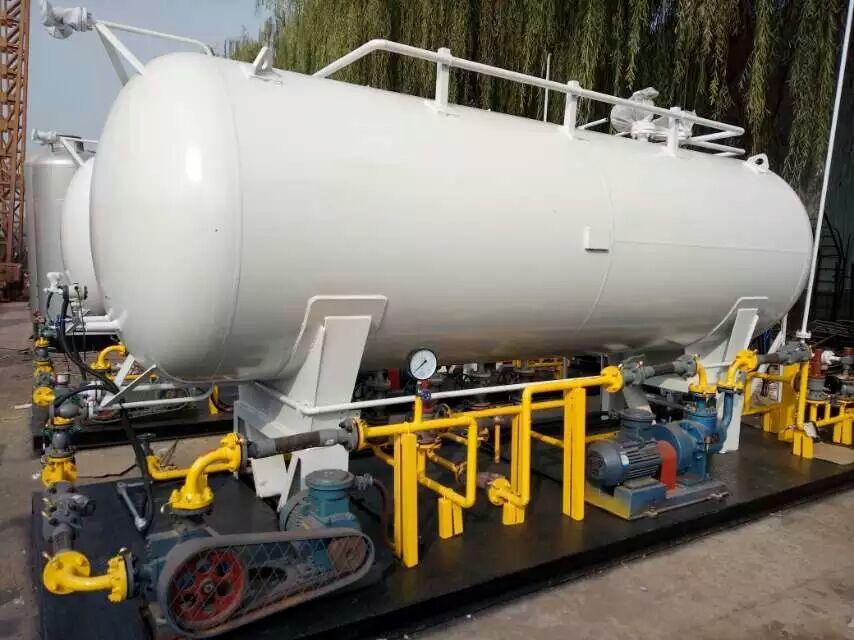
Liquefied gas storage tanks are widely used, and the placement of these containers is crucial. When installing such tanks, many aspects need to be considered. Failure to securely place these chemical storage containers can pose significant risks, leading to chemical leaks and severe corrosion of the tanks, resulting in various issues. When placing containers for storing chemical substances, users must pay attention to the following:
1. Ensure safe placement without affecting nearby residents and businesses. The location for placing liquefied gas storage tanks must be carefully selected, undergo risk and quantitative analysis. When placing tanks for storing chemical items, it's crucial not to cause severe impact on nearby residents or businesses, nor disrupt their daily lives. The placement of the tanks must maintain a certain distance from residential areas to ensure they are out of the affected zone before proceeding with the tank placement. 2. Meet meteorological and geological conditions. The placement of liquefied gas storage tanks must comply with local meteorological and geological requirements, including safety during thunderstorm seasons and considering if the area is prone to severe earthquake disasters. Safety must be the top priority when storing chemical items. Given the decreasing land resources, using underground storage for chemical items is a great choice. It not only saves land resources but also avoids environmental pollution, offering numerous advantages.

Liquefied gas tanks are highly dangerous in the event of a leak. In any正规 industrial facility, comprehensive safety operation standards and management systems for tank use should be established. 1. In case of a minor leak, the transporter should immediately close all pipeline valves on the tank and shut down the operation of surrounding equipment. Quickly evacuate personnel from the leak-polluted area to upwind locations (due to the liquefied gas, it's easy to float in the air) and implement safety isolation. Cut off all ignition sources and, as safely as possible, prevent the spread of the leak source. 2. In the event of a large leak, in addition to the initial emergency response, an immediate report should be made to local government, "119," and local environmental protection and public security traffic police departments. The report should include: the unit involved, time and location of the incident, chemical name and amount of leakage, level of danger, any injuries or casualties, and the name and phone number of the person reporting. Opening a liquefied gas tank for inspection is a major operation for any gas station. Given the characteristics of inspecting three tanks simultaneously and halting the entire station's normal production and operation, the preliminary preparations are particularly crucial.


