Safety Precautions for the Use of lng Liquefied Natural Gas Filling Station Storage Tanks:
1. Tanks with dual root valves, and the valves near the tank's edges, should remain open.
2. During unloading, it is recommended that the tank's maximum filling capacity not exceed 90% of its effective volume (manufacturers specify between 85%-95% of the geometric volume), with the remaining capacity not to be less than 10%.
3. High pressure in an LNG tank doesn't necessarily indicate a problem with the tank itself. Consider the entire system's heat loss and liquid storage time. Generally, when pressure exceeds 1.1 MPa, a pressure release is required. Long-term high-pressure conditions can affect the lifespan of the tank's vacuum insulation.
4. If there is a significant and prolonged "sweating" or frosting on the tank, along with a rapid and continuous increase in pressure, consider the vacuum failure. Immediate action is required, including manual pressure relief and transferring the LNG liquid inside the tank.
5. Suggest conducting vacuum tests on the storage tank annually. For hot tanks, a vacuum level less than 1Pa is acceptable. For cold tanks, a vacuum level less than 0.5Pa (0.00375 TOF) is considered合格.
6. Tanks cannot be transported with liquid. When unused for a long period, the LNG liquid inside the tank should be drained.
7. Storage tanks are pressure vessels. According to the "Technical Supervision Regulations for Pressure Vessel Safety" implemented and promulgated by the People's Republic of China, installation, maintenance, and modification of pressure vessels require units with corresponding qualifications to notify the local quality supervision department. A permit must be obtained before installation, maintenance, or modification can be carried out.
LNG Storage Tanks
LNG Tanks, Manufacturer of LNG Tanks, Producer of LNG Tanks

30, 60, 100 cubic meter LNG storage tanks
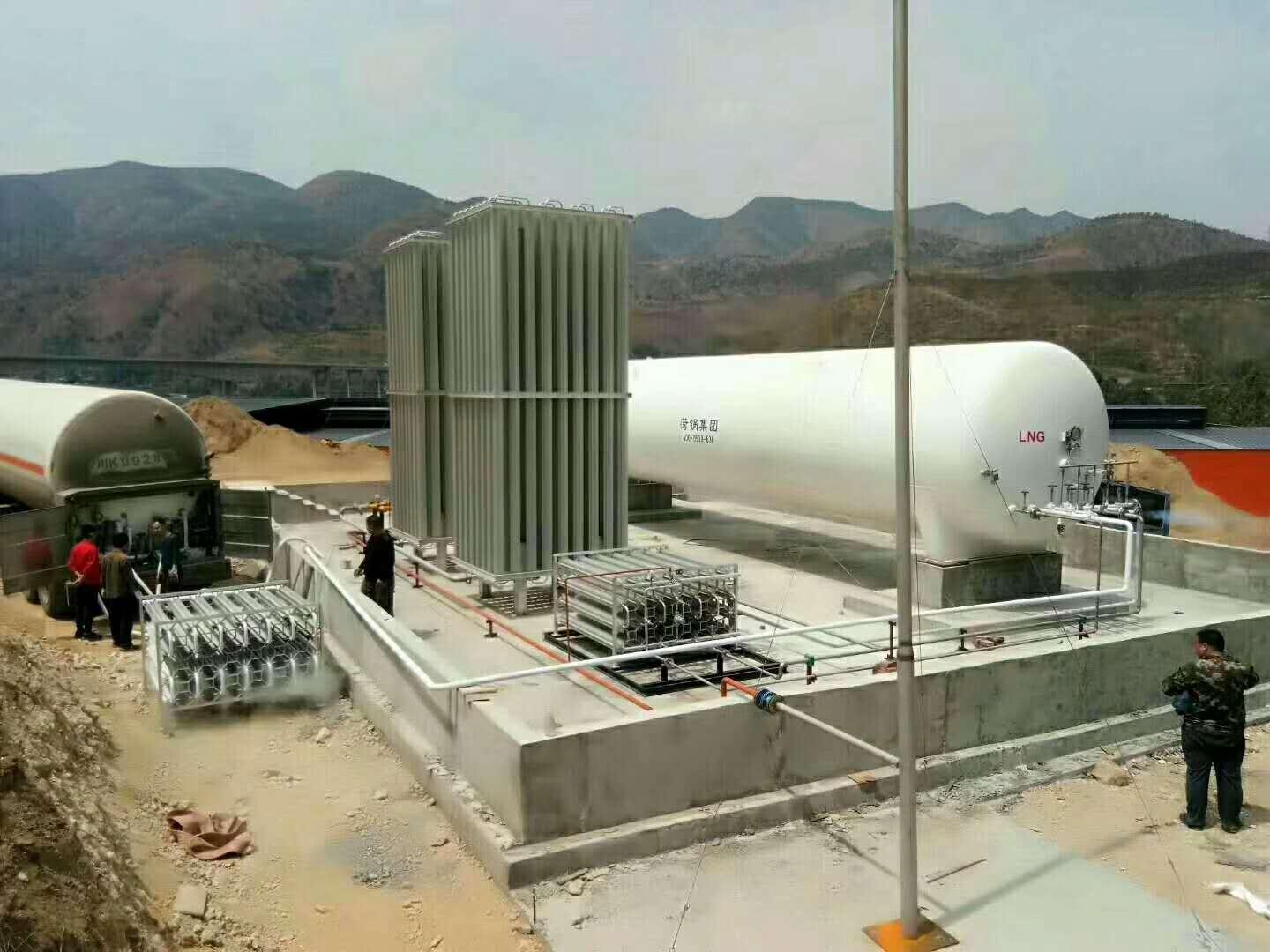
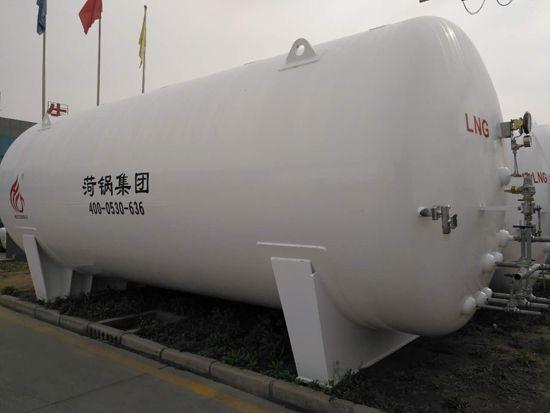
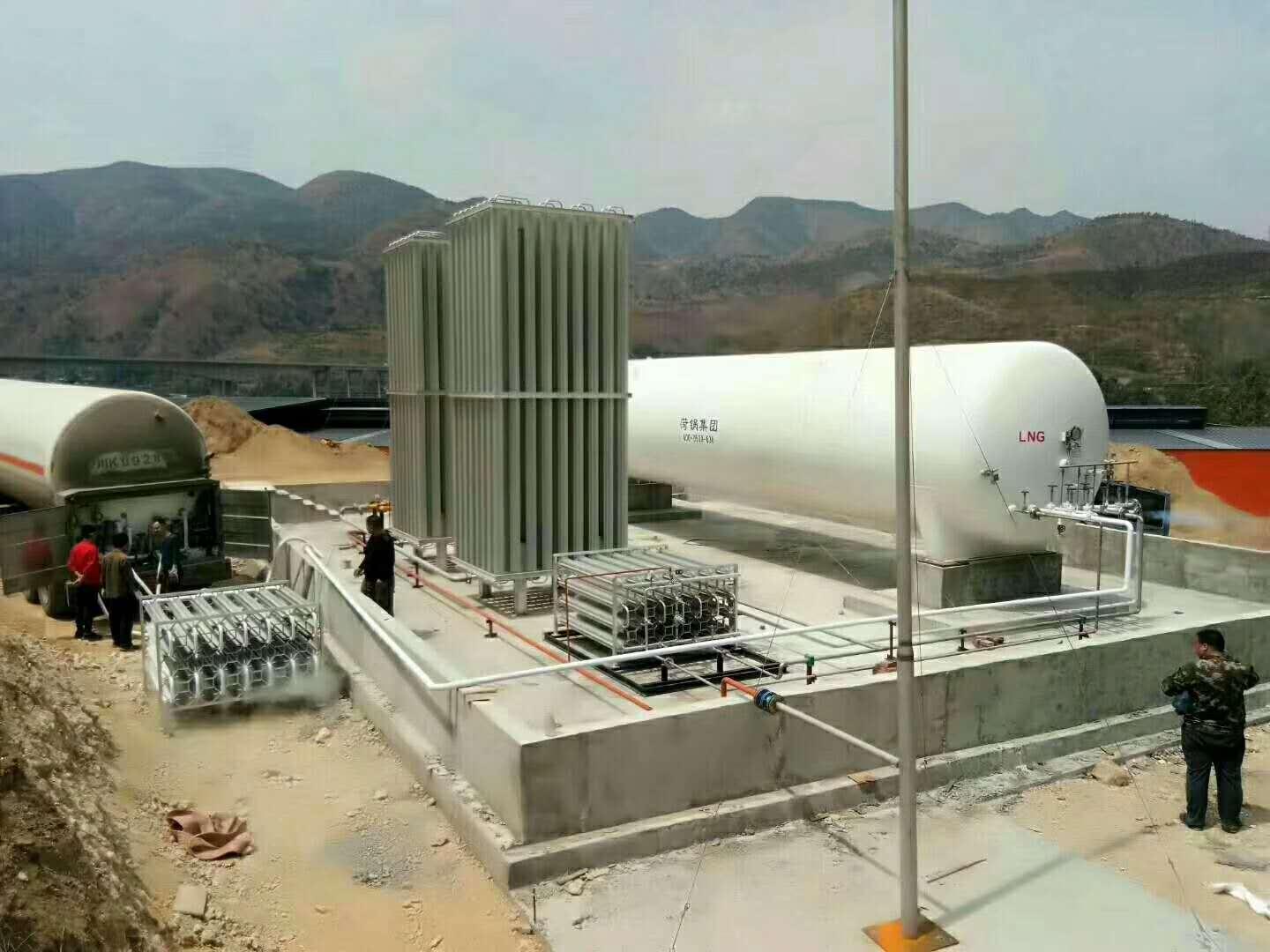
30, 60, and 100 cubic meter LNG tanks are commonly used in our production. It's believed that this new type of LNG tank will be quickly embraced by a wide range of users. Compared to standard tanks, LNG tanks offer enhanced safety. These tanks are categorized by size: small LNG tanks, ranging from 5 to 30 cubic meters, are often used in residential gas vaporization units and LNG vehicle refueling stations; medium-sized LNG tanks, ranging from 30 to 150 cubic meters, are frequently employed in satellite-type liquefaction units and are the ideal choice for replacing conventional tanks.
The storage system for LNG tanks consists of low-temperature storage tanks, affiliated pipelines, and control instruments, yet it is also categorized under low-temperature storage tanks.
2. All lng storage tank pipelines are made of austenitic stainless steel tubes. Austenitic stainless steel tubes offer excellent low-temperature properties.
3. The storage tanks can also be categorized by their placement, including vertical (lng) tanks. These tanks utilize vacuum powder insulation technology for their thermal insulation, with the inner tank and piping materials made of Austenitic S30408 stainless steel, and the outer shell made from high-quality carbon steel Q345R pressure vessel steel plate. Such lng tanks are not only long-lasting but also extremely safe to use, having gained widespread recognition.
30, 60, and 100 cubic meter LNG storage tanks, LNG gasification station, and CNG refueling station process and equipment selection