


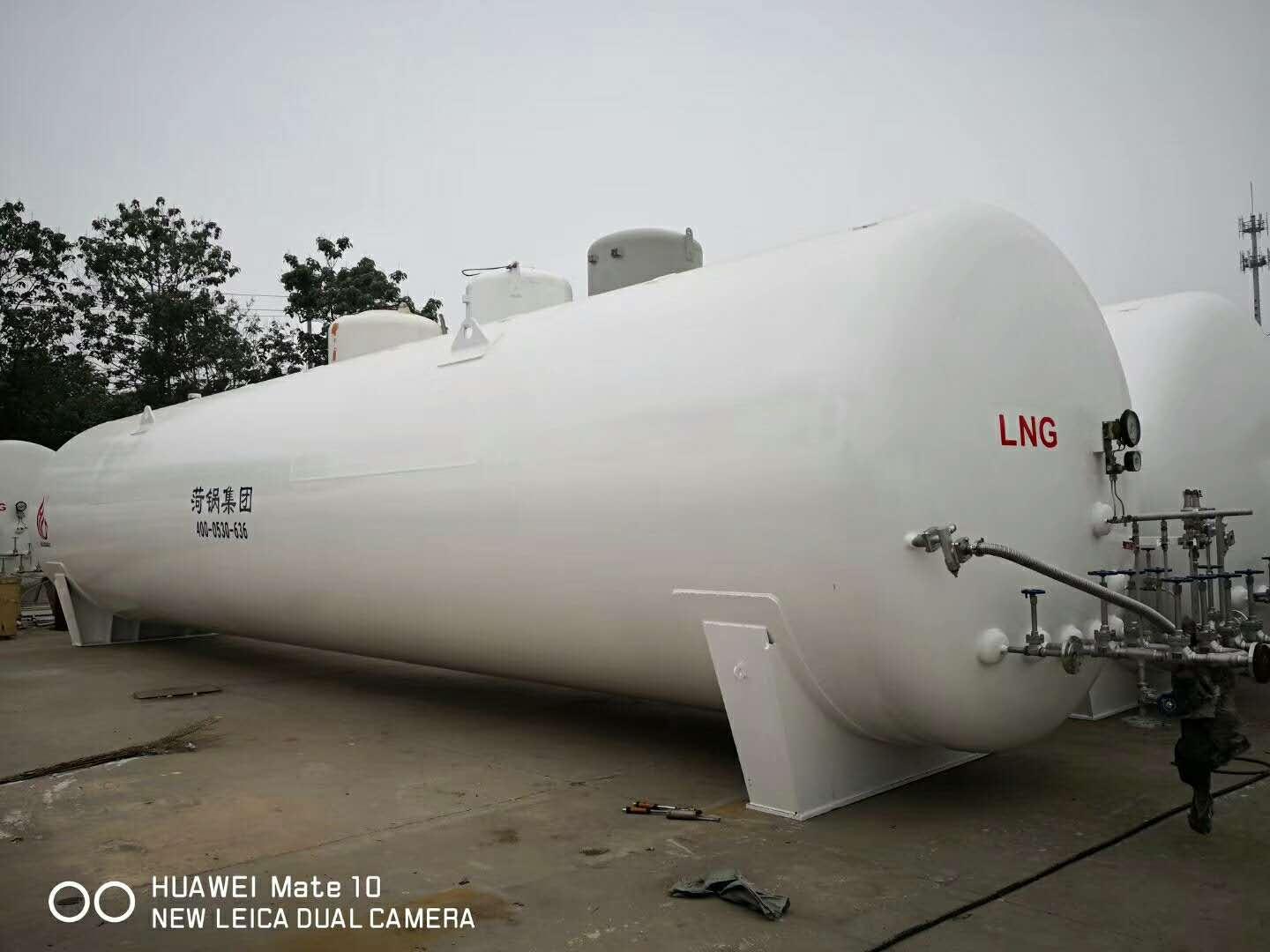
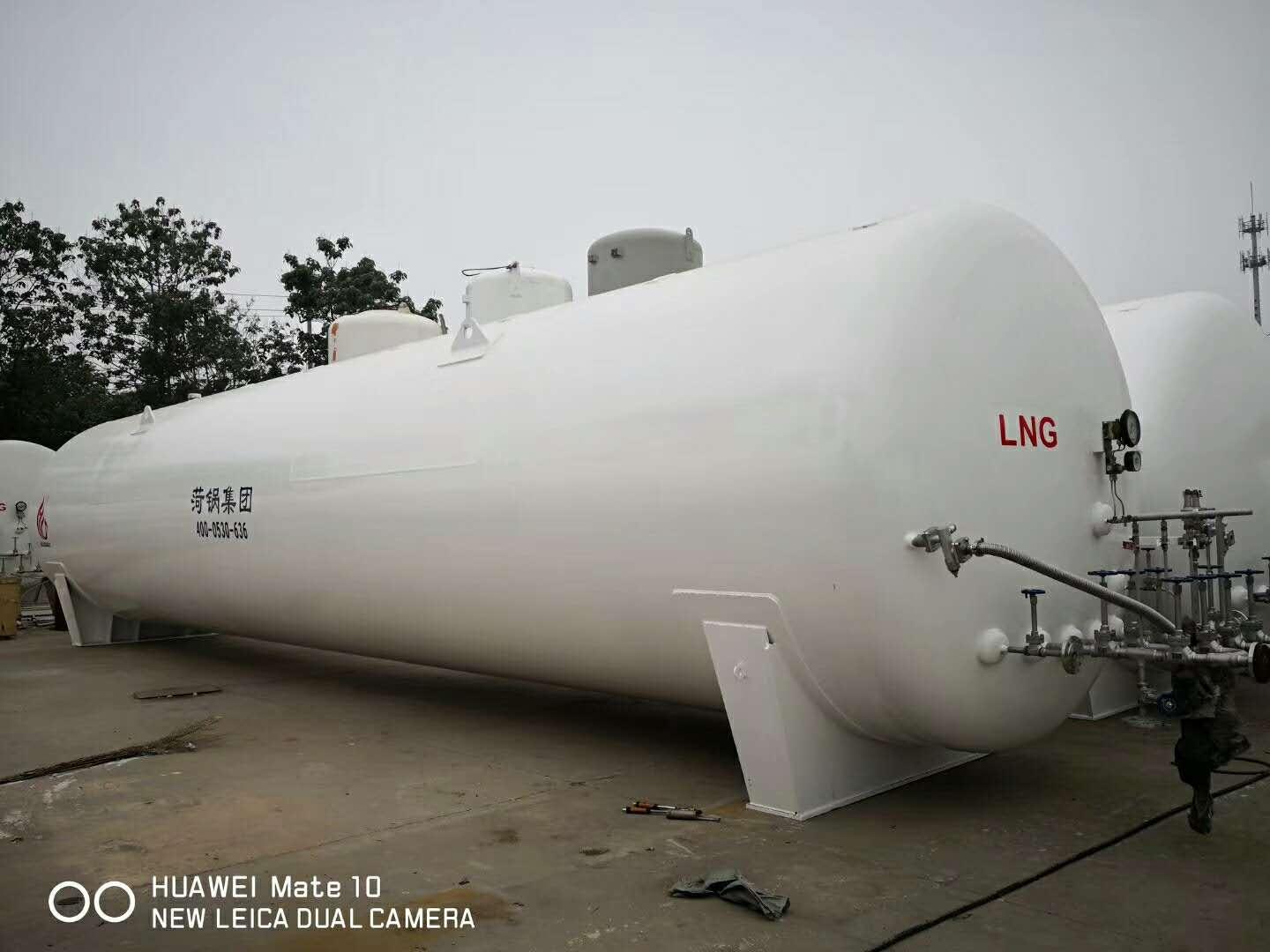
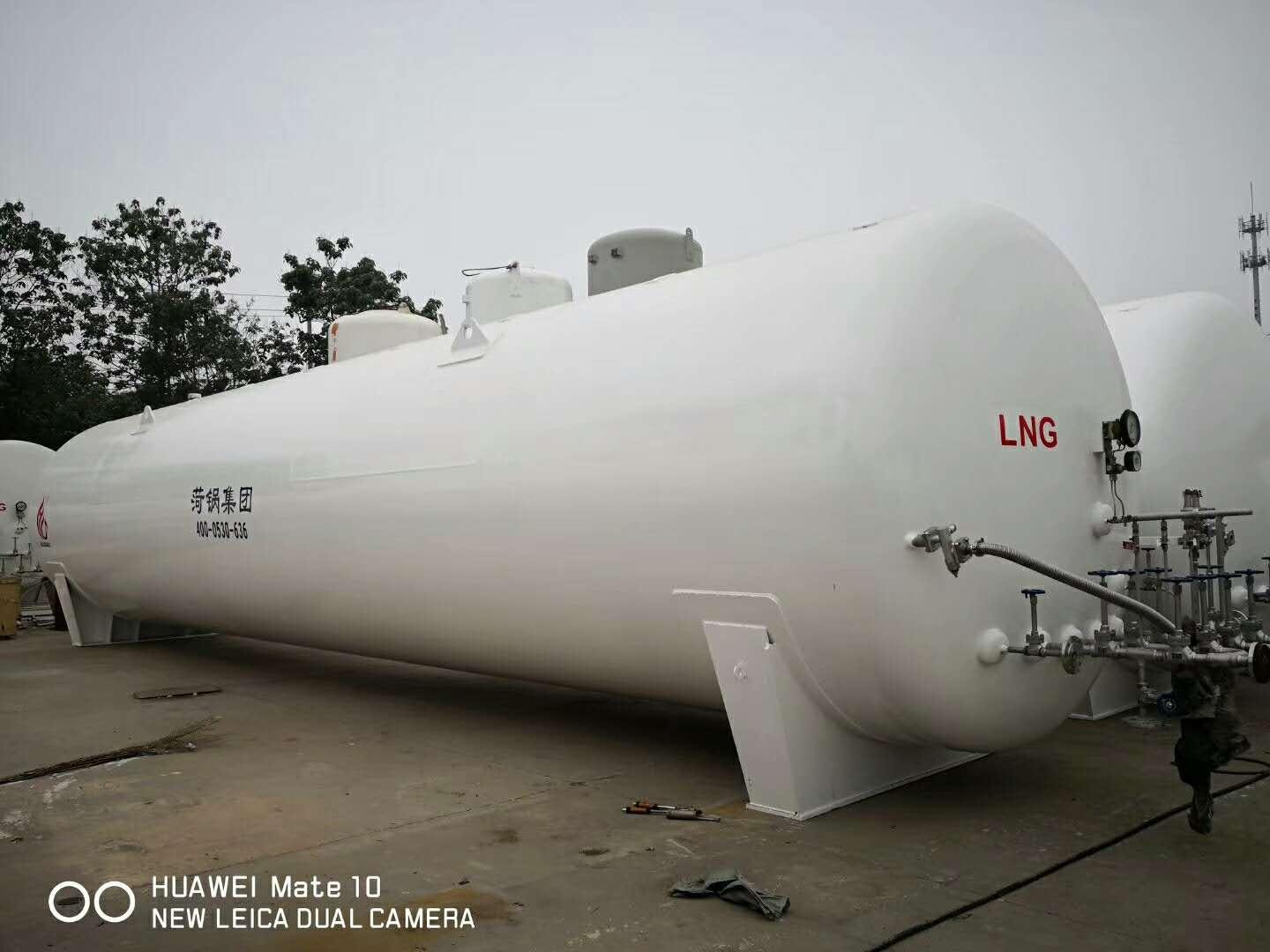
The diaphragm liquefied gas storage tank is primarily composed of an electric motor, base, crankcase, crank and connecting rod mechanism, cylinder components, oil and gas pipelines, electrical control system, and some accessories. It achieves increased gas pressure through single or multi-stage compression to meet customers' requirements for process parameters such as pressure, flow rate, and temperature. The motor drives the crank, connecting rod, and piston to propel hydraulic oil, which in turn drives the diaphragm. The diaphragm compressor is a special volume liquefied gas storage tank, with its working cylinder divided into two parts by a diaphragm. The upper part of the diaphragm is called the gas chamber, and the lower part is called the oil chamber. During operation, the piston moves upwards to drive the hydraulic oil, which then drives the diaphragm to expel the compressed medium outside the diaphragm cavity. The diaphragm liquefied gas storage tank compresses the gas by deforming the diaphragm. As the diaphragm moves, it must tightly fit the cylinder head diaphragm cavity surface and have a smaller gap with the cylinder body diaphragm cavity surface. Through theoretical analysis and scientific selection of the diaphragm cavity curve radius, maximum deflection, and deflection index, a larger volume is ensured, allowing the diaphragm to work under approximately equal strength.
Liquefied gas storage tanks offer the following advantages and features:
1) The overall structural design is rational, ensuring smooth and reliable operation with minimal vibration and low noise, and easy operation and maintenance. 2) The cylinder components adopt a structure without oil distribution disks, reducing assembly difficulty and the number of sealing surfaces; alarms are triggered upon compression medium leakage, enhancing the overall reliability. 3) The new diaphragm cavity curve improves the volumetric efficiency of the liquefied gas storage tank and extends the lifespan of vulnerable components like diaphragms and gas valves. 4) The built-in oil pump station supplies a stable, clean, and well-cooled lubricant for the liquefied gas storage tank and the cylinder, addressing the issue of oil leakage in the original external storage tank. 5) A highly automated control system ensures the safe operation of the equipment. 6) The entire unit is mounted on a skid base for easy transportation, installation, and management.

4.1 Design Unit Selection: The selection of a design unit for the liquefied petroleum gas storage tank system engineering shall be responsible by the project organization department of each provincial (city, district) company. It should be chosen from the shortlisted design institutes, and the supervisor's signature of approval is required. The design unit should be qualified with petrochemical engineering design资质 and industrial pipeline (GC2) design资质. 4.2 Site Survey: 4.2.1 The site survey should be conducted by the project organization department of each provincial (city, district) company, organizing personnel from the construction, pipeline installation, quality safety departments of the branch company where the gas station is located, as well as from the design institute, etc. 4.2.2 For the research and survey of the gas station, it should be understood the existing internal underground pipeline routes and cable laying depth. For stations that cannot provide on-site pipeline data, pipeline detection technology should be used to determine the existing process, electrical, and water supply and drainage pipelines. 4.2.3 The construction department of the branch company where the gas station is located should propose suggestions for the scope of renovation, renovation methods [unloading vapor recovery system, refueling vapor recovery system (dispersed, centralized), and oil and gas emission treatment facilities], and related equipment and facility renovations, based on the principle of economy and practicality and relevant local government requirements. After approval by the supervisor and the project organization department of the provincial (city, district) company, the design unit will base the design on these suggestions. 4.3 Design Proposal: 4.3.1 The design proposal submitted by the design institute should include technical documents such as general layout, oil vapor recovery process diagram, and main equipment and material list. 4.3.2 The design proposal should be reported to the project organization department of the provincial (city, district) company, which will organize the pipeline installation, quality safety departments, construction personnel of the branch company where the gas station is located, and the design institute for proposal review, and then report for the supervisor's approval. 4.4 Construction Drawing Design: 4.4.1 Equipment selection: The project organization department of each provincial (city, district) company will provide a list of pre-qualified suppliers for vapor recovery equipment. The design institute will select the relevant equipment based on this list. The equipment selection should follow the principles of safety and reliability, technical advancement, economic practicality, and compliance with emission standards, and use products that are easy to install, convenient, and have minimal on-site modification. 4.4.1.2 It is advisable to choose equipment from the same manufacturer in the same area for ease of after-sales service. 4.4.1.2 Gas stations with an annual gasoline sales volume of over 3,000 tons and more than 10 gasoline guns should use a centralized refueling vapor recovery system; others should use a dispersed refueling vapor recovery system. 4.4.1.3 Different types of vapor recovery technology and equipment should be selected based on the internal space of the fuel dispenser. For example, a secondary recovery dispersed vacuum pump should use a smaller power, which can be driven by the existing power supply of the fuel dispenser, and it is not advisable to lay additional power cables. 4.4.1.4 The oil and gas emission treatment facilities should be selected based on the surrounding environment, site size, and business volume of the gas station. The maximum oil and gas treatment capacity of the emission treatment facilities should be 10% to 20% of the maximum fuel volume. 4.4.2 Construction Drawing Design: 4.4.2.1 The design institute will carry out construction drawing design based on the approved design proposal. 4.4.2.2 The liquefied petroleum gas storage tank pipeline should use seamless steel pipes that comply with the current national standard "Seamless Steel Pipes for Fluid Transportation" GB/T8163. The design pressure of the oil product pipeline should not be less than 0.6 MPa, and the design pressure of the oil vapor recovery pipeline should not be less than 0.13 MPa. It is not advisable to use thermoplastic plastic pipelines or other flexible material pipelines.


