


LNG vehicle refueling station main equipment
LNG Tank
Internal灌装Design Pressure
External irrigation working temperature
Ambient Temperature
External irrigation design pressure
-0.1MPa
Effective Volume
Internal灌 pressure
0.45~0.8MPa
Filling Rate
90%
External irrigation working pressure
-0.1MPa
Evaporation Rate
Internal灌 design temperature
-196℃
Internal filling material
External irrigation design temperature
-19~50℃
External灌Material
Internal filling working temperature
-146℃
2. Low-temperature pump
Operating Temperature
-146℃
Design Head
220m
Design Temperature
-196℃
Maximum Head
255m
Design Flow
L/min
Required Net Positive Suction Head (NPSH)
0.7~3.0m
2. Truck Unloading Turbocharger, Storage Tank Turbocharger
Individual processing capacity
M3/h
Highest Working Pressure
0.8MPa
Import Temperature
-162℃
Design Pressure
1.6MPa
Export Temperature
-146℃
Design Temperature
-196℃
3. Gas Generator
Minimum Nozzle Pressure
0.41 MPa
Operating Temperature
-146℃
Traffic
0.15 cubic meters/minute
Measurement Accuracy
+0.5~-0.5%
Hose configuration
Single Tube

Product Description
Brand Hoegh Group Model CFW-30/0.8
Material: Stainless Steel, Diameter: 2916mm
Application Range: -162℃; Volume: 30,000L
Heat Exchange Area - See drawing m², Ambient Temperature - See drawing °C
Wall Thickness: 8/10mm, Outer Dimensions: 2916*8289mm
Origin: Shandong, Heze

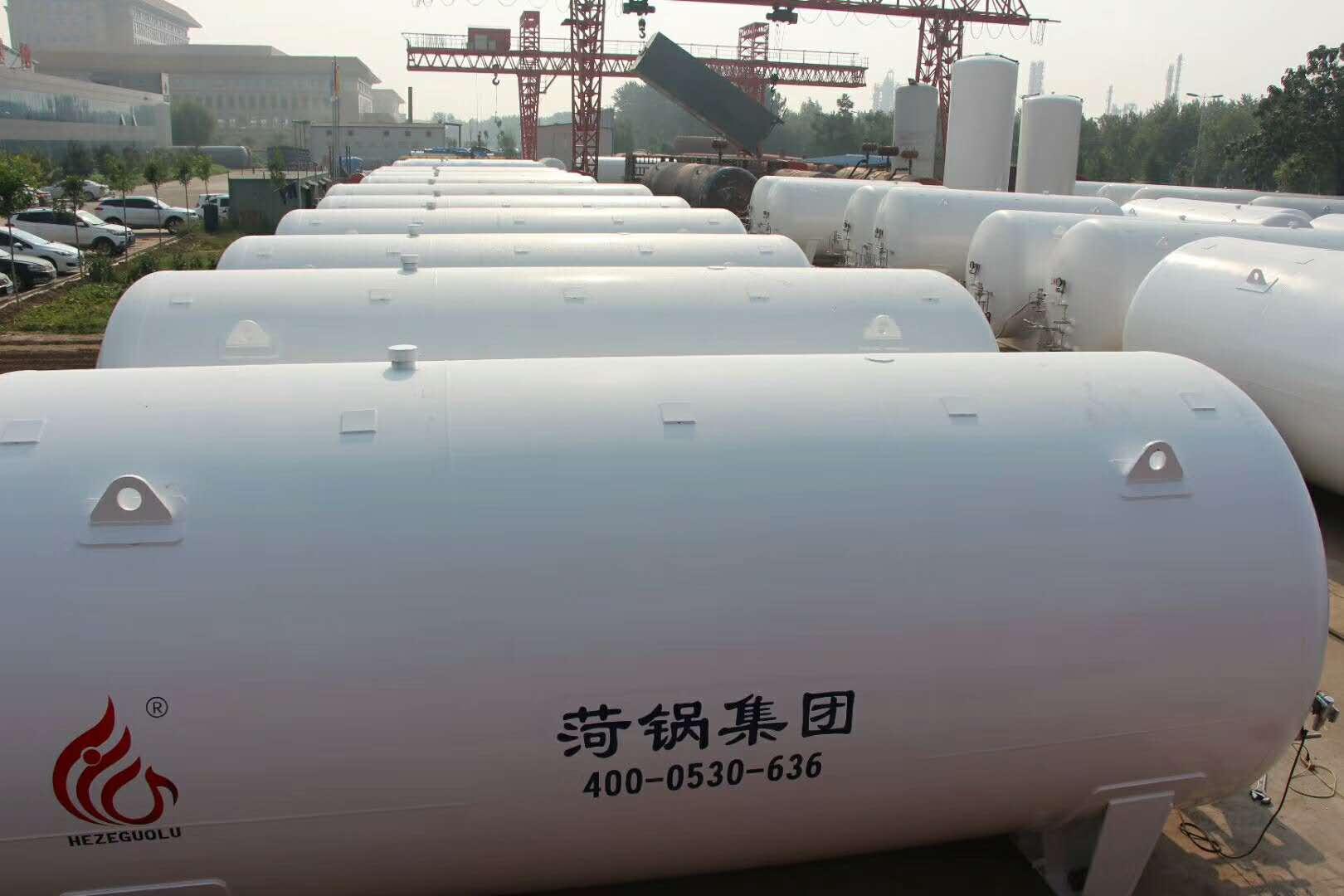
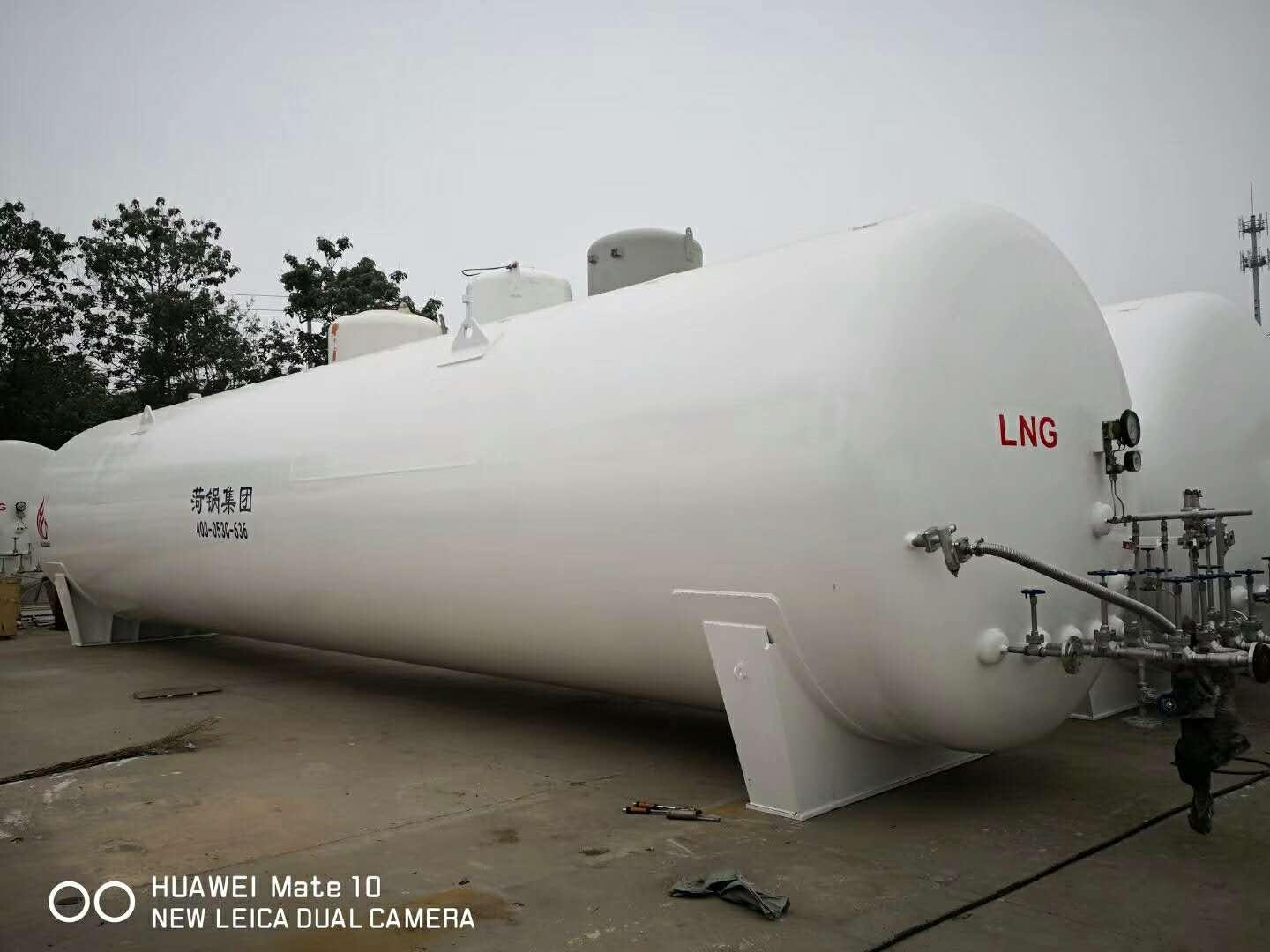
30立方立式lng储罐 卧式LNG储罐 低温天然气储罐厂家
The low-temperature storage tank is a double-layered structure. The inner shell stores low-temperature liquids, withstands the pressure and low temperatures of the medium, and is made of low-temperature-resistant alloy steel (0Cr18Ni9). The outer shell acts as a protective layer for the inner shell, maintaining a certain distance to form an insulating space. It bears the gravitational loads of the inner shell and the medium, as well as the vacuum negative pressure of the insulating layer. The outer shell does not come into contact with the low temperature and is made of container steel. The insulating layer is mostly filled with mica sand, and a high vacuum is drawn. The evaporation rate of the low-temperature storage tank is generally less than 0.2%.
LNG tanks are categorized by capacity
(1) Small (5-50 m3): Commonly used for civil LNG vehicle refueling stations and civil gas liquefaction stations. (2) Medium (50-100 m3): Often utilized in industrial gas liquefaction stations. (3) Large (100-1000 m3): Suitable for small-scale LNG production facilities.
(4) Large (10,000-40,000 m³): Used for base load and peak-shaving type liquefaction plants. (5) Extra-large (40,000-200,000 m³): Used for LNG receiving stations.
LNG tanks classified by shape
Spherical: Generally used for medium and small capacity storage tanks. (2) Cylindrical: Used in storage tanks of various capacities. LNG storage tanks are categorized by their placement: (1) Above ground: Located on the ground. (2) Underground: Located beneath the ground.
Determination of Design Pressure and Calculated Pressure
Currently, the majority of 100m3 vertical LNG storage tanks have a maximum working pressure of 0.8MPa. According to the provisions of GB150 "Steel Pressure Vessels," when the maximum working pressure of the storage tank is 0.8MPa, the design pressure can be taken as 0.84MPa. The filling factor of the tank is 0.95, and the net pressure of the liquid column after filling the inner tank with LNG is 0.062MPa. The absolute pressure between the inner and outer tanks is 5Pa, so the calculated pressure of the inner tank is 1.01MPa.
The primary function of the outer tank is to securely fix the inner tank and insulating material in a suspended or supported manner, while also forming a high-vacuum insulating layer with the inner tank. The loads acting on the outer tank are mainly the gravitational loads from the inner tank and the medium, as well as the vacuum negative pressure of the insulating layer. Therefore, the outer tank is an external pressure vessel, with a design pressure of -0.1 MPa.
Material selection for LNG tanks
During normal operation, the working temperature of the LNG storage tank is -162.3°C. Prior to the first use, the tank must be pre-cooled using liquid nitrogen at -196°C, making the design temperature of the tank -196°C. The inner tank must withstand both the working pressure of the medium and the low temperature of LNG, necessitating that the inner tank material possesses excellent comprehensive mechanical properties at low temperatures, particularly good low-temperature toughness. Therefore, the inner tank material is selected as SS30408. Based on the calculated pressure of the inner tank and the selected material, the calculated thickness and design thickness are 11.1mm and 12.0mm, respectively. As a normal temperature external pressure vessel, the outer tank material is chosen as low-alloy container steel 16MnR, with a design thickness of 10.0mm.
LNG Tank Receiver Design
Tapped openings on the inner tank include: inlet liquid port, outlet liquid port, liquid outlet port, vapor phase port, level gauge port, upper level gauge port, lower level gauge port, and 8 process manholes. The material for the tapped openings on the inner tank is all OCrl8Ni9.
For easy regular measurement of vacuum and evacuation, a vacuum evacuation port is provided on the bottom sealed cap of the outer shell (the port is sealed after evacuation). To prevent vacuum failure and the leakage of the inner tank medium into the outer shell, a blast-proof device is set on the sealed cap of the outer shell.
30立方立式lng储罐 卧式LNG储罐 低温天然气储罐厂家


