


China National Petroleum Corporation's Policy Research Office Deputy Director Wang Zhen also pointed out in an earlier article that there is no separate pricing category for storage cost in our current pricing system. Gas storage facilities are facing issues such as blocked investment return channels and a lack of market trading mechanisms. The cost compensation and benefit assessment mechanisms are both very unclear, which has seriously hindered the commercial operation and development of gas storage facilities.
Han Xiaoping openly pointed out that the slow progress in the construction of gas storage facilities highlights the issue of inadequate implementation efficiency in the reform of the oil and gas system. After multiple failures to meet commitments, in May of this year, our country issued "Some Opinions on Deepening the Reform of the Oil and Gas System," which has become the most comprehensive and three-dimensional guiding document since the new round of oil and gas reform was proposed in 2014. However, experts also note that the essence of the oil and gas reform is to liberalize market access and pricing in the upstream, midstream, and downstream sectors of the oil and gas industry, dismantle barriers that favor state-owned enterprises and regulate private capital, and allow more capital to enter the oil and gas sector. But currently, the oil and gas sector in our country is largely monopolized by state-owned enterprises. It may take a relatively long process for state-owned enterprises to share profits with private enterprises.

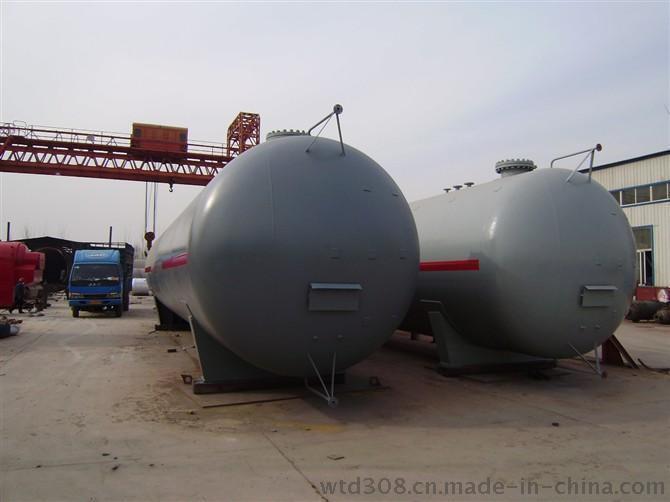
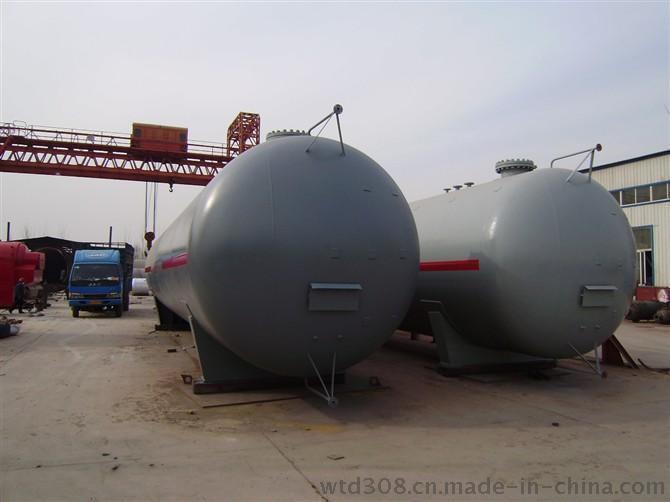
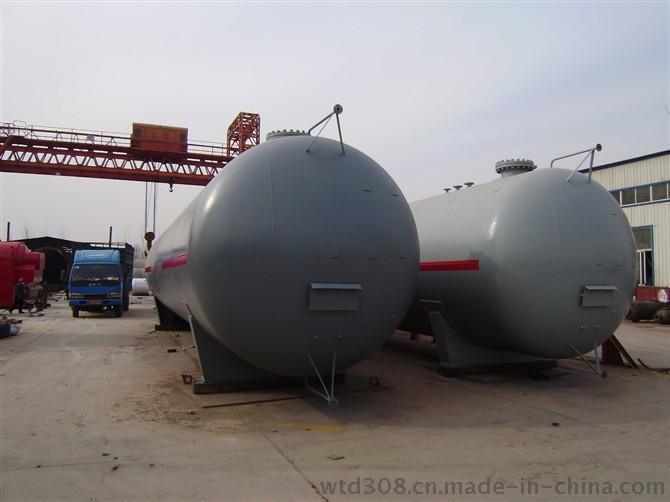
LiquefiedNatural Gas Storage TankIt is a professional product for storing liquefied natural gas, a special equipment, a Category III pressure vessel, made of 06Ni9DR material. It has undergone non-destructive testing, hydraulic and pneumatic tests, on-site inspection by the Technical Supervision Bureau, and a pressure vessel inspection certificate has been issued. It is completed with processes such as external rust removal and painting. The liquefied gas tank has strict quality assessment for the material, appearance dimensions, welding quality, operational quality, installation quality, internal equipment, and safety accessories of the pressure components.
Routine physical and chemical tests for the drum material, such as mechanical properties and chemical composition.
The welding joints, seams, head of the tank, and the geometric positions of all pressure elements are strictly inspected through X-ray non-destructive testing and magnetic particle inspection. Tests are conducted for the product's sealability, pressure resistance, and all technical indicators that could affect the safe operation of the product.
Common structures of LNG tanks include: vertical LNG tanks, horizontal LNG tanks, vertical mother-child tanks, and atmospheric storage tanks.
Vertical LNG Storage Tank
Volume options include 50 cubic, 100 cubic, 150 cubic, and 200 cubic.
Horizontal LNG Storage Tank
Volume options: 60 cubic, 100 cubic.
Vertical mother-child tanks
Sub-Containers refer to an internal container composed of multiple sub-containers connected in parallel to meet large storage capacity requirements. These sub-containers are assembled side by side within a large outer container. The number of sub-containers typically ranges from 3 to 7, usually not exceeding 12. The volume of a single sub-container should not be too large, usually between 100 to 150 cubic meters, with the maximum reaching 250 cubic meters. Common sizes include 1000 cubic meters, 1750 cubic meters, and 2000 cubic meters.
Atmospheric Storage Tank:
We offer medium to large-sized atmospheric LNG tanks and extra-large atmospheric LNG storage tanks.


