


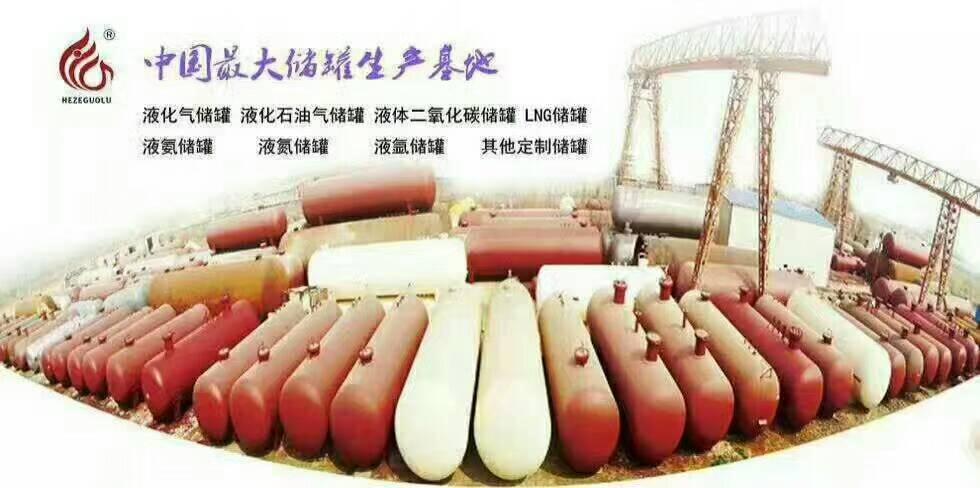
Low-temperature storage tank structure:
A low-temperature storage tank is a compact storage unit equipped with various accessories (valves, safety systems, etc.) for storing low-temperature liquids. The tank consists of a carbon steel vacuum shell and a pressure vessel placed within it. It can operate under low to medium pressure as per actual design requirements. Explosion-proof plates and double-acting safety valves can protect the tank in case of overpressure. The safety relief device is designed to protect the internal pressure vessel and vacuum shell, and its use and type are governed by GB150 and the "Fixed Container Regulations." This includes a double-acting safety relief valve and explosion-proof plate assembly for protecting the internal pressure vessel, as well as an explosion-proof cover for protecting the vacuum shell (shell). The tank is designed and manufactured for safety, reliable operation, and durability (can operate without fault for many years). Strict adherence to proper safety and operational regulations is required when operating the tank.
High safety requirements. As the tank stores low-temperature liquids, in the event of an accident, the refrigerated liquid would volatilize in large quantities, with the vaporization amount being approximately 300 times that of the refrigerated state. This would form an automatically detonating gas cloud in the atmosphere. Therefore, specifications such as API and BS require tanks to be constructed with double-walled structures and employ sealing concepts. In the event of a leak in the first layer, the second layer can completely seal off the leaked liquid and evaporated gas, ensuring storage safety.

Cautionary Notes
1. Cylinders must be stored in well-ventilated areas, with a minimum distance of 1.5 meters from any fire or heat source. Cylinders are strictly prohibited from being heated with fire, scalded with boiling water, or left exposed to direct sunlight. Regular inspections of cylinder valves and pipeline joints for air tightness are required to ensure no leaks. Leaks can be checked using soap water, and it is strictly forbidden to test for leaks with an open flame.
2. When lighting the flame, ignite the ignition material first, then turn on the gas; do not reverse the order. Always have someone supervising during use and never leave it unattended to prevent boiling water from overflowing and extinguishing the flame, which could cause a liquid gas leak and potentially lead to an explosion. After using the gas cylinder, ensure the valve is tightly closed to prevent gas leakage.
3. The liquefied gas inside the cylinder should not be completely exhausted; a certain residual pressure must be maintained. The residual pressure should generally be greater than 49.03 kPa (i.e., 0.5 kg/cm², gauge pressure) to prevent air from entering the cylinder. After the liquefied petroleum gas is used up, the remaining residue inside the cylinder is also a flammable substance and should not be poured out arbitrarily to avoid fires caused by the flow and evaporation of the residue.
4. LPG cylinders are pressurized containers that require proper maintenance and regular inspections. During transportation and use, prevent the cylinder from falling or colliding. Do not use metal tools to敲击 open the valve. Protect from direct sunlight and prolonged exposure to rain. Cylinders are typically inspected every 2 years.
5. Although the explosive range of liquefied petroleum gas (LPG) is not very wide, its lower explosive limit is small, making it highly flammable upon leakage. Moreover, since LPG is heavier than air, it tends to flow downwards in the air, accumulating in low-lying areas and posing a hidden danger of gas explosion. Therefore, areas where gas can easily leak require more than just window ventilation; attention must be given to lower-level ventilation as well.
6. When a gas leak is detected indoors, immediately open windows and doors for ventilation, allowing the gas to disperse towards a direction without open flame. It is strictly prohibited to ignite a fire nearby. Only after the fault is resolved and the distinctive odor has dissipated can the area be used again. For waste liquid on the ground, cover it with sand and soil before disposing of it to a safe location. In case of a gas cylinder fire, immediately close the valve, move it to an open area outdoors, and extinguish the fire using dry powder extinguisher, carbon dioxide extinguisher, or cover it with a wet sack.
7. Educate children not to play with cylinders carelessly, and users must understand the safety knowledge of using cylinders.


