


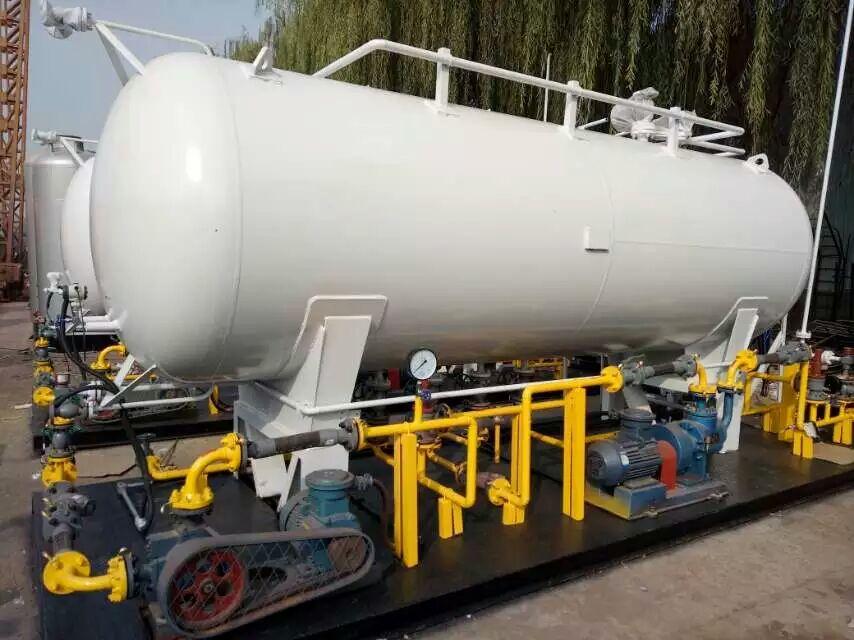
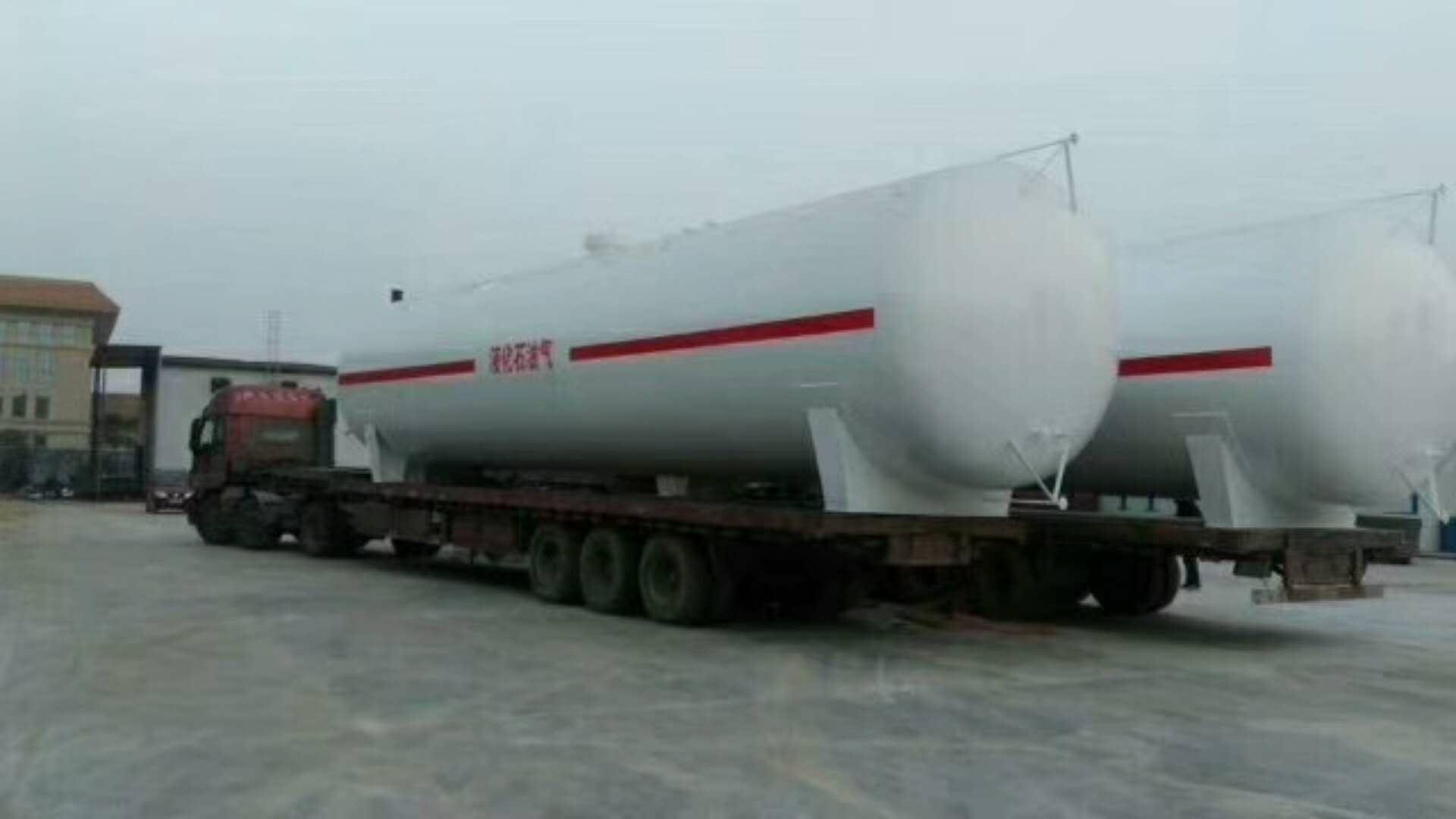
Cautionary Notes for Using Natural Gas Storage Vessels: These are jacketed vacuum powder-insulated pressure vessels used for storing and supplying cryogenic liquefied gases. They are widely used in industrial production. Analysis of the hazardous characteristics of cryogenic liquids: Cryogenic liquids have low boiling points, high expansibility, strong asphyxiating properties, and strong oxidizing properties. Boiling points at 101.3 KPa: Liquid nitrogen at -196°C, liquid oxygen at -183°C, and liquid argon at -186°C. Contact with the human body can cause severe frostbite on the skin and eyes. In case of minor leakage or internal leakage from valves, they absorb heat from the surrounding environment, causing the leakage point to rapidly condense and frost over, which may lead to freezing in severe cases. If cryogenic liquids absorb high heat from the surrounding environment or undergo large-scale leakage, their volume expands rapidly due to quick vaporization. At 0°C and 101.3 KPa pressure, the volume of gases formed from 1L of cryogenic liquids: nitrogen at 674L, oxygen at 800L, and argon at 780L. In closed containers or pipes, the increase in internal pressure due to the vaporization of cryogenic liquids can easily lead to overpressure explosions. In the environment around cryogenic liquid storage tanks, the vaporization of leaked cryogenic liquids can easily create rich gas areas. High concentrations of nitrogen, argon, or carbon dioxide can cause asphyxiation injuries. Additionally, high oxygen concentrations can lead to hyperoxic injuries. Oxygen is a strong oxidizing agent with potent oxidizing properties. Liquid oxygen, when in contact with combustible materials, can easily ignite when exposed to an open flame; contact with combustible materials can cause explosions due to shock or impact; mixing with combustible materials poses latent explosive risks. Liquid oxygen can adhere to clothing and fabrics, and can cause flashback and burn upon ignition, posing a risk to personal safety.

More and more businesses require the use ofLiquefied Gas Storage TankSteel storage tanks are specialized equipment for storing various liquids or gases. Many businesses cannot operate normally without storage tanks for energy, especially when stockpiling various materials. Storage facilities for oil are mostly above ground and often consist of metal structures.Liquefied Gas Storage TankThe uses are very extensive, and these drums are required in various enterprises. Oil tanks, as storage equipment for oil and gas pipeline transportation, are containers used for storing oil and ensuring a stable oil transportation volume. The oil storage tanks used at the first station of oil pipeline transmission are for storing oil and collecting oil to maintain a stable oil transportation volume, while the oil storage tanks used at the end station are mainly for receiving and storing oil. Oil is supplied to the users through the oil tanks. The vast majority of plastic storage tanks require molding processing techniques. During the molding process, the mold is under a considerable amount of pressure, employing widely-used compression molding, which is formed through extrusion and molding into storage equipment. Large-sized products produced by molding processes must withstand significant pressure, necessitating especially sturdy design and manufacturing of molding equipment, with considerable difficulty in processing and manufacturing, and increased costs. Corrosion resistanceLiquefied Gas Storage TankUtilizing rotational molding technology, these tanks demand high strength in the frame. The frame must be strong enough to support the material, the mold, and its own weight to prevent leakage. Even for large-scale or extra-large plastic storage tanks, producing corrosion-resistant tanks does not require heavy equipment or molds. The processing and manufacturing of molds is particularly convenient, with low production costs and a short cycle.


