


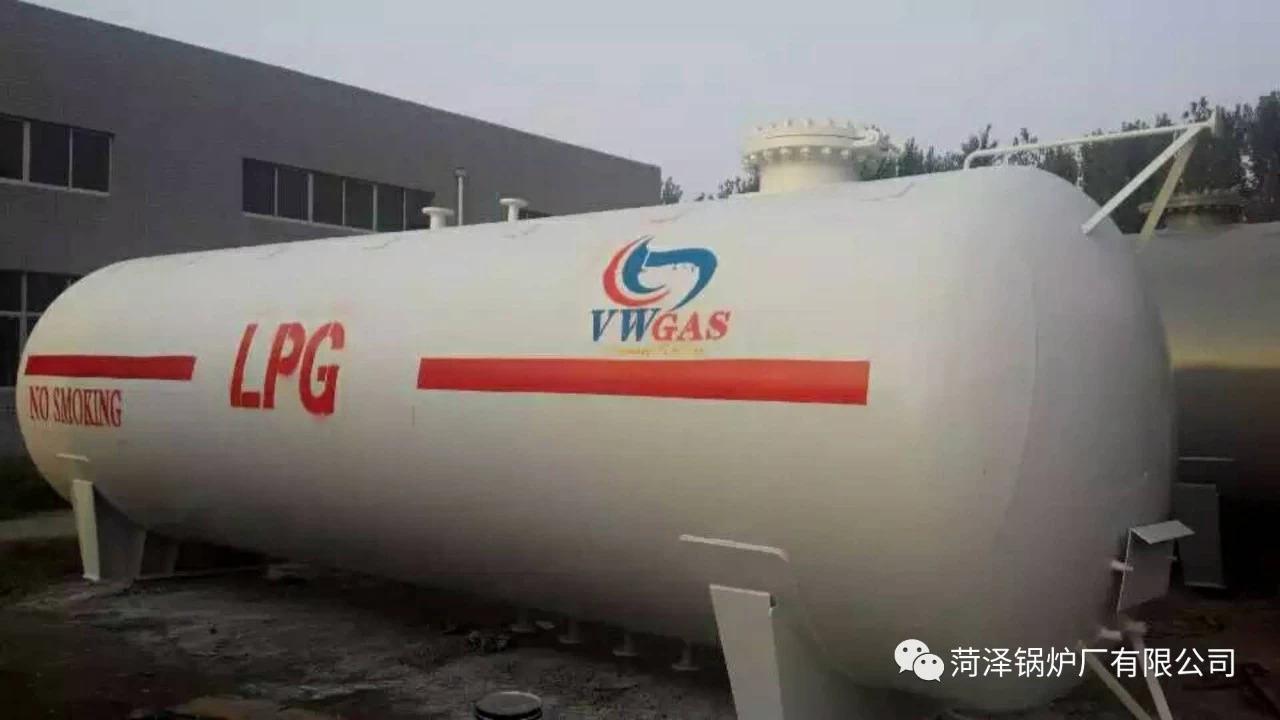
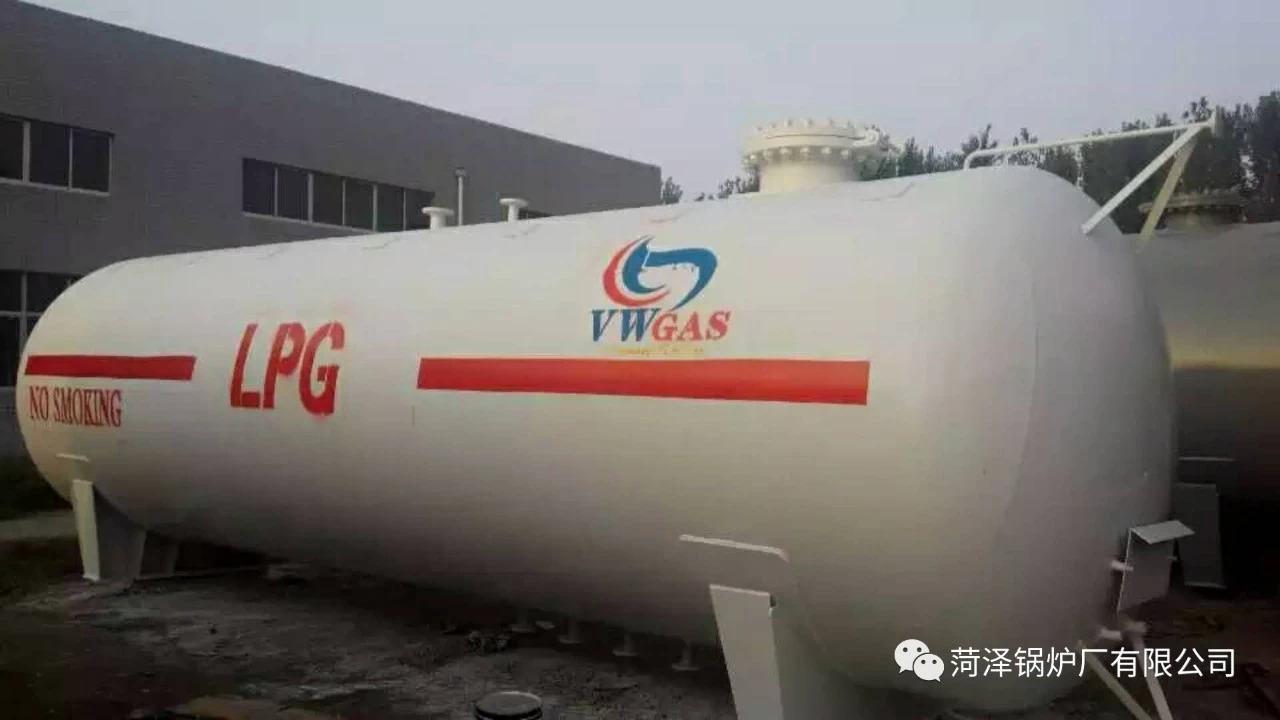


Our company specializes in storage tanks, which are one of our key products. These include LPG storage tanks, liquid ammonia tanks, liquid chlorine tanks, propane tanks, C5 storage tanks, and low-temperature storage tanks for liquid oxygen and nitrogen. Particularly, our LPG storage tanks have reached mass production with a production line and are available in various models with stock supply.
Table of Performance Parameters for Class III Storage Tanks
Tank Type Product Model Effective Volume m3 Working Pressure MPa Dimensions mm
LPG Storage Tank
[Ground Level]
WG .--.DN1400×2750
WG .--.DN1400×5980
WG .--.DN1600×4400
WG .--.DN2000×5650
WG .--.DN2200×5800
WG .--.DN2200×7100
WG .--.DN2600×6600
WG 1.77-2600-50(B)501.77DN2600×8500
WG .--.DN2600×10360
WG 1.77-3000-1001001.77DN3000×13200
WG 1.77-3600-1201201.77DN3600×10500
WG 1.77-3600-1501501.77DN3600×13500
WG 1.77-3800-2002001.77DN3800×16300
LPG Storage Tank
[Underground]
WDG .--.DN1400×2750
WDG .--.DN1600×4400
WDG .--.DN2200×5770
WDG .--.DN2200×7100
WDG .--.DN2600×8500
WDG .--.DN2800×8740
WDG 1.77-3000-1001001.77DN3000×13200
Supply of listed company He Guo brand LPG Storage Tanks, ranging from 5 cubic meters to 200 cubic meters of LPG storage tanks.

专业定制液化气储罐哪家质量好-知名液化气储罐价格-销售液化气储罐批发价-正规液化气储罐制造厂

The diaphragm liquefied gas storage tank is primarily composed of a motor, base, crankcase, crank and connecting rod mechanism, cylinder components, gas and oil piping, electrical control system, and some accessories. It achieves increased gas pressure through single-stage or multi-stage compression to meet the customer's requirements for process parameters such as pressure, flow rate, and temperature. The motor drives the crank, connecting rod, and piston, which in turn moves the hydraulic oil. The hydraulic oil drives the diaphragm, and the vibration of the diaphragm compresses the medium. The membrane pressure machine is a special type of volumetric liquefied gas storage tank, where the working cylinder is separated into two parts by a diaphragm, with the upper part called the gas chamber and the lower part called the oil chamber. During operation, the piston moves upwards to drive the hydraulic oil, which in turn drives the diaphragm to expel the compressed medium outside the membrane cavity. The diaphragm liquefied gas storage tank works by compressing the gas through the deformation of the diaphragm. As the diaphragm moves, it must tightly fit the membrane cavity surface of the cylinder cover and have a small gap with the cylinder body membrane cavity surface. By theoretically analyzing and scientifically selecting the membrane cavity curve radius, maximum deflection, and deflection index, a larger volume is ensured, allowing the diaphragm to work under approximately equal strength conditions.
Liquid gas storage tanks have the following advantages and characteristics:
1) The overall structural design is rational, ensuring smooth and reliable operation with minimal vibration and noise, and easy operation and maintenance. 2) The cylinder components feature a structure without an oiling dish, reducing assembly complexity and the number of sealing surfaces; an alarm is triggered in case of compressed medium leakage, enhancing the overall reliability of the unit. 3) The innovative diaphragm cavity curve increases the volume efficiency of the liquefied gas storage tank and extends the lifespan of vulnerable components like diaphragms and gas valves. 4) The built-in oil pump station supplies pressure-stable, clean, and well-cooled lubricating oil for the liquefied gas storage tank and the cylinder, addressing the issue of oil leakage in externally mounted storage tanks. 5) A highly automated control system ensures the safe operation of the equipment. 6) The entire unit is mounted on a skid base, facilitating transportation, installation, and management.


