


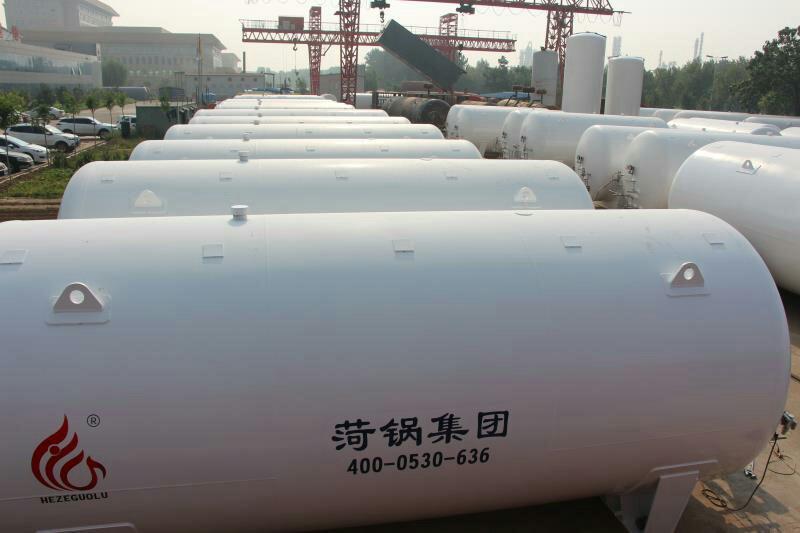
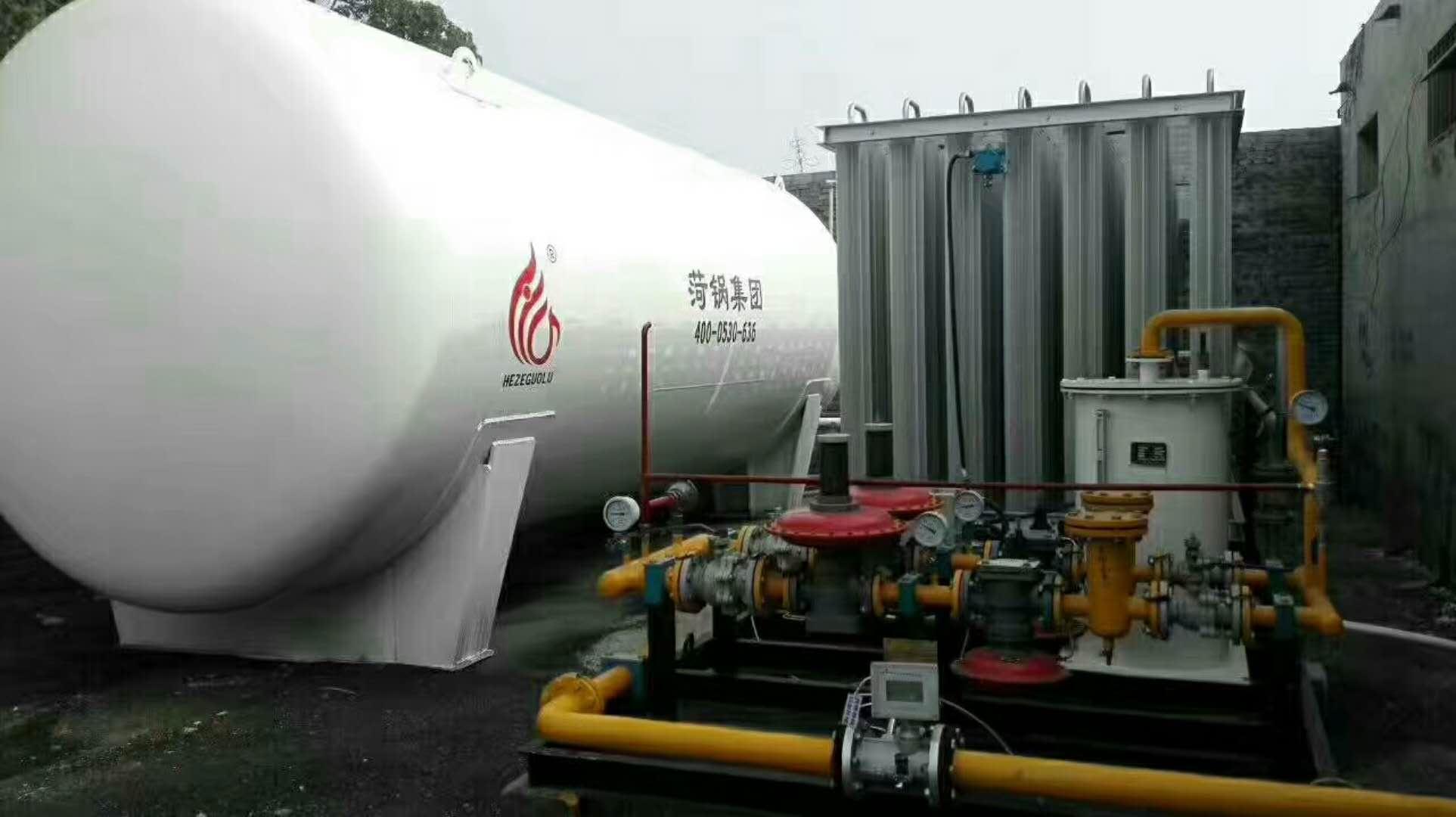
Product Description
Brand He Guo Group Model CFW-60/0.8
Material: Stainless Steel, Diameter: 2916mm
Application Range -162℃ Volume 60000L
Heat Exchange Area - See drawing m², Ambient Temperature - See drawing °C
Wall Thickness: 8mm, Outer Dimensions: φ2916*14929mm
Origin: Shandong Heze

60-cubic-meter LNG Storage Tank, Horizontal LNG Storage Tank, Professional Manufacturer of Liquefied Natural Gas Storage Tanks
LNG storage tanks are atmospheric pressure, low-temperature, large capacity vessels, typically featuring flat-bottomed, double-walled cylindrical design. The inner cylinder is usually made of 9% nickel alloy steel, but can also be all aluminum, stainless steel film, or pre-stressed concrete. The outer wall is carbon steel or pre-stressed concrete. The suspended insulating support platform at the top of the wall is aluminum, while the tank roof is constructed from carbon steel or concrete. The main insulating materials inside the LNG storage tank include expanded perlite, elastic glass fiber felt, and foam glass bricks.
LNG Tank Characteristics Requirements
Low-temperature resistance
The boiling point of liquefied natural gas at atmospheric pressure is -162°C. Therefore, LNG storage tanks must have excellent low-temperature resistance and insulation properties.
(2) High safety requirements
Due to the storage of low-temperature liquids inside the tank, in the event of an accident, the chilled liquid would evaporate in large quantities, with the vaporization rate being approximately 625 times that of the chilled state, forming an explosive mixture in the atmosphere. Therefore, it is required that the tank be constructed with a double-walled structure and utilize containment principles. In the event of a leak in the first layer of the tank, the second layer can completely contain the leaked liquid and evaporated gases, ensuring storage safety.
(3) Special Material.
The inner tank must withstand low temperatures and is made of austenitic stainless steel, while the outer casing is constructed from Q345R ordinary low-carbon alloy steel plate.
(4) Strict thermal insulation measures.
Due to the maximum temperature difference between inside and outside the can reaching up to 200°C, the can must have excellent insulation properties to maintain an internal temperature of -160°C. High-performance insulation material should be filled between the inner and outer shells. The insulation material at the bottom of the can must also have sufficient pressure-bearing capacity. (5) Good seismic performance
The seismic requirements for general buildings are to crack but not collapse under specified seismic loads. To ensure the safety of storage tanks under unexpected loads, they must possess excellent seismic performance. The tank body must remain undamaged under the given seismic intensity. (6) Strict construction requirements
The tank welds must undergo 100% magnetic particle inspection (MT) and 100% vacuum leak test (VBT). Strict selection of insulation materials is required, and the construction should adhere to the specified procedures.
Huzhou Boiler Factory Co., Ltd. is a key enterprise designated by the China Quality Supervision, Inspection and Quarantine Administration to produce boiler pressure vessels, a vice-president unit of the China Industrial Boiler Industry Association, a member unit of the China Association of Heating, Ventilation and Air Conditioning, and Water Supply and Drainage, holding a B-grade boiler manufacturing qualification (No. TS2110587-2011), a Class III pressure vessel manufacturing qualification (No. TS2210916-2013), and design qualifications (No. TS-), and having passed the ISO9001 international quality management system certification.
Huzhou Boiler Factory Co., Ltd. Main Products:
Chemical Storage Tanks (including LPG Tanks, Liquefied Petroleum Gas Tanks, Liquid Ammonia Tanks, Propane Tanks, Propylene Tanks, Isobutane Tanks, Methyl Chloride Tanks, etc.); Non-standard Pressure Vessels ( Towers, Heat Exchangers, Pressure Vessels, Reaction Vessels, Stainless Steel Containers, etc.).
Cooling auxiliary equipment (evaporative coolers, ammonia storage tanks, condensate drums, circulating drums, oil separators, separators, condensers, intermediate coolers, siphon tanks, economizers, etc.)
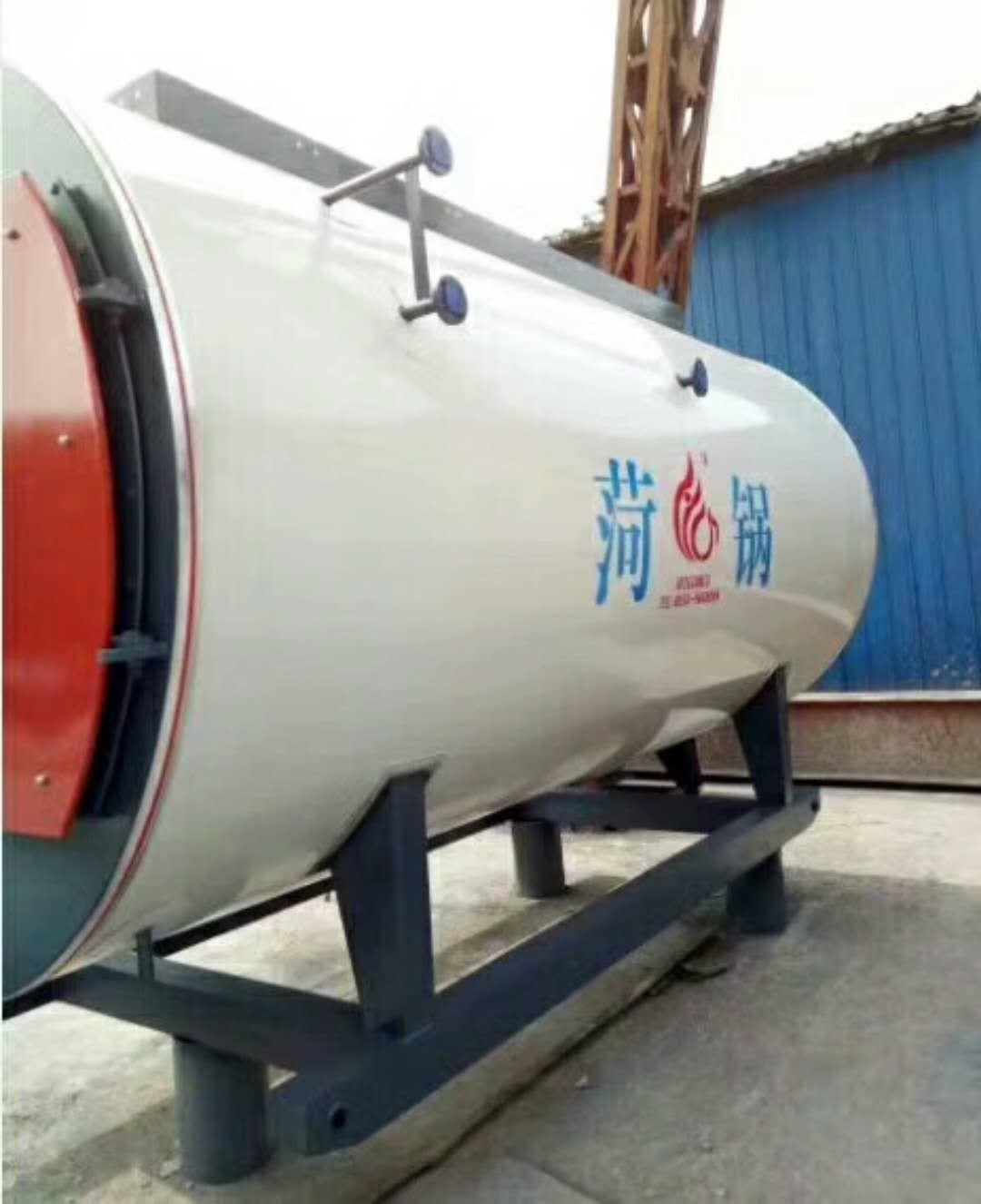
Boiler equipment (including steam boilers, hot water boilers, thermal oil boilers, oil-gas boilers, waste heat boilers, etc.)
Low-temperature Storage Tanks (Liquid Oxygen Tanks, Liquid Oxygen Vessels, Liquid Nitrogen Tanks, Liquid Nitrogen Vessels, Liquid Argon Tanks, Carbon Dioxide Tanks, LNG Tanks, Liquefied Natural Gas Tanks).

60-cubic-meter LNG Tank, Horizontal LNG Storage Tank, Professional Manufacturer of Liquefied Natural Gas Storage Tanks

In the early stages of LNG tank development, tanks were all single-walled. Their insulation was in the form of block insulation, but they had drawbacks such as a lack of a metallic moisture-proof layer and vulnerability to wind disasters. Subsequently, they evolved into double-walled, double-roofed tanks. Due to the easy formation of vapor in LNG, which can cause overpressure inside the tank, they eventually developed into double-walled, single-roofed tanks.
1. Tank Classification and Overview
The LNG low-temperature storage tank types include: underground tanks, spherical tanks, single containment tanks, double containment tanks, full containment tanks, membrane tanks, and mother-daughter tanks. Currently, single containment tanks and mother-daughter tanks are more commonly used in liquefied natural gas plants, while underground tanks, full containment tanks, and membrane tanks are primarily applied in large-scale LNG receiving stations.
(1) Single-container tank
Single-wall containers and double-wall containers are available. The design pressure ranges from 17 to 20 kPa, with the operating pressure typically at 12.5 kPa. For large diameter single-wall containers, the design pressure is relatively lower, potentially less than 14 kPa. For single-wall containers, the equipment layout requires a larger safety distance and land area, and fire dikes and embankments must be established.
(2) Mother and Child Drums
The mother tank consists of an inner and an outer tank. The inner tank is made up of multiple sub-tanks, which are assembled side by side within a large outer tank. This is a new type of low-temperature storage tank technology that has developed in recent years. It is suitable for both pressurized and atmospheric storage, with operating pressures ranging from 0.2 to 1.0 MPa, up to a maximum of 1.8 MPa. Similar to single-container tanks, it requires a significant safety distance, large land area, and often includes fire dikes and embankments.
(3) Spherical Tank
The spherical storage tank consists of an inner and outer shell, both in spherical shape. In operation, the inner shell serves as an internal pressure vessel, while the outer shell functions as an external vacuum pressure vessel. The volume of the spherical tank typically ranges from 200 to 1500 cubic meters, with operating pressures between 0.2 to 1.0 MPa.
(4) Underground Tanks
An underground storage tank is a type of storage facility where the highest liquid level of stored LNG is below ground level, with the tank body resting on an impermeable, stable foundation. These tanks are constructed with cylindrical metal shells, coated with reinforced concrete. Due to the high investment and long delivery period associated with underground storage tanks, they are generally not chosen for design.
(5) Full Capacity Tank
The full-volume tank consists of an inner cylinder, an outer cylinder, and a top cover, offering a double containment for LNG and its vapor. The design pressure of the full-volume tank reaches up to 0.029 MPa, with a design temperature range of -196 to 60°C. The friction coefficient for seismic design is generally 0.3 to 0.6, with an allowable distance between the inner and outer cylinders not exceeding 2 meters. Compared to single or double containment tanks, the full-volume tank is the most expensive but boasts the highest safety reliability, making its application in receiving stations extremely widespread.
(6) Membrane罐
The membrane tank utilizes stainless steel inner lining and concrete outer walls, meeting the same fire prevention and safety distance requirements as full-volume tanks. The operational flexibility of the membrane tank is greater than that of full-volume tanks, making it particularly suitable for use in areas prone to frequent seismic activity and high population density. However, it is characterized by higher investment costs and a longer construction period.
(7) Dual-purpose Tank
The double-container design has the same pressure as the single-container design, with both the inner and outer containers capable of independently containing the stored low-temperature liquid products. The outer container is made of low-temperature steel or concrete, while the inner container is made of 9% nickel steel or stainless steel. The distance between the inner and outer containers must not exceed 6 meters.


