


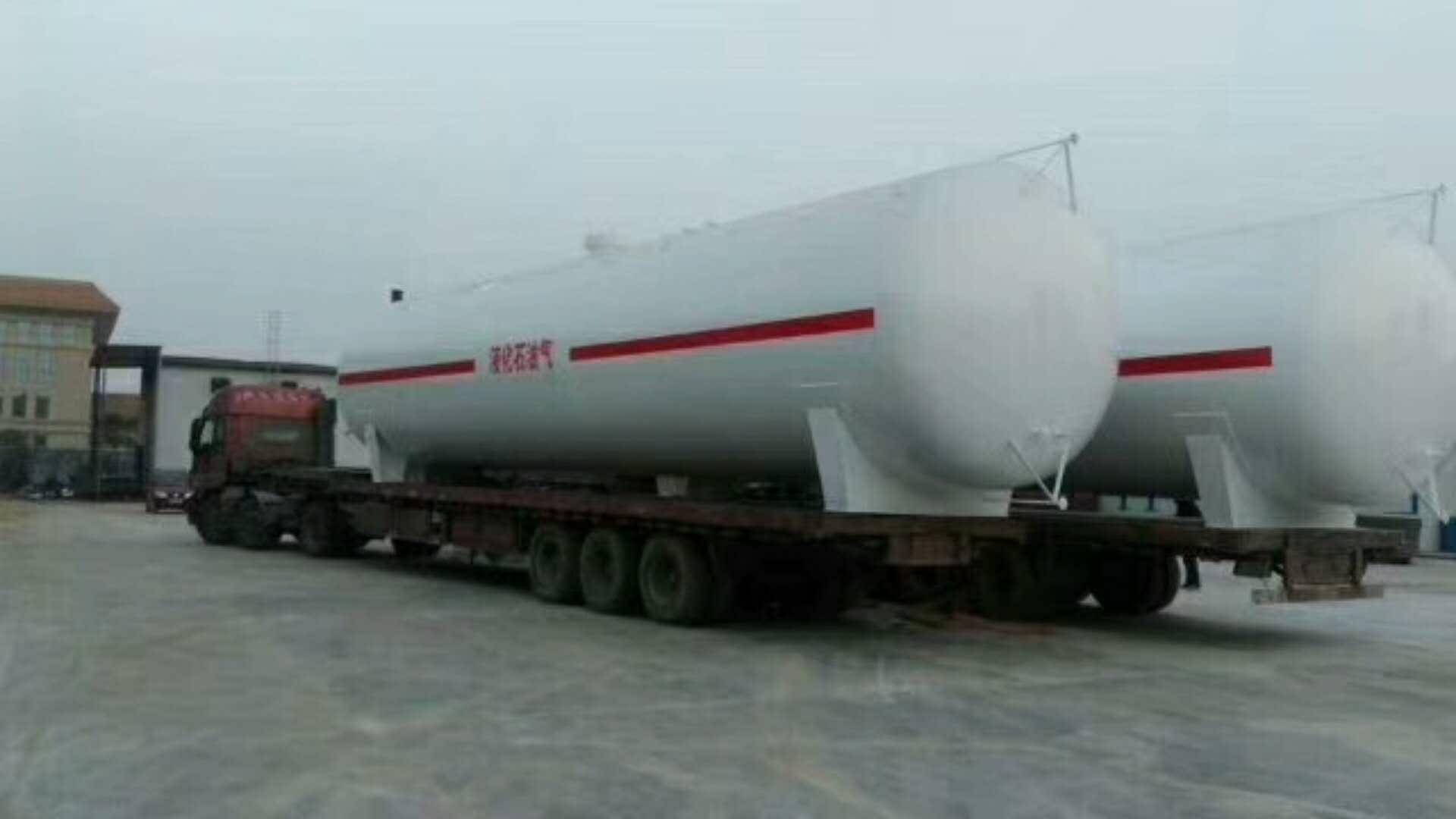
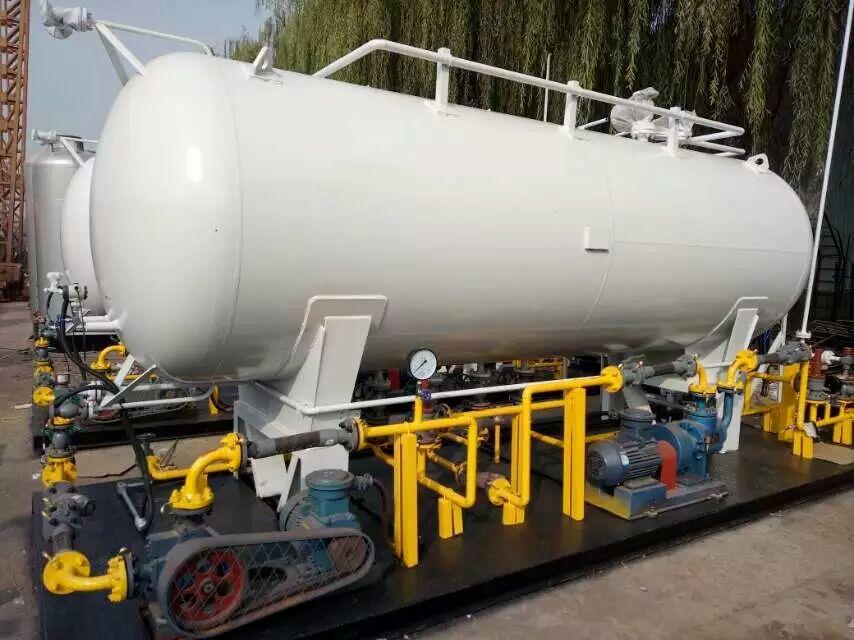
Liquefied Gas Storage TankThe application of these containers is very broad, and the placement of these bottles is a critical matter. When placing these bottles, many aspects must be taken into account. If these chemical storage containers cannot be placed securely, the hazards are significant, leading to chemical leaks and severe corrosion of the containers, resulting in various issues. When storing chemical items, the following are essential points for users to note:
1. Ensure safe placement; do not affect nearby residents and businesses.Liquefied Gas Storage TankThe location of the storage must be carefully selected, involving risk analysis and quantitative assessment. When placing containers for storing chemical items, it is crucial to ensure that no severe impact is caused to surrounding residents or businesses, nor disrupts their daily lives. The placement of the containers must maintain a certain distance from residential areas to ensure they are not within the affected range before proceeding with the placement. 2. Ensure compliance with meteorological and geological conditions when placing the containers.Liquefied Gas Storage TankIt is essential to meet local meteorological requirements, geological conditions, and be mindful of safety during thunderstorm seasons. Consider whether the area is prone to severe seismic disasters. When placingLiquefied Gas Storage TankWhen it comes to storing chemical products, safety must always be a top priority. With increasingly limited land resources, and ground storage equipment occupying a significant amount of space, choosing to store chemical products in underground tanks is an excellent option. Placing tanks underground not only saves on land use but also avoids environmental pollution, offering numerous advantages.

Huzhou Boiler Factory Co., Ltd. operates a development center, an installation company, and three production bases. It has established close cooperative relationships with numerous key universities and research institutions domestically. New product development is ongoing and highly favored by a wide customer base. We offer industrial and residential coal-fired boilers, oil-fired boilers, gas-fired boilers, biomass boilers, heat transfer oil boilers, waste heat recovery boilers, refrigeration auxiliary equipment, pressure vessels of categories 1, 2, and 3 (including liquefied gas tanks, liquid ammonia tanks, methyl chloride tanks, propane tanks, underground tanks, tower vessels), low-temperature containers (liquid oxygen tanks, liquid nitrogen tanks, liquid argon tanks), heat exchanger units, ground-source heat pump units, and more. For years, the company has actively implemented an innovation strategy centered on technological, market, and management innovation, accelerating corporate reform and restructuring. It has gradually established a modern corporate system that adapts to the socialist market economy system.
Liquefied Petroleum Gas primarily originates from refinery gas and associated gas from oil fields.
One: Obtained from petroleum gas in oil refineries
Refinery gas is a byproduct gas produced during the refining and processing of crude oil, with its quantity depending on the production method and processing depth of the refinery, generally ranging from 4% to 10% of the original weight. Currently, the recovery of liquefied petroleum gas from catalytic cracking gases at refineries is a major domestic source for liquefied petroleum gas.
From associated gas obtained from oil fields
Associated gas from oilfields is a byproduct gas generated during the oil extraction process. It is itself a combustible gas existing in the geological structures of the oil reservoirs, containing 10%-40% of propane, butane, pentane, and high-carbon alkanes. During oil extraction, both oil and associated gas are discharged simultaneously. Using a gas-oil separation unit installed above the oil well, the oil is separated from the associated gas. The associated gas contains approximately 5% propane and butane components, which can be extracted using absorption methods to produce high-purity liquefied petroleum gas with low sulfur content. The liquefied petroleum gas supplied by countries like Europe, the U.S., and Japan is often of this type.
III. Derived from Natural Gas
Pure natural gas extracted from the ground is divided into dry gas and wet gas. Wet gas contains less than 90% methane, with more than 10% of ethane, propane, butane, and other alkanes. After the gas is compressed and fractionated, it is sprayed with diesel to absorb it, then it is condensed into a liquid at a pressure of 1.6 MPa in a fractionation tower, forming liquefied petroleum gas.
Safety Procedure for Inverting Drum Operations
1. First, check the pressure, level, and temperature of the tanks upon filling or emptying, as per production or maintenance processes. Record these details upon confirmation and then proceed with tank handling.
2. Determine the liquid output volume from the discharge tank and the incoming liquid volume to the receiving tank, and calculate if the receiving tank's capacity meets the process and safety requirements, then confirm the tank transfer process.
3. The operational procedure is: open the liquid phase valves for incoming and outgoing tanks — adjust the vapor phase valve — start the circulating compressor.
4. During decanting, pay attention to checking the storage tank's pressure and liquid level changes, and always reverify the calculations. The incoming liquid tank must not exceed the highest permitted liquid level.
5. After decanting is complete, shut off the compressor, close the liquid phase valve, and readjust the compressor valve.
6. Thoroughly fill out the operation records.


