


Shandong Zhongjie Special Equipment (formerly Heze Boiler Factory Co., Ltd.) was established in 2001, located at No. 2218 Jinnan Road, Economic and Technological Development Zone, Heze City, with a registered capital of 50 million yuan and total assets of 500 million yuan. The company has 7 business centers: boilers, deep-freezing containers, pressure vessels, central air conditioning, engineering installation, international trade, and Internet of Things. It has three factory sites on Jinnan Road, East Changjiang Road, and Bohai Road, covering a total of 200,000 square meters, with the main workshop spanning 83,000 square meters. It currently employs 710 people, including 247 engineering and technical staff and 82 intermediate-level technicians. In December 2016, it was recognized as a "High-Tech Enterprise" by the Science and Technology Department. In June 2021, it was identified as a "Specialized and New Enterprise in Shandong Province" by the Department of Industry and Information Technology. In June 2022, it was recognized as a "Gazelle Enterprise in Shandong Province" and in August 2022, it was identified as a "Specialized and New Small Giant Enterprise" by the Ministry of Industry and Information Technology.
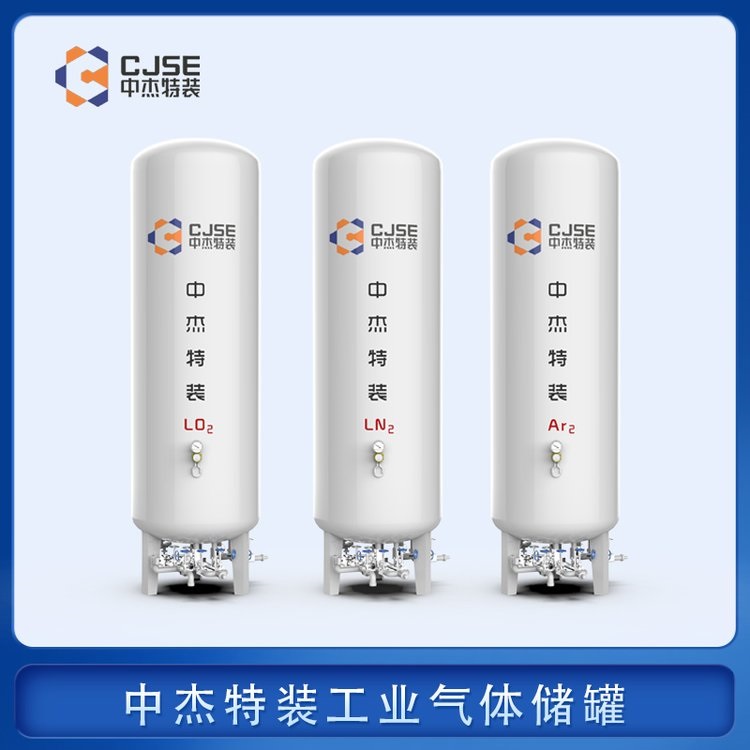
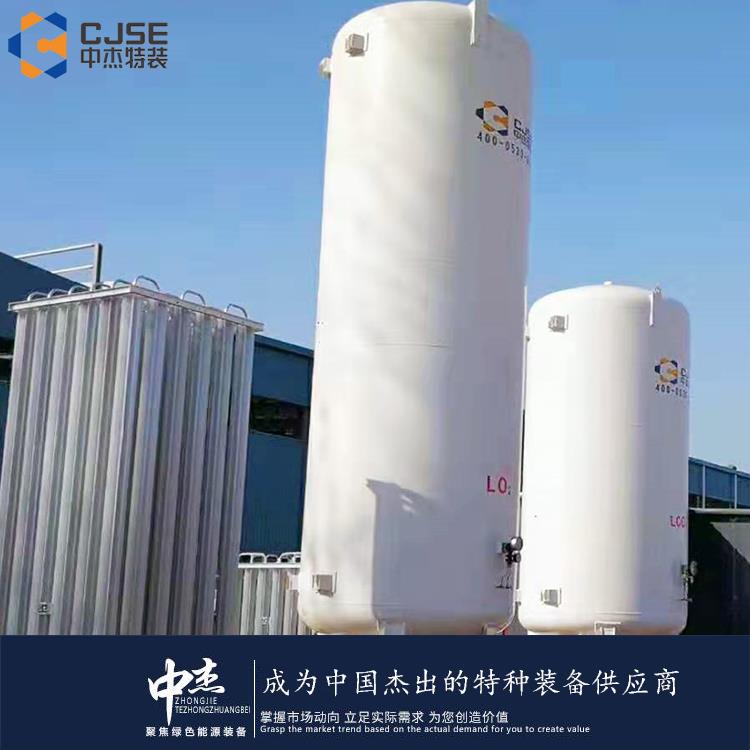
Liquid Argon Storage Tanks are equipment used for storing and transporting liquid argon. Their application scope and characteristics are as follows:
Application Scope:
Industrial Applications: Liquid Argon Storage Tanks are widely used in various industrial sectors, including metal processing, electronic manufacturing, semiconductor production, and more.
Application: Liquid argon tanks are used in the field for cryogenic preservation of biological samples, cells, tissues, and vaccines.
Lab Applications: Liquid argon tanks are used in scientific research laboratories for low-temperature experiments, cryogenic preservation, and sample processing, etc.
Features:
Low-temperature Performance: Since liquid argon has a boiling point of -185.7°C, the liquid argon storage tank must have excellent low-temperature insulation properties to maintain the低温 state of the liquid argon.
High sealing: Liquid argon tanks must have good sealing performance to prevent evaporation loss of liquid argon and the entry of external air.
Safety: Liquid argon is a flammable and explosive substance; therefore, liquid argon storage tanks must be equipped with safety valves, leak detectors, and other safety devices to ensure safe operation.
High Capacity: The capacity of liquid argon storage tanks ranges from a few liters to several thousand liters, allowing for selection of an appropriate capacity based on demand.
Cautionary Notes:
Protective Gear: When operating liquid argon tanks, it is mandatory to wear appropriate protective gear, including protective gloves, suits, and non-slip shoes, to safeguard against the low temperature of liquid argon and other hazards.
Ventilation Requirements: Please provide.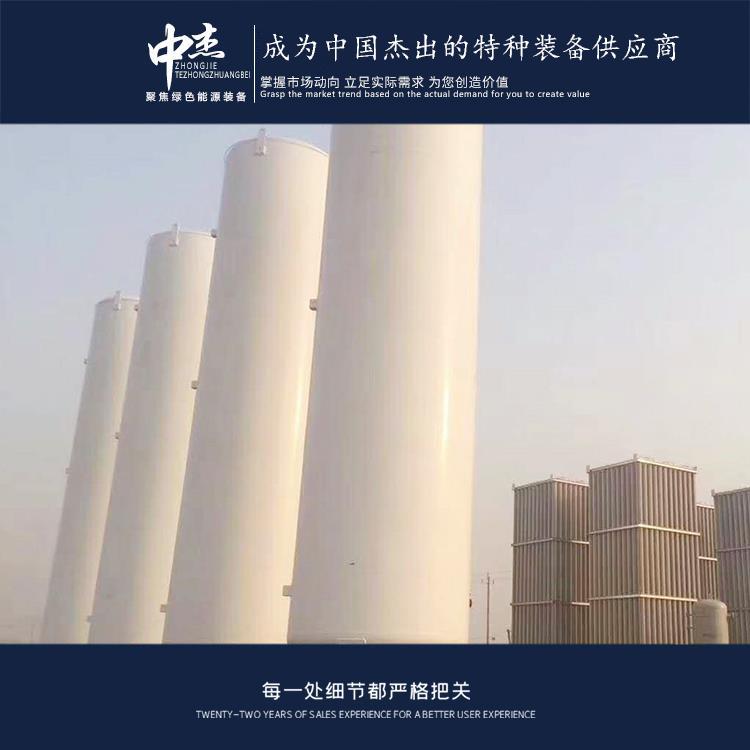
Routine inspections of liquid nitrogen tanks include the following aspects:
Level Check: Regularly inspect the liquid nitrogen tank's level to ensure it remains within the normal range. This can be done using level gauges or level scales, among other equipment.
Pressure Check: Inspect the tank's pressure to ensure it is within the safe range. Pressure gauges or pressure sensors can be used for the inspection.
Insulation Layer Inspection: Check if the tank's insulation layer is intact without any damage or detachment. The integrity of the insulation layer is crucial for reducing heat transfer and the evaporation of liquid nitrogen.
Leak Inspection: Check for signs of liquid nitrogen leakage around the storage tank, such as vapor fog, frost, or freezing. If leakage is detected, take immediate measures to repair it.
Valve and pipeline inspection: Ensure that the valves and pipelines of the tank are functioning properly, without any leaks or blockages. Confirm the tightness and unobstructed flow of the valves and pipelines.
Safety Equipment Inspection: Examine the storage tank's safety equipment, such as pressure relief valves, temperature sensors, and level alarms, to ensure they are functioning properly.
External Tank Cleaning: Regularly clean the external surface of the tank to remove dust, dirt, and debris. Maintain the tank's appearance and facilitate inspection and maintenance.
Record and Documentation: Timely record the inspection results and maintenance records of the tank, including liquid level, pressure, insulation condition, leakage status, etc. These records help monitor the tank's operating status and identify issues promptly.
Above is the daily inspection content for liquid nitrogen storage tanks. Regularly performing these checks ensures the safe operation and efficient use of the tanks. At the same time, adhere to relevant safety regulations and operation guidelines to ensure the safety of personnel and equipment.
Daily inspection content for liquid nitrogen storage tanks mainly includes the following aspects:
Appearance Inspection: Check for any obvious damage, deformation, or corrosion on the tank's exterior, including the tank walls, valves, pipes, and joints.
Sealability Inspection: Verify the tank's sealing performance, including checking for leaks at valve and pipe connections, and ensuring the tank's exhaust valve and safety valve are functioning properly.
Pressure Check: Verify that the storage tank's pressure gauge is functioning properly and that the pressure is within the normal range to ensure the tank's normal operation.
Level Inspection: Check the liquid nitrogen tank's level to ensure it remains within the normal range, avoiding issues caused by either excessive or insufficient levels.
Insulation Layer Inspection: Check if the insulation layer of the tank is intact, for any signs of damage or detachment, to ensure the insulation effect and reduce the evaporation loss of liquid nitrogen.
Leakage Inspection: Check for signs of liquid nitrogen leakage around the storage tank, including frost, ice, or liquid nitrogen stains on the ground.
Safety Equipment Inspection: Verify that the storage tank's safety equipment, such as leak detectors, alarm systems, and safety valves, is functioning properly to ensure the tank's safety.
Cleaning Inspection: Regularly clean the interior of the tank to remove accumulated impurities and dirt, maintaining the tank's cleanliness and hygiene.
Above are the key items for the daily inspection of liquid nitrogen tanks. The specific inspection items should be adjusted and supplemented according to the tank's model, usage, and relevant regulations. During the inspection process, strict adherence to the relevant operational procedures and safety requirements is essential to ensure the safe operation of the tank.
Leakage defects in liquid argon storage tanks may be caused by the following reasons:
Design or Manufacturing Defects: Defects in the design or manufacturing process of the tank, such as loose welding, improper material selection, or poor sealing, lead to leakage issues in the tank.
Corrosion and Oxidation: Long-term exposure of liquid argon tanks to low temperatures can lead to corrosion and oxidation. These can damage the tank's surface protective layer, causing leakage issues.
Fatigue and stress cracking: During long-term use, tanks may experience fatigue and stress cracking due to temperature and pressure variations. These cracks can reduce the tank's sealing performance, leading to leakage.
Improper Operation: Failure to follow proper procedures during the storage tank's operation, such as overfilling with liquid argon or applying excessive pressure, can lead to tank damage and leakage.
External Damage: The storage tank may sustain damage from external factors such as mechanical collisions or objects.
Shandong Zhongjie Special Equipment, welcome customers to our factory for business discussions.
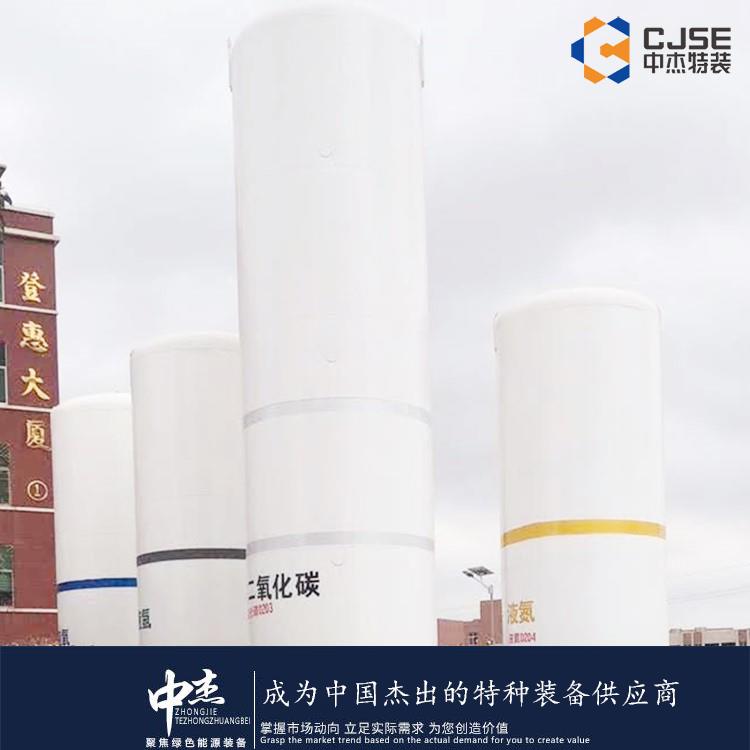
80 cubic meter liquid nitrogen tank, manufacturer
