


Shandong Zhongjie Special Equipment (formerly Heze Boiler Factory Co., Ltd.) was established in 2001, located at No. 2218 Jinnan Road, Economic and Technological Development Zone, Heze City, with a registered capital of 50 million yuan and total assets of 500 million yuan. The company has 7 business centers: boilers, deep-freeze containers, pressure vessels, central air conditioning, engineering installation, international trade, and Internet of Things. It has three factory sites on Jinnan Road, East Changjiang Road, and Bohai Road, covering a total of 200,000 square meters. The main workshop is 83,000 square meters, with a staff of 710, including 247 engineers and technicians, and 82 intermediate-level technicians. In December 2016, it was recognized as a "High-tech Enterprise" by the Science and Technology Department. In June 2021, it was identified as a "Specialized and New Enterprise in Shandong Province" by the Ministry of Industry and Information Technology. In June 2022, it was recognized as a "Gazelle Enterprise in Shandong Province" and in August 2022, as a "Specialized and New Small Giant Enterprise" by the Ministry of Industry and Information Technology.
Choose a reliable gas boiler supplier—it's crucial. Consider the following factors:
- Reputation: Understand the reputation and market reputation of the gas boiler supplier. You can gather relevant information by reviewing customer reviews, industry reports, and certifications from institutions.
- Quality and Performance: The quality and performance of the gas boiler directly affect its reliability and efficiency. Learn about the supplier's quality control system, product certifications, and technical support capabilities to ensure their products meet standards and fulfill factory requirements.
- Technical Support and After-Sales Service: Selecting a supplier that offers comprehensive technical support and after-sales service is vital. Ensure the supplier can provide training, installation guidance, maintenance, and troubleshooting support to ensure the normal operation of the gas boiler.
- Cost-Effectiveness: Beyond quality and performance, consider the cost-effectiveness of the gas boiler. Take into account the purchase cost, operating cost, and maintenance cost to choose a supplier that offers reasonable pricing and value for money.
Ultimately, choosing a trustworthy gas boiler supplier requires considering these factors and making a decision based on the specific needs and conditions of your factory. It is recommended to communicate and compare with multiple suppliers to gather more information and advice for an informed choice.
A heat-conducting oil furnace is a device that utilizes heat-conducting oil as a medium to transfer heat energy generated by combustion or electric heating to the equipment or process that requires heating. The working principle of a heat-conducting oil furnace involves heating the heat-conducting oil to a certain temperature, then circulating it through a pump to the heated equipment or process, transferring the heat energy to the heated object. The heat-conducting oil exchanges heat with the heated object in a heat exchanger, raising the object's temperature while cooling the oil, which then returns to the furnace for reheating. The heat transfer process in a heat-conducting oil furnace primarily relies on the thermal conductivity of the heat-conducting oil. This oil has a high thermal conductivity, enabling rapid heat transfer to the heated object and achieving effective heating. Additionally, it boasts high thermal stability, allowing stable operation at high temperatures without decomposition or oxidation. A heat-conducting oil furnace typically consists of the furnace body, combustion system, flue gas system, heat exchanger, circulation pump, and control system. The furnace body is the main part of the furnace, used to house the heat-conducting oil and the combustion system. The combustion system is responsible for burning fuel to produce heat energy and heat the heat-conducting oil. The flue gas system is used to expel the exhaust gases produced by combustion. The heat exchanger is the equipment where the heat-conducting oil exchanges heat with the heated object. The circulation pump is tasked with circulating the heat-conducting oil back to the furnace for reheating. The control system monitors and controls the operation of the heat-conducting oil furnace to ensure safe and stable operation. Heat-conducting oil furnaces offer high temperature control accuracy, fast heating speed, low energy consumption, and simple operation, and are widely used in industrial fields such as chemicals, textiles, food processing, and papermaking, as well as in special heating processes.
For the maintenance of industrial gas boilers, here are some common methods and precautions:
* Clean the burner: Regularly clean the interior and nozzle of the burner to ensure normal combustion of the gas, and avoid carbon buildup and blockages.
* Inspect the gas supply system: Regularly check the gas supply system, including gas pipelines, valves, and pressure regulators, to ensure normal gas supply, no leaks, and no blockages.
* Clean the flue and heat exchanger: Regularly clean the flue and heat exchanger to remove dust and dirt, maintain heat exchange efficiency, and avoid overheating and energy loss.
* Check water level and pressure: Regularly inspect the boiler's water level and pressure to ensure safe operation within the specified range. Refill water and adjust pressure to avoid issues caused by low or high water levels.
* Inspect safety devices: Regularly check the boiler's safety devices, including safety valves, pressure switches, and water level controllers, to ensure they are functioning properly and to ensure safe boiler operation.
* Check the control system: Regularly inspect the boiler's control system, including automatic controllers, sensors, and instruments, to ensure accuracy and reliability, and to detect and repair faults in a timely manner.
* Regular maintenance: Conduct regular maintenance, including lubricating components, replacing worn parts, and checking electrical connections, to extend the lifespan and stability of the boiler.
* Keep records: Record the boiler's operating parameters, maintenance records, and fault situations to help identify problems and analyze operational conditions.
* Train operators: Ensure that operators are sufficiently
The reasons for uneven heat distribution in steam boilers may include the following aspects: Uneven combustion: During the combustion process, uneven mixing of fuel and air, or an improperly designed and adjusted burner, can lead to uneven combustion. This results in some areas producing more heat while others produce less. Pipe blockage: The presence of blockages or scale in the steam boiler's transmission pipes can cause uneven heat transfer. Blockages or scale impede steam flow, limiting heat transfer in certain areas while allowing better heat transfer in others. Heat exchanger issues: If the heat exchanger in the steam boiler has scaling, corrosion, or blockages, it can lead to uneven heat transfer. These issues can affect the heat conduction efficiency of the heat exchanger, impacting heat transfer in certain areas. Water level problems: Inaccurate or unstable water level control in steam boilers can lead to uneven steam generation. Both high and low water levels can affect steam production and distribution, causing uneven heat distribution. Boiler load changes: Changes in the boiler load can also result in uneven heat distribution. Sudden increases or decreases in load may prevent the boiler from adjusting its heat production and distribution in time, leading to uneven heat distribution. To address the issue of uneven heat distribution in steam boilers, regular inspection and maintenance of the boiler equipment are necessary to ensure the normal operation of combustion and heat exchange processes. Additionally, adjusting burners and control systems reasonably, maintaining stable water levels, cleaning pipes and heat exchangers, and improving...
Our company attaches great importance to technological innovation and R&D design. We possess 1 municipal-level enterprise technology center in Heze City, with testing facilities for non-destructive testing, physical and chemical testing, welding testing, hydrostatic testing, etc. We are equipped with over 600 various instruments and equipment, including CNC machine tools, X-ray flaw detectors, digital ultrasonic flaw detectors, mechanical property testing machines, chemical analyzers, spectrometers, tensile testing machines, plasma welding machines, and more. The key products and technologies we have developed, such as temperature-pressure vessels for welding, biomass boiler emissions reduction, and waste heat utilization, have successively been included in multiple Shandong Provincial Department of Industry and Information Technology science and technology projects, Shandong Provincial key projects, and Heze City innovative and excellent projects. We have accumulated a total of 27 authorized utility models, 16 authorized inventions, participated in drafting 2 standards, 2 industry standards, and registered 15 trademarks. The technical team of our company, in collaboration with Professor Yajiang Li from Shandong University, has developed deep cryogenic container processing technology using the international plasma arc + filler wire tungsten inert gas arc welding (PAW-GTAW) technology. After provincial-level scientific and technological achievement evaluation, the technology level has reached an international standard in the field of deep cryogenic container manufacturing.
Choose ZJET Customized Solutions, let's create brilliance together!
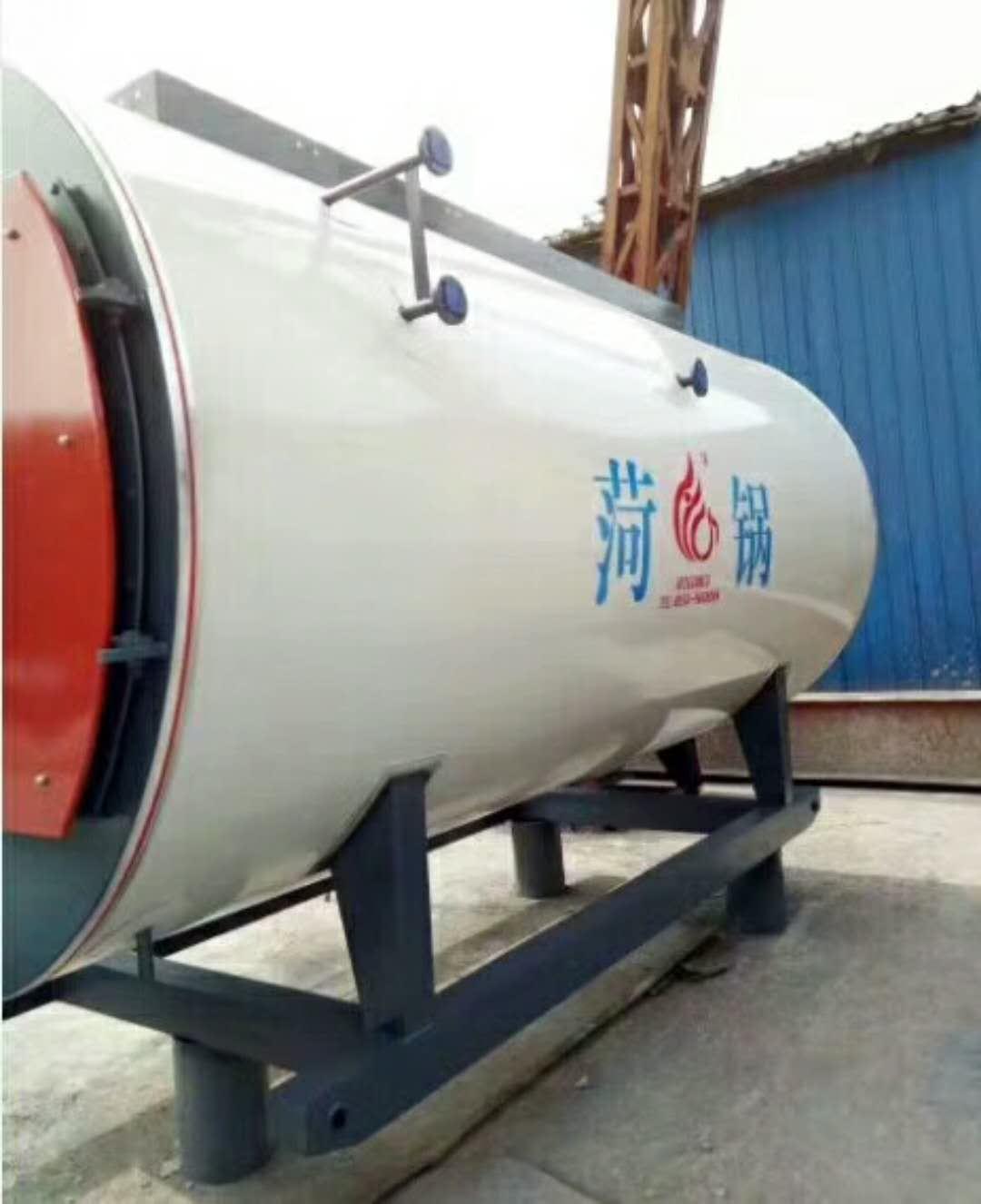
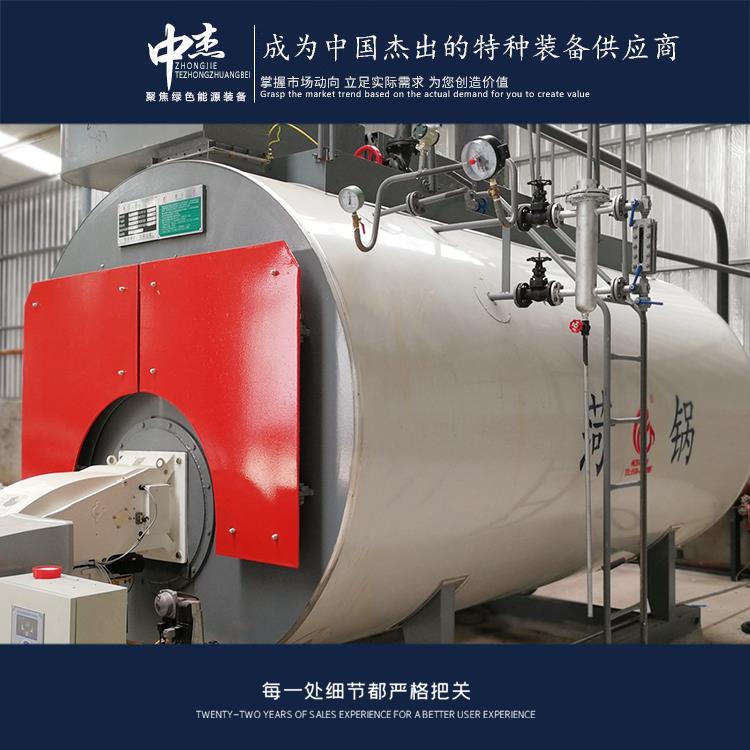
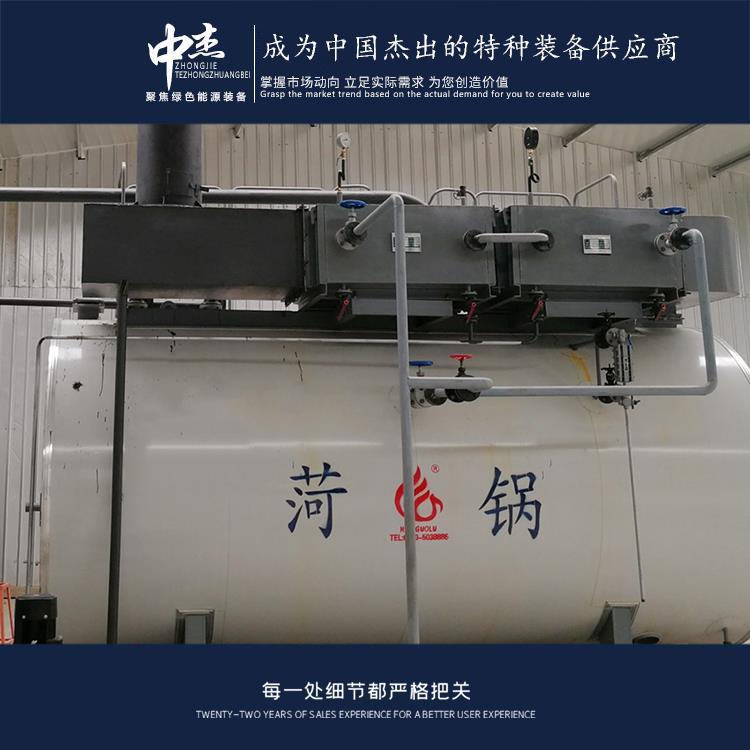
15-ton Shanghai gas boiler, stable performance
