



Shandong Zhongjie Special Equipment Co., Ltd. (formerly Heze Boiler Factory Co., Ltd.) was established in 2001, located at No. 2218 Jinan Road, Development Zone, Heze City, with a registered capital of 50 million yuan and total assets of 500 million yuan. The company has 7 major business centers: boiler, deep-freeze container, pressure vessel, central air conditioning, engineering installation, international trade, and Internet of Things. It has three factory sites on Jinan Road, East Changjiang Road, and Bohai Road, covering a total area of 200,000 square meters, with the main workshop spanning 83,000 square meters. It currently employs 710 people, including 247 engineering and technical staff and 82 intermediate-level technicians. In December 2016, it was recognized as a "High-tech Enterprise" by the Science and Technology Department. In June 2021, it was identified as a "Specialized and New Enterprise in Shandong Province" by the Ministry of Industry and Information Technology. In June 2022, it was recognized as a "Gazelle Enterprise in Shandong Province" and in August 2022, it was identified as a "Specialized and New Small Giant Enterprise" by the Ministry of Industry and Information Technology.
To prevent re-burning accidents at the tail end of biomass boilers, the following operational measures can be taken:
Properly Adjust Combustion Parameters: Ensure the stability and completeness of the combustion process, and avoid fuel accumulation and recombustion in the tail-end area. Reasonably control combustion temperature, air flow, and combustion time, maintaining a smooth and thorough combustion process.
Enhance combustion chamber mixing and air flow distribution: By optimizing the combustion chamber structure and combustion system design, ensure thorough mixing of fuel and air, preventing fuel accumulation and re-burning in the tail end. Reasonably design the air flow distribution within the combustion chamber to ensure uniform fuel combustion.
Regularly clean the furnace chamber and flue: Regularly remove ash and carbon deposits from the furnace chamber to maintain cleanliness. Clean the flue and waste heat recovery equipment to prevent particle accumulation and ash in the flue gases, reducing the risk of re-burning.
Install Flue Gas Recirculation Device: Install a flue gas recirculation device at the rear of the boiler to reignite the exhaust flue gas, enhancing combustion efficiency, and reducing the likelihood of secondary combustion at the rear.
Enhance operational monitoring and maintenance: Regularly monitor and maintain biomass boilers to promptly identify and address any anomalies. Monitor combustion parameters, flue gas emissions, and temperatures to ensure the boiler operates normally.
Ensure safety training and operational procedures: Conduct safety training for operators to enhance their understanding of biomass boiler operations and safety
To prevent coking issues when burning biomass pellets, the following measures can be taken:
Appropriate Particle Size: The size of biomass pellets is crucial for combustion efficiency. The particle size should be controlled within an appropriate range, typically 3-5 millimeters. Larger particles can lead to incomplete combustion, while smaller ones tend to disperse easily and cause blockages.
Sufficient Oxygen Supply: Adequate oxygen supply is required for combustion to ensure a complete reaction. Biomass boilers should ensure that there is ample oxygen within the combustion chamber, which can be achieved by adjusting the ventilation system and the operational parameters of the burner.
Appropriate combustion temperature: The combustion temperature of biomass pellets is also a critical factor affecting combustion efficiency. Too low a combustion temperature leads to incomplete combustion, while too high a temperature can cause coking. Biomass boilers should adjust the combustion temperature to an appropriate range based on the fuel characteristics and combustion requirements.
Proper combustion duration: The combustion time of biomass pellets should also be properly controlled. Too short a combustion time leads to incomplete combustion, while an extended combustion time can easily cause coking. Biomass boilers should adjust the combustion time according to the fuel characteristics and combustion requirements, ensuring it falls within an appropriate range.
Regular Cleaning and Maintenance: Biomass boilers require regular cleaning and maintenance to keep the combustion chamber and flue passages clear. Regularly cleaning the ash and carbon buildup in the combustion chamber, as well as the flue and heat exchanger, helps prevent the occurrence of coking issues.
Be mindful that there may be differences among various types of biomass fuels and biomass boilers. The specific operations and adjustments should be made based on the actual situation. When making adjustments and
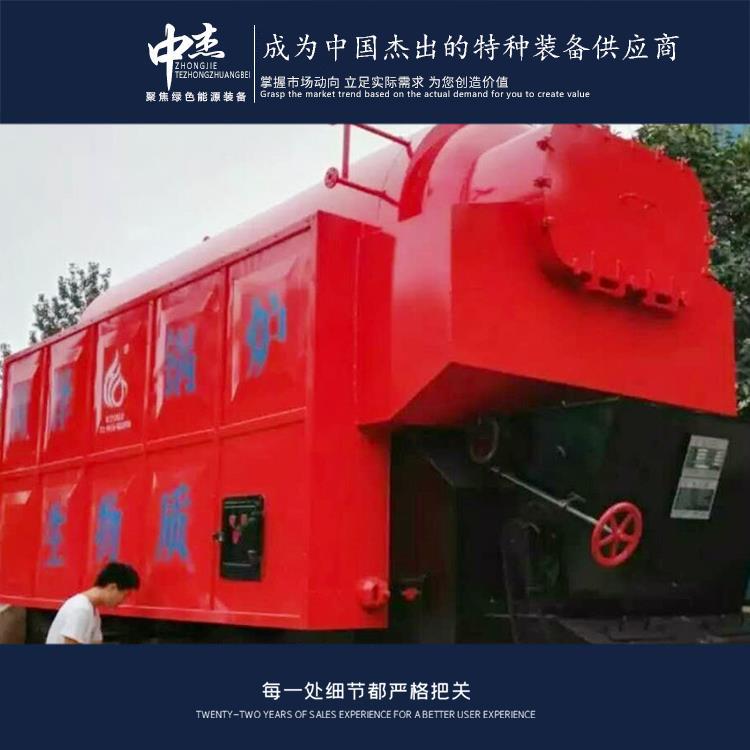
Biomass boilers feature the following characteristics:
Renewable Energy: Fuel for biomass boilers comes from organic matter such as plants, animals, and microorganisms, making it a renewable energy source. Compared to traditional fossil fuels, biomass fuel has lower carbon emissions and a reduced environmental impact.
Diverse Fuel Sources: Biomass fuel sources are abundant, including wood, straw, waste crops, food scraps, and municipal solid waste. This diversity in fuel sources allows biomass boilers to be flexible and adaptable, utilizing waste and by-products from plants and animals.
Environmental Friendliness: The carbon dioxide produced during biomass combustion can be absorbed by plants, forming a cycle that reduces atmospheric pollution. Additionally, the emissions and ash produced during the combustion process of biomass boilers are relatively low, resulting in minimal environmental impact.
Energy Security: Biomass, as a domestic renewable energy source, can reduce reliance on imported energy and enhance energy security. In regions with scarce resources, the use of biomass boilers can provide a reliable energy supply.
Economic Efficiency: Biomass fuel is relatively economical and can reduce energy costs. Moreover, the technology and equipment for biomass boilers are continuously evolving and maturing, making them more economically competitive.
In summary, biomass boilers feature renewable energy, diverse fuel sources, environmental friendliness, energy security, and economic efficiency, making them a crucial component in the sustainable energy sector.
Biomass boilers feature the following characteristics:
Renewable Energy: Biomass boilers utilize biomass fuels such as wood chips and straw, which are renewable. Compared to traditional fossil fuels, these fuels offer lower carbon emissions and environmental friendliness.
Versatile Fuel Options: Biomass boilers are suitable for a variety of biomass fuels, including wood chips, straw, husks, etc., demonstrating strong adaptability to different fuels. This allows for widespread application of biomass boilers in various regions and industries.
Energy Utilization: Biomass boilers utilize advanced combustion technology and heat recovery systems, achieving high energy utilization efficiency. By optimizing the combustion process and heat recovery, energy efficiency can be maximized and energy consumption minimized.
Flexible operating modes: Biomass boilers can be operated flexibly according to actual needs, such as manual control, automatic control, or remote monitoring, etc. This allows biomass boilers to meet requirements in various scenarios and provide a stable energy supply.
Superior environmental performance: Biomass boilers produce relatively fewer emissions during combustion, resulting in less environmental impact. With reasonable combustion control and flue gas treatment devices, the content of emissions can be further reduced to meet higher environmental protection standards.
Broad Application Range: Biomass boilers are widely used in industries, agriculture, greenhouses, HVAC, and other fields. They provide a stable energy supply to meet the needs of various industries and sectors.
In summary, biomass boilers feature renewable energy, diverse fuel options, efficient energy utilization, flexible operation modes, superior environmental performance, and a wide range of applications, making them a sustainable and eco-friendly thermal energy supply solution.
Shandong Zhongjie Special Equipment, welcome customers to visit our factory for business discussions.
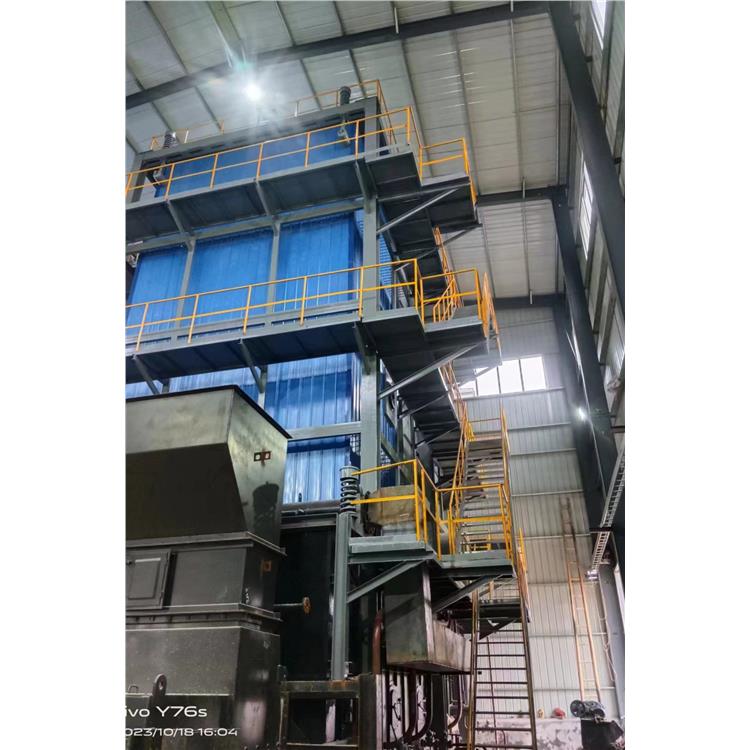
Wenzhou 15-ton biomass boiler, on-site installation
