


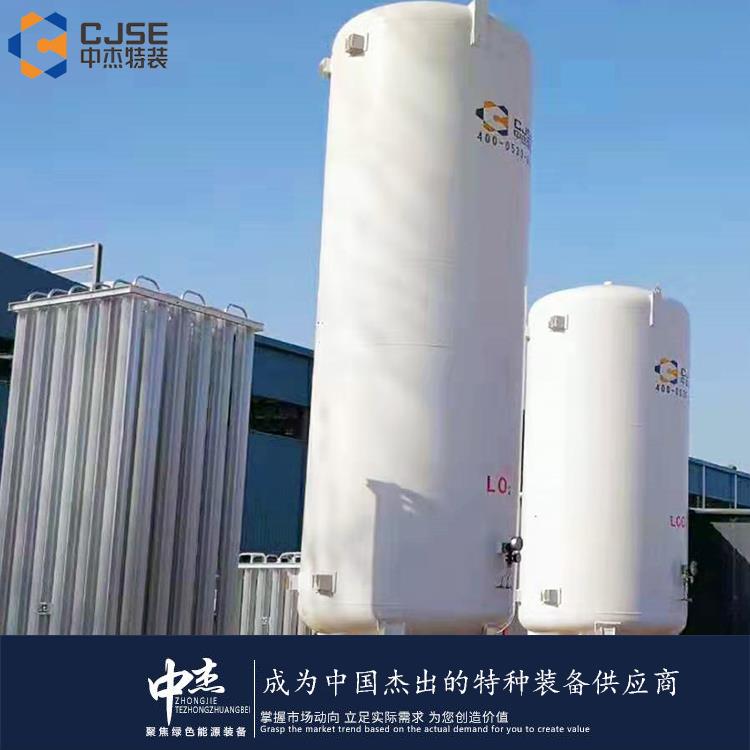

Shandong Zhongjie Special Equipment Co., Ltd. (formerly Heze Boiler Factory Co., Ltd.) holds an A-grade boiler manufacturing license, A2-grade pressure vessel manufacturing license, A2-grade pressure vessel design license, B-grade boiler installation license, GB2 and GC2 class pressure pipeline installation licenses, and equipment and machinery installation contracting qualifications. It is a member of the China Boiler and Water Treatment Association, the China Chemical Equipment Association, and the council member of the Shandong Equipment Manufacturing Association, and has passed the ISO9001 quality management system certification, ISO14001 environmental management system certification, OHSAS18001 occupational health and safety management system certification, and the ASME/U2 certification.
The oxygen-filling process for liquid oxygen tanks must adhere to specific operational procedures and safety measures. Here are the steps for filling liquid oxygen tanks:
Preparation: Ensure the tanks and oxygen-filling equipment are in good working condition, check the tank's sealing and the proper functioning of the safety valves.
Connect equipment: Link the aeration equipment to the storage tank, ensuring a secure and sealed connection.
Prepare liquid oxygen: Transfer liquid oxygen from the storage container to the oxygen storage tank of the filling equipment. During the transfer, be cautious to avoid any leakage or contact with the liquid oxygen.
Oxygen Filling Operation: Open the valve of the oxygen filling equipment and fill liquid oxygen from the oxygen storage tank into the storage tank. During the filling process, control the filling speed and pressure to avoid excessive pressure and temperature rise in the storage tank.
Monitoring and Control: During the aeration process, the tank's pressure and temperature must be monitored to ensure they remain within safe limits. In case of any anomalies, aeration should be halted immediately, and appropriate measures should be taken.
Oxygen Filling Complete: Close the valve of the oxygen filling equipment and cease the filling operation once the storage tank reaches the required oxygen level or pressure.
Safety Handling: After oxygenation is complete, safety handling is required, including closing relevant valves and emptying any remaining liquid oxygen from the oxygenation equipment.
Note that liquid oxygen is highly oxidizing and flammable; the oxygen filling process must strictly adhere to relevant safety operating procedures and standards. Operators should receive training and strictly follow the operational procedures and safety measures to ensure the safety and reliability of the oxygen filling process.
Low-temperature liquid storage tanks feature the following characteristics and advantages for use:
Feature:
Low-Temperature Storage: Low-temperature liquid storage tanks can store low-temperature liquids (such as liquid nitrogen, liquid oxygen, etc.) at low temperatures, maintaining their liquid state. Liquid storage significantly enhances storage density and saves space.
Insulation: The low-temperature liquid storage tank is equipped with special insulation materials and structural design, effectively reducing heat conduction and retention, maintaining a stable temperature for the low-temperature liquid. This helps to minimize energy loss and liquid evaporation.
Safety: Low-temperature liquid storage tanks boast excellent safety performance. The tanks are made of special materials and feature a structural design that can withstand low temperatures and high pressures. Additionally, the tanks are equipped with safety devices such as pressure relief valves and liquid level alarms, ensuring safe operation and use.
Utilization Advantages:
High Purity Supply: Low-temperature liquid storage tanks can provide high-purity liquid supplies. Through refrigeration and purification processes, high-purity liquid gases can be obtained to meet application needs in industries such as industrial and scientific research.
Long-Term Storage: Low-temperature liquid storage tanks are designed for long-term storage of低温 liquids, extending their service life. By controlling the tank's internal temperature and the performance of the insulation layer, the evaporation and oxidation of the liquid can be slowed down, maintaining its stability and purity.
Versatile Applications: Low-temperature liquid storage tanks are widely used in various fields such as industry, scientific research, and more. They can be utilized for storing liquid oxygen, providing oxygen supply; in industrial settings, they can store liquid gases (LNG) and liquid nitrogen for processing; and in scientific research, they are used for storing low-temperature experimental samples.
Environmental Protection and Energy Saving: Low-temperature liquid storage tanks can effectively store and utilize low-temperature liquids, reducing energy waste and environmental pollution. Storage of liquid substances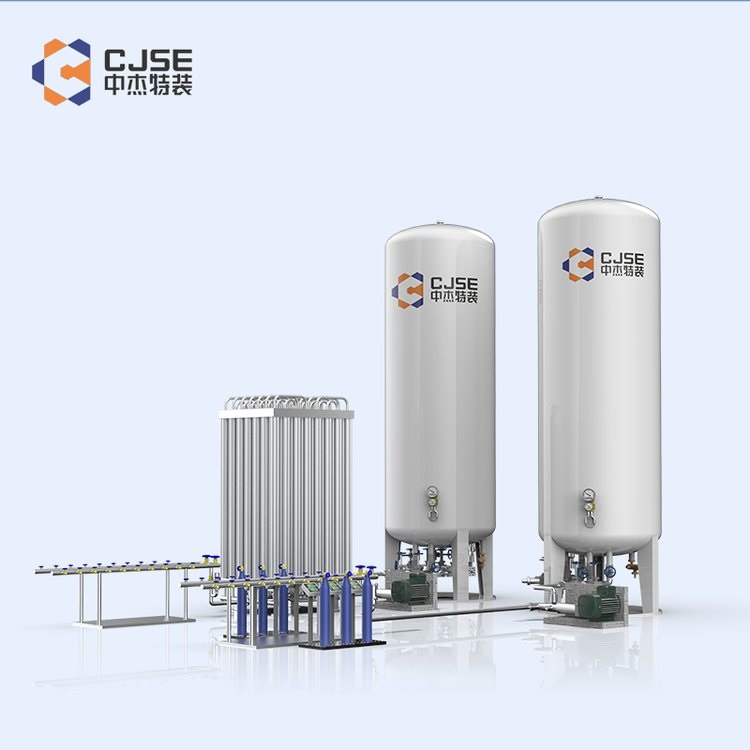
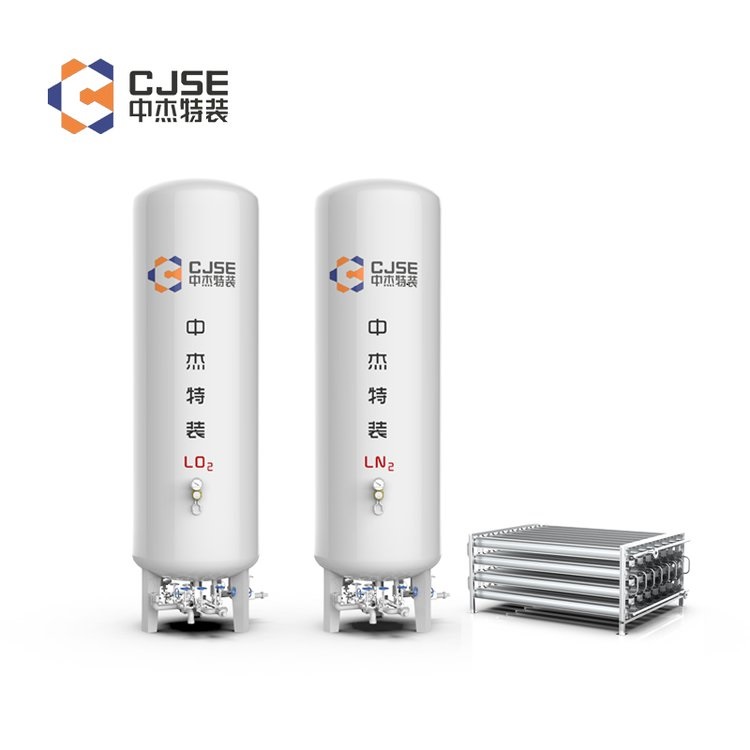
A 50-cubic-meter liquid oxygen tank refers to a storage tank with a capacity of 50 cubic meters. Liquid oxygen tanks are commonly used for storing and supplying liquid oxygen, used in fields such as experiments and research.
Key features and configurations of a 50 cubic meter liquid oxygen storage tank may include the following aspects:
Volume: A 50 cubic meter liquid oxygen tank can store a large quantity of liquid oxygen.
Structure: Liquid oxygen tanks are typically designed with double or multi-layer construction, filled with insulating material in between to minimize heat transfer and evaporation of the liquid oxygen. The tank material is usually stainless steel or aluminum alloy, offering excellent corrosion and low-temperature resistance.
Insulation Layer: The insulation layer of liquid oxygen storage tanks typically employs multi-layered insulation materials, such as polyethylene foam, glass fiber, and vacuum layers, to reduce heat transfer and the evaporation of liquid oxygen.
Temperature Control System: Liquid oxygen storage tanks are typically equipped with a temperature control system to regulate the tank's temperature and maintain the low-temperature state of the liquid oxygen.
Safety Equipment: Liquid oxygen storage tanks are typically equipped with safety devices, such as pressure and temperature sensors, safety valves, etc., to ensure the safe operation of the tank.
It is crucial to strictly adhere to the relevant safety regulations and operational guidelines when using liquid oxygen tanks to ensure their safe operation and use. Liquid oxygen is highly flammable, so fire prevention measures must be taken when using liquid oxygen tanks, and it is essential to ensure there are no ignition sources nearby.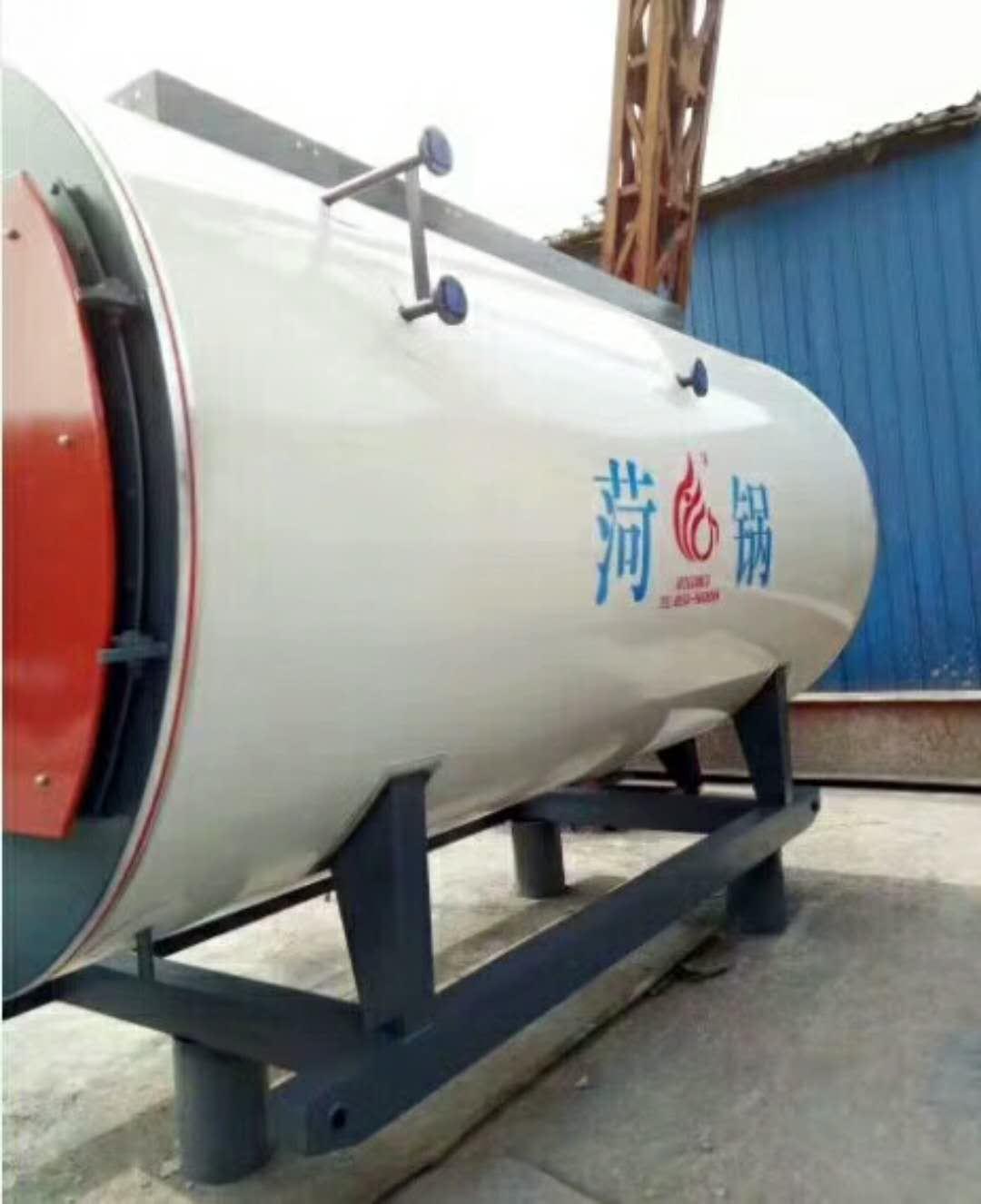
Liquid oxygen storage tanks may deform during use. The following are common deformation defects in liquid oxygen storage tanks:
Elastic Deformation: Liquid oxygen tanks may undergo elastic deformation when subjected to external pressure or temperature changes. This deformation is typically reversible, meaning the tank will return to its original shape once the external pressure is removed or the temperature returns to normal.
Plastic Deformation: When a liquid oxygen tank is subjected to significant external force or pressure, it may undergo plastic deformation. This type of deformation is irreversible, and the tank cannot return to its original shape. Plastic deformation can cause changes in the tank's shape, such as dents or warping.
Hot Deformation: Liquid oxygen storage tanks may experience hot deformation when subjected to high temperatures or temperature changes. Hot deformation can cause the tank to change shape, expand, or contract.
Cold Deformation: Liquid oxygen tanks may undergo cold deformation when exposed to low temperatures or temperature changes. Cold deformation can lead to changes in the tank's shape, shrinkage, or cracking.
These deformation defects may affect the structural integrity and safety of liquid oxygen storage tanks. Therefore, it is crucial to regularly inspect and evaluate the deformation status of liquid oxygen storage tanks to ensure their normal operation and safe use. If deformation defects are found in the tanks, timely repair or replacement measures should be taken to avoid further damage and safety risks.
Our company places great emphasis on technological innovation and R&D, boasting 1 city-level enterprise technology center in Heze City. We have established testing facilities for non-destructive testing, physical and chemical testing, welding testing, hydrostatic testing, and more. We are equipped with over 600 pieces of various equipment, including CNC machine tools, X-ray flaw detectors, digital ultrasonic flaw detectors, mechanical property testing machines, chemical analyzers, spectrometers, tensile testing machines, plasma welding machines, and others. The key products and technologies we have developed, such as temperature and pressure vessel welding, biomass boiler emission reduction, and waste heat utilization, have successively been shortlisted for multiple Shandong Provincial Department of Industry and Information Technology science and technology innovation projects, Shandong Provincial key projects, and Heze City innovative and excellent projects. We have cumulatively obtained 27 authorized utility model patents, 16 authorized invention patents, participated in drafting 2 standards, 2 industry standards, and registered 15 trademarks. The technical team of our company, in collaboration with Professor Yajiang Li of Shandong University, has jointly developed deep cryogenic container processing technology, which employs the internationally recognized plasma arc + wire feeding argon arc welding (PAW-GTAW) technology. After being appraised as a provincial-level scientific and technological achievement, our technology level has reached international standards in the field of deep cryogenic container manufacturing. Choose Zhongjie Special Equipment, and let's create brilliance together!
Qingdao Argon Storage Tanks, Various Models Available
