


Shandong Zhongjie Special Equipment (formerly Heze Boiler Factory Co., Ltd.) holds an A-grade boiler manufacturing license, an A2-grade pressure vessel manufacturing license, an A2-grade pressure vessel design license, a B-grade boiler installation license, and GB2/Class, GC2/Class pressure pipeline installation licenses, as well as a mechanical and electrical equipment installation contracting qualification. It is a member of the China Boiler and Water Treatment Association, the China Chemical Equipment Association, and the director unit of the Shandong Equipment Manufacturing Association. The company has also passed the ISO9001 Quality Management System, ISO14001 Environmental Management System, OHSAS18001 Occupational Health and Safety Management System certifications, and the American ASME/U2 certification.
Reducing emissions of nitrogen oxides (NOx) from biomass boilers can be achieved through the following measures:
Combustion Control Technology: Utilizes advanced combustion control techniques such as low nitrogen combustion technology. By optimizing the combustion process and regulating the combustion temperature and oxygen concentration, the formation of nitrogen oxides is reduced. Methods like staged combustion and optimized combustion chamber design can be employed to lower combustion temperatures and extend combustion times, further decreasing nitrogen oxide emissions.
SNCR Technology: Selective Non-Catalytic Reduction (SNCR) technology involves injecting a reductant, such as urea solution, into the combustion process, which reacts with nitrogen oxides to convert them into nitrogen and water. This technique can reduce the formation and emission of nitrogen oxides during combustion.
SCR Technology: Selective Catalytic Reduction (SCR) technology is a nitrogen oxide control method. By injecting urea solution into flue gas and acting through a catalyst, nitrogen oxides are converted into nitrogen and water. SCR technology achieves nitrogen oxide removal at lower temperatures, suitable for large-scale biomass boilers.
Flue Gas Recirculation (FGR): The FGR technology recycles a portion of the flue gas back into the boiler combustion chamber, reducing combustion temperature and oxygen concentration, and minimizing the formation of nitrogen oxides. This technique can control nitrogen oxide emissions by adjusting the recirculation ratio.
Fuel selection and pretreatment: Choosing low nitrogen fuels, such as low nitrogen biomass fuel, can reduce the formation of nitrogen oxides. Additionally, for biomass fuels with high nitrogen content, pretreatment measures like drying and gasification can be taken to decrease the formation of nitrogen oxides during combustion.
Regular maintenance and cleaning: Regularly maintain and clean biomass boilers to ensure the cleanliness and proper operation of components such as burners and heat exchangers. Cleaning the combustion chamber and heat exchangers can reduce the accumulation of dirt, enhance thermal conductivity efficiency, and lower nitrogen oxide emissions.
Comprehensive implementation of the aforementioned measures can effectively reduce the emissions of nitrogen oxides from biomass boilers, achieving the goals of environmental protection and energy conservation. Specific measures should be selected based on the characteristics, operating conditions, and emission requirements of the boiler.
To prevent the occurrence of tail combustion accidents in biomass boilers, the following operational measures can be taken:
Properly adjust combustion parameters: Ensure the stability and completeness of the combustion process, avoiding fuel accumulation and re-burning in the tail section. Reasonably control combustion temperature, air flow, and combustion time, maintaining a smooth and thorough combustion process.
Enhance mixing and air flow distribution within the furnace: By optimizing furnace structure and combustion system design, ensure thorough mixing of fuel and air, preventing fuel accumulation and re-burning in the tail section. Rationalize the air flow distribution within the furnace to guarantee uniform combustion of the fuel.
Regular ash and carbon removal from the furnace chamber: Regularly clean the ash and carbon deposits within the furnace chamber to maintain its cleanliness. Clean the flue and waste heat recovery equipment to prevent particle accumulation and ash buildup in the flue gases, reducing the risk of re-combustion.
Install Flue Gas Recirculation (FGR) Unit: Install a flue gas recirculation unit at the boiler tail to reignite the exhaust flue gas, enhance combustion efficiency, and reduce the likelihood of secondary combustion at the tail.
Enhanced Operation Monitoring and Maintenance: Regularly monitor and maintain biomass boilers to promptly identify and address any anomalies. Monitor combustion parameters, flue gas emissions, and temperatures to ensure the boiler operates normally.
Ensure comprehensive safety training and operational procedures: Conduct safety training for operators to enhance their understanding of biomass boiler operation and safety protocols.
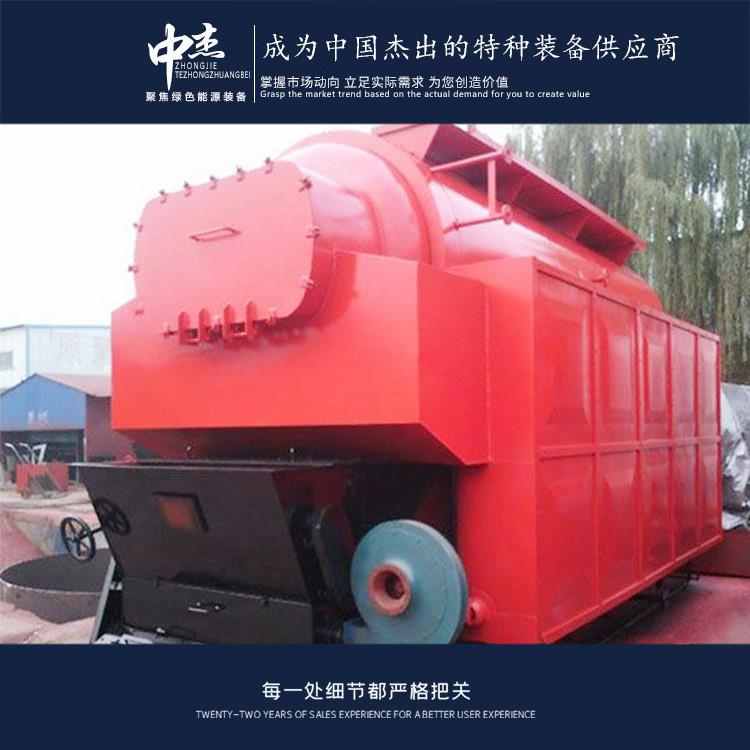
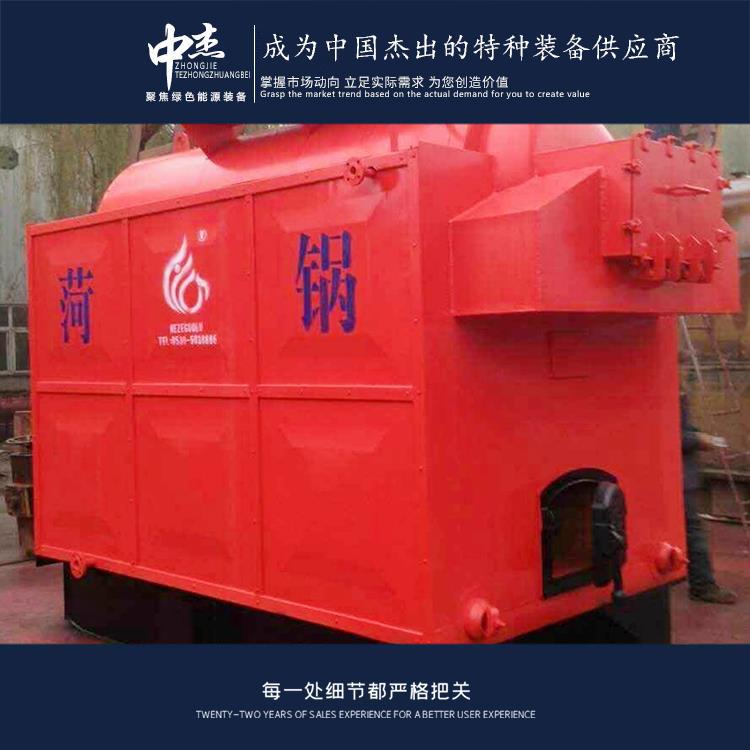
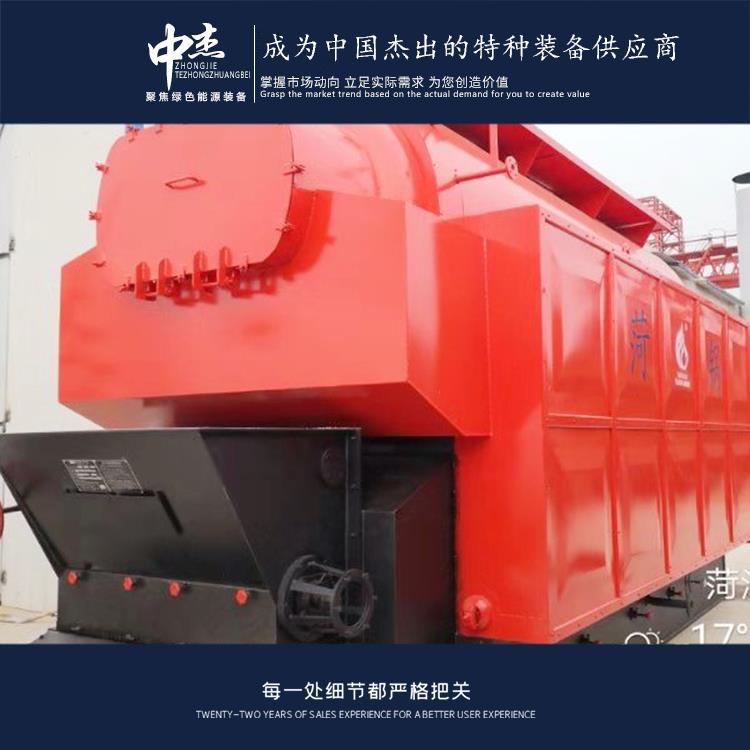
The biomass boiler body is typically composed of the following components, each with its specific function:
Furnace Chamber: The furnace chamber is the area where biomass fuel is burned, serving as a space for combustion and heat exchange. During the combustion process, the fuel in the furnace chamber releases thermal energy, while flue gases exchange heat with water through the furnace chamber.
Chimney Flue: The flue is a passage for the flow of flue gas, guiding the exhaust gases from the furnace to the chimney for排放. The flue gas inside exchanges heat with the boiler's water, transferring heat from the flue gas to the water, thus improving thermal efficiency.
Boiler Drum: The boiler drum is the main part that holds water and steam, where water is heated to convert into steam. It is equipped with a water level control device inside to regulate the water level and ensure the safe operation of the boiler.
Grate: A grate is a device used to support and burn biomass fuel, its function being to evenly distribute the fuel within the furnace chamber and to provide an air supply, thereby promoting the combustion process.
Superheater: A superheater is a device that heats the saturated steam in a boiler to increase its temperature and pressure. It transfers heat from the flue gases to the steam through heat exchange between the two.
Condenser: A condenser is a device used to condense steam into water, releasing the heat from the steam. By exchanging heat with a cooling medium (such as cold water), a condenser converts the heat from the steam into thermal energy, enhancing thermal efficiency.
Chimney: A chimney is a passageway for emissions to be released into the atmosphere, serving the purpose of exhausting.
Biomass boilers feature the following characteristics:
Renewable Energy: Fuel used in biomass boilers comes from organic matter such as plants, animals, and microorganisms, making it a renewable energy source. Compared to traditional fossil fuels, biomass fuel has lower carbon emissions and a reduced environmental impact.
A wide range of fuel sources: Biomass fuels come from a diverse array, including wood, straw, discarded crops, food waste, and municipal solid waste. This variety of fuel sources provides flexibility and adaptability to biomass boilers, allowing them to utilize waste and by-products from plants and animals.
Environmental friendliness: The carbon dioxide produced during biomass combustion can be absorbed by plants, forming a cycle that reduces air pollution. Moreover, the emissions and ash produced during the combustion process of biomass boilers are relatively low, resulting in less environmental impact.
Energy Security: Biomass, as a native renewable energy source, can reduce dependence on imported energy and enhance energy security. In areas with scarce resources, the use of biomass boilers can provide a reliable energy supply.
Economic Efficiency: Biomass fuel is relatively cost-effective, helping to reduce energy costs. Moreover, the technology and equipment for biomass boilers are continuously developing and maturing, making them more economically competitive.
In summary, biomass boilers feature renewable energy, diverse fuel sources, environmental friendliness, energy security, and cost-effectiveness, making them a crucial component in the sustainable energy sector.
Our company attaches great importance to technological innovation and R&D, with 1 city-level technical center in Heze City. We have established testing facilities for non-destructive testing, physical and chemical testing, welding testing, hydrostatic testing, etc., and are equipped with over 600 pieces of various equipment including CNC machine tools, X-ray flaw detectors, digital ultrasonic flaw detectors, mechanical property testing machines, chemical analyzers, spectrometers, tensile testing machines, plasma welding machines, and more. The key products and technologies we have developed, such as welding of temperature-pressure vessels, emissions reduction of biomass boilers, and waste heat recovery, have successively been selected for multiple Shandong Province Department of Industry and Information Technology science and technology innovation projects, Shandong Province key projects, and Heze City innovative excellence projects. We have accumulated a total of 27 authorized utility models, 16 authorized inventions, participated in drafting 2 standards, 2 industrial standards, and registered 15 trademarks. The technical team of our company, in collaboration with Professor Yajiang Li of Shandong University, has developed deep cryogenic vessel processing technology using the international plasma arc + filler wire tungsten inert gas arc (PAW-GTAW) welding technology. After provincial technological achievement evaluation, the technology level has reached international standards in the field of deep cryogenic vessel manufacturing. Choose Zhongjietezhuang, let's create brilliance together!
Fujian 40-ton biomass boiler, over 20 years of experience for added peace of mind
