


Shandong Zhongjie Special Equipment (formerly Heze Boiler Factory Co., Ltd.) holds an A-grade boiler manufacturing license, A2-grade pressure vessel manufacturing license, A2-grade pressure vessel design license, B-grade boiler installation license, GB2 and GC2 class pressure pipeline installation licenses, and equipment and machinery installation contracting qualifications. It is a member of the China Boiler and Water Treatment Association, the China Chemical Equipment Association, and the council unit of the Shandong Equipment Manufacturing Association, and has passed the ISO9001 Quality Management System, ISO14001 Environmental Management System, OHSAS18001 Occupational Health and Safety Management System certifications, as well as the American ASME/U2 certification.
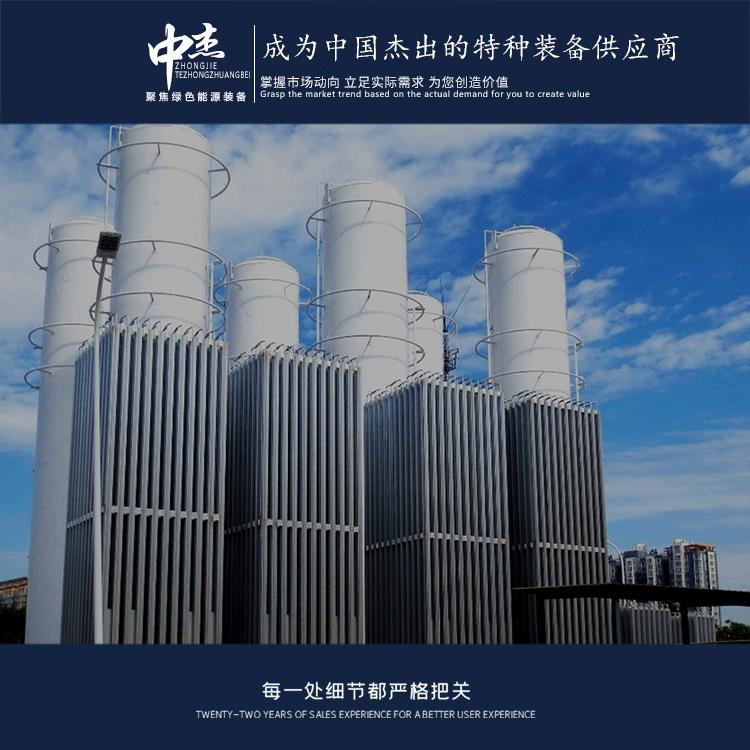
When selecting a low-temperature liquefied natural gas (LNG) storage tank, consider the following factors:
Storage Tank Types: Common LNG storage tank types include vertical fixed-roof tanks, spherical tanks, and horizontal tanks. Choose the appropriate tank type based on specific application requirements and site conditions.
Tank Capacity: Determine the tank capacity based on the storage requirements and estimated usage of LNG. The tank capacity should meet the expected storage cycle and supply demand.
Material Selection: LNG tanks are typically made from low-temperature steel or nickel alloys to ensure corrosion resistance and strength in cold environments. Select the appropriate material based on the tank's design pressure and temperature requirements.
Safety Performance: LNG tanks should have excellent safety performance, including seismic resistance, fire resistance, and leakage control capabilities. The tanks should comply with relevant safety standards and regulations, such as API 620, EN 1473, etc.
Maintenance and Inspection: Consider the maintenance and inspection requirements of the tank, including internal cleaning, coating protection, and corrosion prevention measures. The tank design should facilitate maintenance and inspection operations to ensure long-term reliable operation.
Environmental Impact: When selecting LNG tanks, consider their impact on the surrounding environment. The layout and design of the tanks should meet environmental protection requirements, minimizing noise, vibration, and gas emissions, etc.
Cost-effectiveness: Considering the investment, operational, and lifecycle costs of the storage tank, choose a tank with a favorable cost-performance ratio.
需要注意的是,选型LNG储罐时应遵循相关的和地区的法规、标准和规范。此外,咨询的工程师或储罐制造商,以获取更详细和准确的选型建议。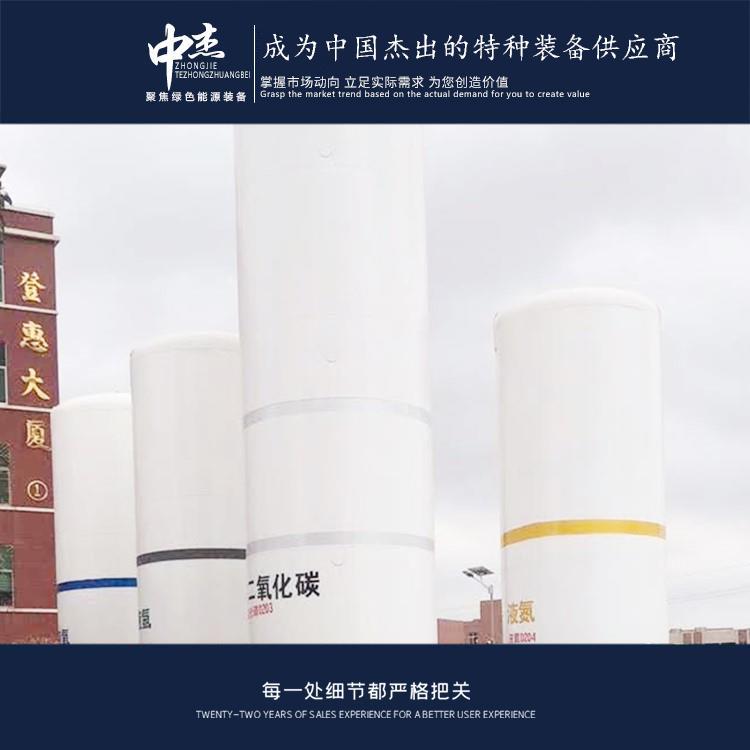
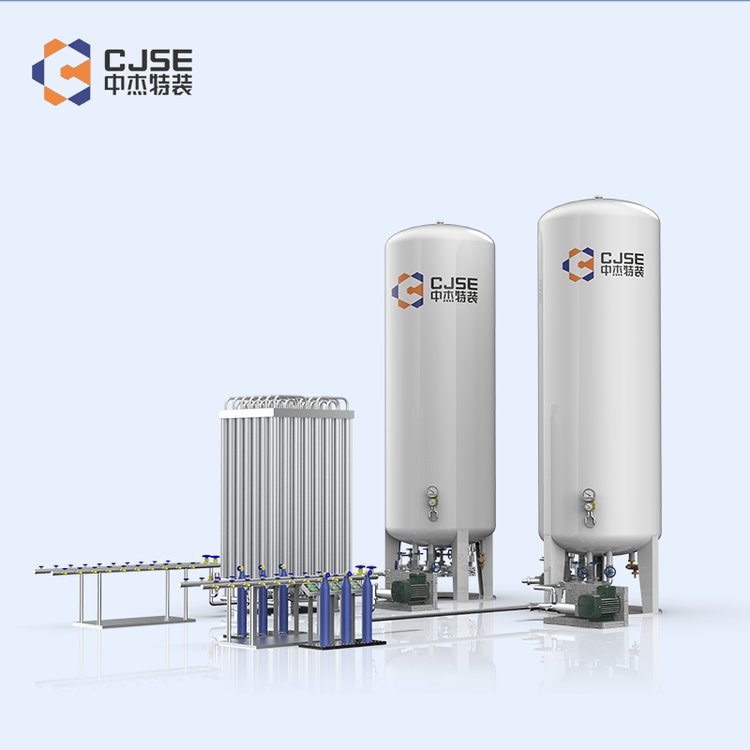
A liquid oxygen tank is a device used for storing liquid oxygen. Liquid oxygen is the liquid form obtained by cooling oxygen below its boiling point and is commonly used in fields such as medical, industrial production, and equipment. Liquid oxygen tanks are typically made from high-strength materials like stainless steel to ensure they can withstand the low temperatures and high pressures of liquid oxygen. The interior of the tank usually has an insulating layer to minimize evaporation of the liquid oxygen and maintain its低温 state. The design and manufacturing of liquid oxygen tanks must consider safety and reliability to prevent leaks and explosions. Strict operational procedures and safety standards must be followed when using liquid oxygen tanks to ensure the safety of personnel and equipment. The development and manufacturing of liquid oxygen tanks are carried out by engineers and technical teams, involving knowledge and technology from various fields such as materials science, mechanical engineering, and chemical engineering. Different manufacturers may employ different design and manufacturing methods to meet the needs and application scenarios of various users.
Liquid oxygen tanks are used for storing and supplying liquid oxygen as fuel and an oxidizer, playing a crucial role in launch propulsion systems and more. Industrial Production: Liquid oxygen is used as an oxidizer in industrial production for processes such as combustion, oxidation, and oxygen supply. Liquid oxygen tanks are employed to store and supply liquid oxygen to meet the demands of industrial applications like metal cutting, welding, and chemical reactions. Equipment: Liquid oxygen tanks are used in equipment to supply oxygen, such as oxygen therapy, oxygen inhalation, and operating rooms. These tanks provide high-purity oxygen while maintaining low temperatures to meet the equipment's oxygen requirements. Laboratory Research: Liquid oxygen tanks are utilized in scientific research and laboratories to provide liquid oxygen as experimental materials and reagents. The low temperature and high purity of liquid oxygen make it widely applicable in laboratories for fields such as materials science, chemical reactions, and biomedical research. In summary, liquid oxygen tanks are crucial in various fields including industrial production, equipment, and laboratory research, providing storage and supply functions for liquid oxygen at the application sites.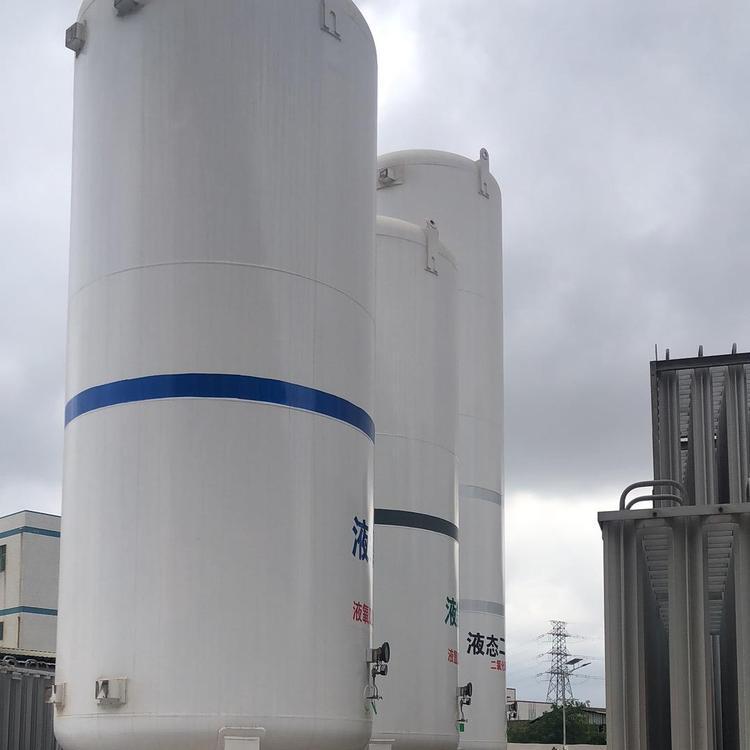
Low-temperature liquid storage tanks feature the following characteristics and usage advantages:
Feature:
Low-Temperature Storage: Low-temperature liquid storage tanks can store low-temperature liquids (such as liquid nitrogen, liquid oxygen, etc.) at low temperatures, maintaining their liquid state. Liquid storage significantly enhances storage density and saves space.
Insulation: The low-temperature liquid storage tank is equipped with special insulation materials and structural design, effectively reducing heat conduction and retention, maintaining a stable temperature for the low-temperature liquid. This helps to minimize energy loss and liquid evaporation.
Safety: Low-temperature liquid storage tanks feature excellent safety performance. These tanks are made with special materials and structural design, capable of withstanding low temperatures and high pressures. Additionally, the tanks are equipped with safety devices, such as pressure relief valves and level alarms, to ensure safe operation and use.
Utilization Advantages:
High Purity Supply: Low-temperature liquid storage tanks provide high purity liquid material supply. Through refrigeration and purification processes, high purity liquid gases can be obtained to meet application needs in fields such as industry and scientific research.
Long-Term Storage: Low-temperature liquid storage tanks are designed for long-term storage of低温 liquids, extending their service life. By controlling the temperature inside the tank and the performance of the insulation layer, the evaporation and oxidation of the liquid can be slowed down, maintaining its stability and purity.
Wide Range of Applications: Low-temperature liquid storage tanks are extensively used in various fields such as industry and scientific research. They can be used for storing liquid oxygen and providing oxygen supply; in the industrial sector, they are suitable for storing liquefied natural gas (LNG) and other process gases like liquid nitrogen; in scientific research, they are ideal for storing low-temperature experimental samples.
Environmental Protection and Energy Saving: Low-temperature liquid storage tanks can effectively store and utilize low-temperature liquids, reducing energy waste and environmental pollution. Storage of liquid substances
Zhongjie Special Equipment upholds the grand vision of "realizing employees' dreams, creating value for customers, and striving for the prosperity and strength of our motherland," and is dedicated to the development of the green energy equipment industry. We offer society high-quality products and services at competitive prices!
Luoyang Nitrogen Storage Tank, 304 Stainless Steel Material
