


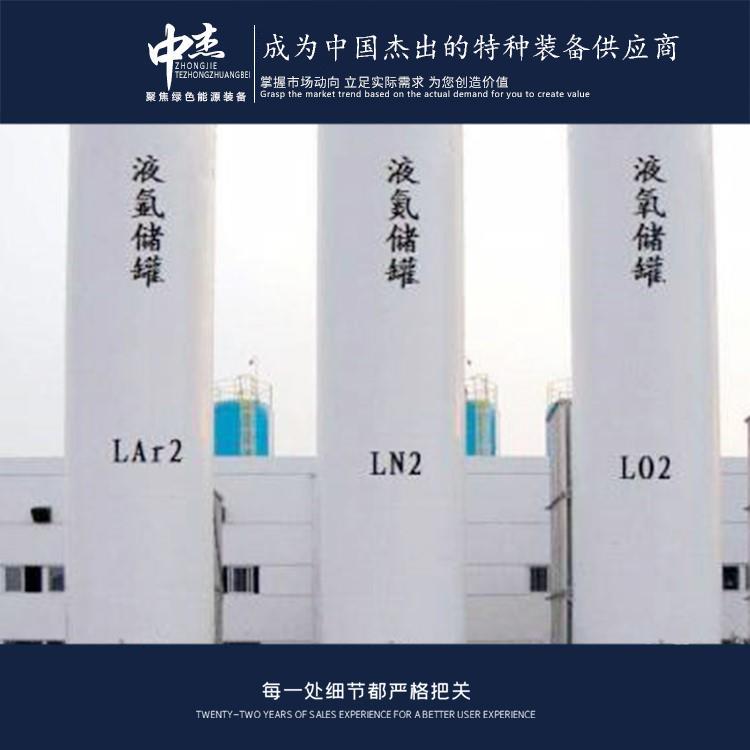
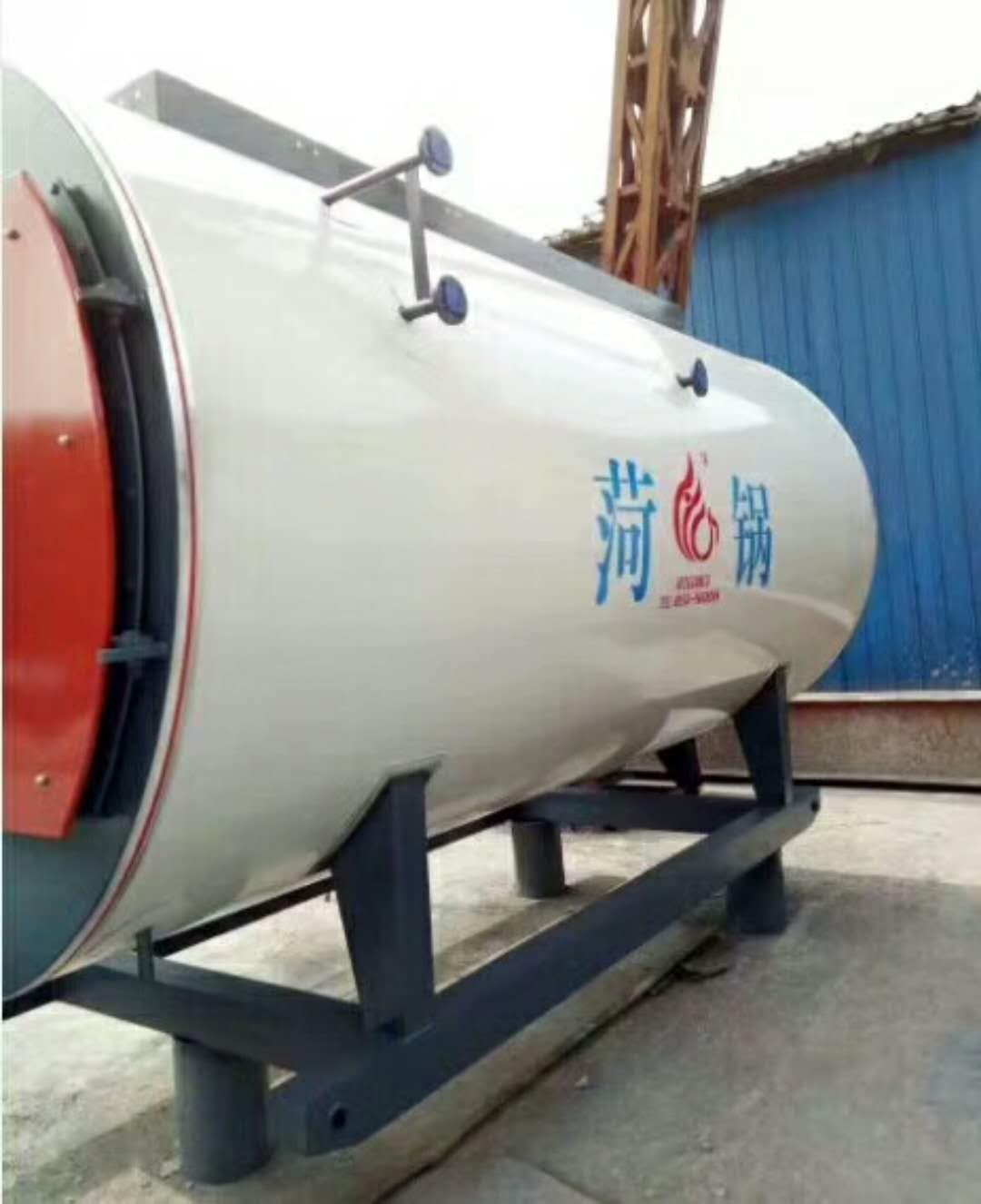
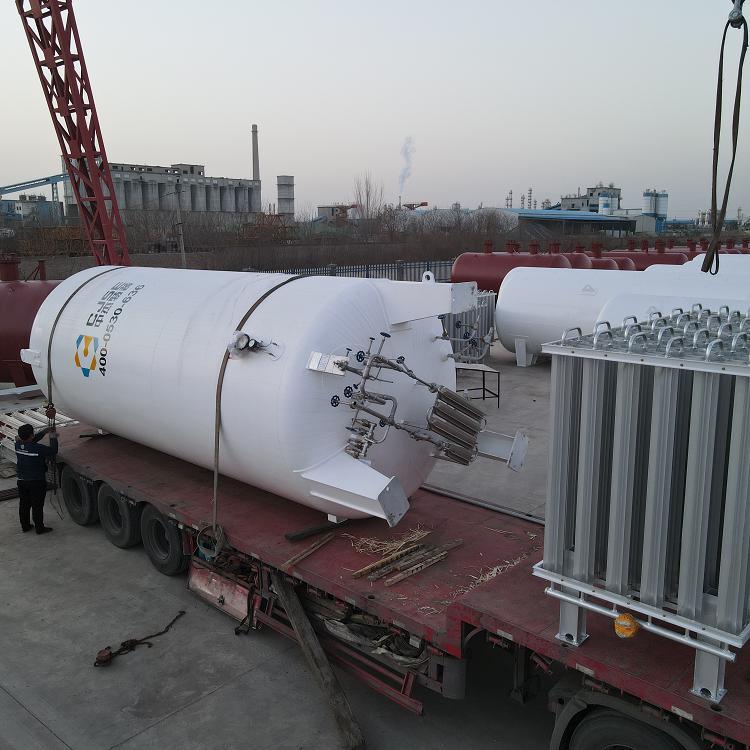
Shandong Zhongjie Special Equipment (formerly Heze Boiler Factory Co., Ltd.) holds an A-grade boiler manufacturing license, an A2-grade pressure vessel manufacturing license, an A2-grade pressure vessel design license, a B-grade boiler installation license, and GB2/Class, GC2/Class pressure pipeline installation licenses, as well as an electromechanical equipment installation contracting qualification. It is a member of the China Boiler and Water Treatment Association, the China Chemical Equipment Association, and the理事 unit of the Shandong Equipment Manufacturing Association. The company has also passed the ISO9001 Quality Management System, ISO14001 Environmental Management System, OHSAS18001 Occupational Health and Safety Management System certifications, and the American ASME/U2 certification.
Carbon dioxide storage tanks are equipment used for storing and supplying carbon dioxide gas, featuring the following parameters, functions, and characteristics:
Parameters:
- Capacity: The capacity of carbon dioxide storage tanks can be customized to meet requirements, typically expressed in the volume of liquid carbon dioxide, such as kiloliters or cubic meters.
- Pressure: The internal pressure of the tank is usually controlled within a safe range to ensure the safety of storage and supply.
- Temperature: Carbon dioxide storage tanks generally need to be maintained at low temperatures to keep the carbon dioxide in a liquid state.
Functions:
- Storage: The tanks can compress carbon dioxide gas into a liquid form, achieving high-density storage, saving space and costs.
- Supply: Carbon dioxide within the tank can be supplied to the required fields via pipelines or other means, such as the food and beverage industry, various sectors, and fire extinguishing.
Characteristics:
- Environmental and Renewable: Carbon dioxide is an environmentally friendly gas. By storing and utilizing carbon dioxide, its emissions into the atmosphere can be reduced, promoting environmental protection and sustainable development.
- Safe and Reliable: Carbon dioxide storage tanks are typically made with high-strength materials, offering excellent pressure resistance and safety. The tanks are equipped with safety valves, pressure gauges, and other accessories to ensure safe operation.
- Multiple Applications: Carbon dioxide storage tanks are widely used in the food and beverage industry, various sectors, fire extinguishing, and more. Carbon dioxide serves as a preservative, carbonation agent, gas, and extinguishing agent, with extensive applications and market demand.
In summary, carbon dioxide storage tanks are characterized by high-density storage, safety, environmental friendliness, and multiple applications, making them an essential device for storing and supplying carbon dioxide gas.
When using carbon dioxide tanks, be mindful of the following aspects:
- Safe Operation: Adhere to relevant safety operating procedures and standards to ensure operators have the necessary safety knowledge and skills. Be vigilant against risks such as leaks, explosions, and fires while using the tank.
- Tank Pressure Control: Monitor and control the tank's pressure to ensure it remains within a safe range. Avoid exceeding the tank's rated pressure to prevent破裂 or leakage.
- Level Monitoring: Regularly monitor the liquid level within the tank to ensure an adequate supply of carbon dioxide. Avoid overfilling or underfilling to maintain proper levels.
- Static Control Measures: Implement static control measures to prevent the buildup and discharge of static electricity. Use anti-static equipment and tools to ensure static safety during operations.
- Tank Maintenance: Regularly inspect and maintain the tank, including its appearance, valves, and fittings, to ensure its integrity and prevent leaks or damage.
- Exhaust Gas Treatment: Handle the exhaust gas produced by carbon dioxide tanks to avoid environmental pollution. Adopt appropriate exhaust gas treatment methods, such as collection and processing.
- Storage Records: Keep records of the tank's usage, including filling dates, quantities, and inspection records. Regularly perform tank inspections and maintenance and retain relevant records.
- Training and Awareness: Train operators to enhance their awareness and ability in safely operating carbon dioxide tanks. Conduct regular safety training and drills to prepare for emergencies.
- Note: The above are common considerations; specific application requirements may vary depending on tank type and usage. When operating carbon dioxide tanks, follow relevant specifications and standards, and consult with experts to ensure safety and effectiveness.
Carbon dioxide recovery is a technology designed to capture carbon dioxide from industrial emission sources or the atmosphere and store or utilize it to reduce CO2 emissions. Here are some common carbon dioxide recovery techniques:
1. Coal-fired Power Plant CO2 Recovery: In coal-fired power plants, the CO2 produced by burning coal can be captured and recovered. Common methods involve carbon capture technologies to separate CO2 from flue gas and then store or utilize it.
2. Industrial Emission Source CO2 Recovery: CO2 produced by many industrial processes can be treated through capture and recovery techniques. For instance, CO2 generated during the production processes in industries like steel, cement, and chemicals can be recovered to reduce emissions.
3. Atmospheric CO2 Capture: CO2 in the atmosphere can also be recovered using direct air capture technologies. This technique employs adsorbents or chemical reactions to capture and separate CO2 from the atmosphere, followed by storage or utilization.
4. CO2 Utilization: Captured CO2 can be used to produce valuable chemicals and fuels. For example, through CO2 catalytic conversion technology, CO2 can be converted into fuels or chemicals like ethanol.
The development of carbon dioxide recovery technologies aims to reduce greenhouse gas emissions and mitigate climate change. However, these technologies are still in continuous development and research, requiring further technological breakthroughs and practical verification for large-scale application.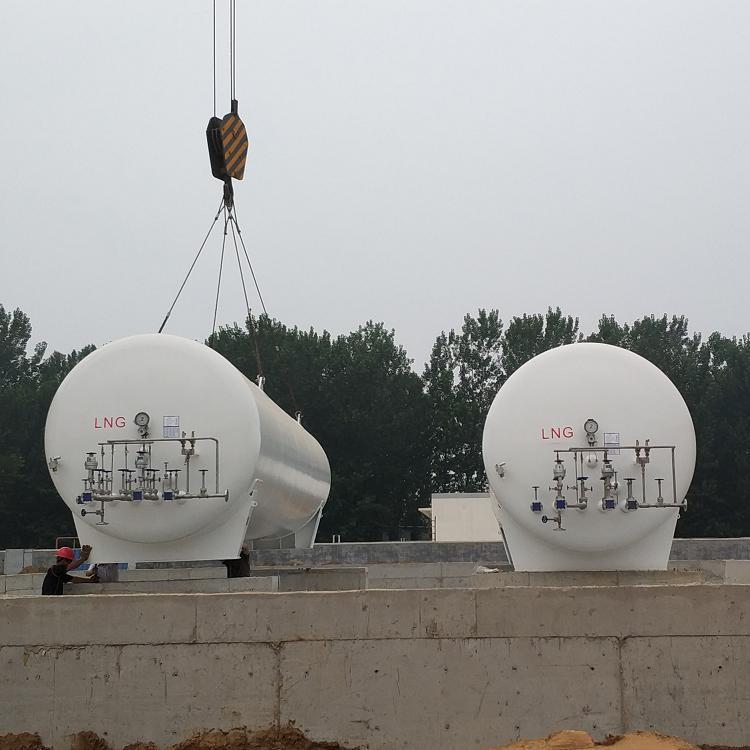
CO2 storage tank spacing regulations are typically dictated by relevant safety codes and standards, with specific requirements varying due to factors like location, use, and tank capacity. Below are some common spacing rules:
- Small spacing between tanks: Generally, the small spacing between adjacent tanks should comply with the relevant safety codes and standards. This ensures that neighboring tanks are not affected in the event of a leak or accident.
- Spacing between tanks and buildings: The distance between tanks and buildings also needs to meet the relevant codes and standards. This ensures that the building is not compromised in the event of a tank leak or accident.
- Spacing between tanks and equipment: The spacing between tanks and other equipment (such as pipelines, pumps, etc.) should also comply with the relevant codes and standards. This ensures the proper operation and maintenance of the equipment.
- Safety and evacuation routes: Sufficient safety and evacuation routes should be provided around and between tanks to allow for safe撤离 during emergencies.
Note that specific spacing rules may vary by region and industry. Therefore, when installing and using CO2 storage tanks, it's crucial to refer to local safety codes and standards and consult with experts to ensure compliance.
Shandong Zhongjie Special Equipment, welcome customers to our factory for business discussions.
枣庄二氧化碳储罐厂家 生产厂家
