


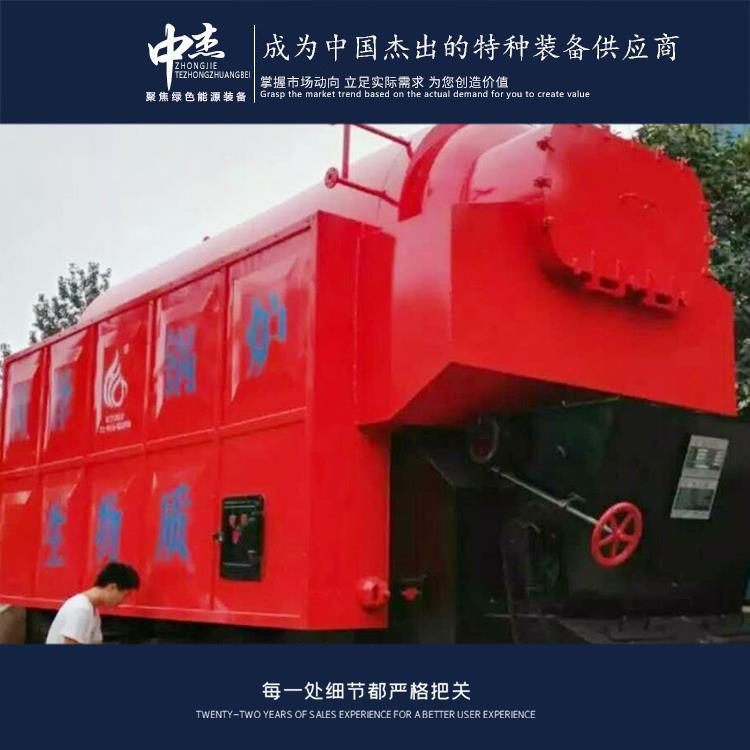
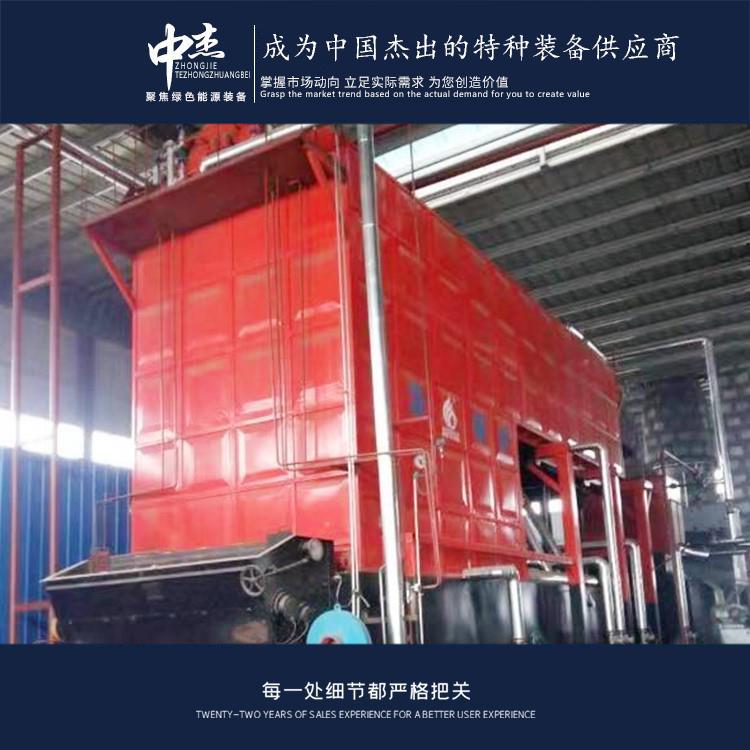
Shandong Zhongjie Special Equipment (formerly Heze Boiler Factory Co., Ltd.) holds an A-grade boiler manufacturing license, an A2-grade pressure vessel manufacturing license, an A2-grade pressure vessel design license, B-grade boiler installation, and GB2/Class, GC2/Class pressure pipeline installation licenses, as well as a qualification for electromechanical equipment installation contracting. It is a member of the China Boiler and Water Treatment Association, the China Chemical Equipment Association, and the理事 unit of the Shandong Equipment Manufacturing Association. The company has also passed certifications for the ISO9001 Quality Management System, ISO14001 Environmental Management System, OHSAS18001 Occupational Health and Safety Management System, and the American ASME/U2 certification.
Possible reasons for the black smoke produced by biomass boiler combustion may include:
Incomplete Combustion: Inadequate oxygen supply or insufficient combustion temperature in biomass fuel can lead to incomplete combustion, resulting in a large amount of smoke and black smoke. This may be caused by poor combustion chamber ventilation, poor fuel quality, or incorrect setting of combustion parameters.
High moisture content: Excessive water content in biomass fuel can lead to the evaporation of a large amount of steam during combustion, lowering the combustion temperature and affecting the combustion efficiency, resulting in the production of black smoke.
Fuel Quality Issue: If biomass fuel contains impurities, ash, or uneven humidity, it can affect the combustion process, leading to incomplete combustion and the production of black smoke.
Combustion Equipment Issues: If there are malfunctions or wear in the combustion equipment of a biomass boiler, such as slagging in the combustion chamber or clogging of the burners, it can affect the combustion efficiency and lead to the production of black smoke.
To reduce the emission of black smoke, the following measures can be taken:
Ensure sufficient oxygen supply: Adjust the ventilation system of the combustion equipment to ensure adequate oxygen supply, enhance combustion efficiency, and reduce the emission of black smoke.
Control combustion temperature: Adjust combustion parameters, such as combustion temperature and time, to ensure complete fuel combustion and reduce the emission of black smoke.
Optimize fuel quality: Select the appropriate amount of biomass fuel, ensuring consistent dryness and quality, reducing moisture content and impurities, and enhancing combustion efficiency.
Regular Maintenance: Conduct regular maintenance on biomass boilers to clean the combustion chamber, burners, and other components, ensuring smooth operation of the equipment and reducing the production of black smoke.
Install Pollutant Control Equipment: As required, install flue gas purification equipment such as dust collectors and desulfurization devices, effectively removing particulates generated during the combustion process.
Slagging in biomass boiler furnace occurs due to the accumulation of ash and other impurities from biomass fuel during combustion, which settle within the furnace. The following are some operational factors that can influence slagging in biomass boiler furnaces:
Fuel Characteristics: Different types of biomass fuel have varying ash content, ashing temperature, and ashing properties. Fuel with high ash content tends to produce a large amount of ash residue, while fuel with a lower ashing temperature is prone to slagging inside the furnace.
Combustion Temperature: Combustion temperature is a significant factor affecting slagging in biomass boiler furnaces. An excessively low combustion temperature can lead to incomplete fuel combustion and insufficient melting of ash, increasing the likelihood of slagging.
Air Supply: Excessive air supply can lower the combustion temperature, increase the residence time of fuel in the furnace, and raise the risk of slagging. At the same time, insufficient air supply can lead to incomplete fuel combustion, increasing the generation of ash and slag.
Furnace Chamber Design: The design of the furnace chamber significantly impacts the air flow distribution and temperature distribution within. A well-designed furnace chamber promotes complete combustion of fuel and the discharge of ash, reducing the likelihood of slagging.
Dust Removal System: The performance and operation of the dust removal system also affect the slagging condition inside the furnace. Regularly cleaning the ash and dust inside the furnace to maintain good air circulation.
The extinguishing process and maintenance methods for fully automatic biomass boilers are as follows:
Extinguishing Process:
Cease Fuel Supply: Prior to extinguishing the biomass boiler, stop fuel supply first to ensure the fuel supply pipelines are closed.
Turn off the burner: Switch the burner's switch or the "Off" button on the control panel to the off position, stopping the burner from operating.
Wait for Cooling: Allow the boiler to cool to a safe temperature, which usually takes some time. Do not operate during this period to prevent any accidents.
Shut off power: After the boiler has completely cooled down, turn off the power switch of the boiler to ensure the boiler is in a power-off state.
Maintenance Instructions:
Clean combustion chamber: Regularly clean the combustion chamber of ash and dirt produced during the combustion process. Use appropriate tools and cleaning agents to ensure the chamber remains clear and clean.
Heat Exchanger Cleaning: Regularly clean heat exchangers, particularly those on the flue side. During the combustion process, flue gases may contain particulates and slag, which can adhere to the heat exchanger surface, affecting heat transfer efficiency. Appropriate cleaning methods, such as mechanical or chemical cleaning, can reduce the accumulation of dirt.
Inspect and Replace Critical Components: Regularly inspect and replace critical components such as burners, valves, and sensors. Ensure these parts operate and perform properly to avoid malfunctions and safety hazards.
Water Treatment: Proper water treatment for boiler feedwater to prevent impurities and sediments from depositing inside the boiler. Methods such as water softening, deoxygenation, and scale removal can be employed to maintain the cleanliness and stability of the water supply.
Regular Maintenance: Perform regular maintenance and upkeep, including inspecting and cleaning control systems, checking electrical connections, lubricating moving parts, etc. Develop a corresponding maintenance schedule based on the boiler's usage and the manufacturer's recommendations.
Above is the extinguishing process and maintenance methods for the fully automatic biomass boiler. Through proper operation and regular maintenance, it ensures the safe operation of the boiler and extends its service life.
The biomass boiler body is typically composed of the following components, each serving a specific function:
Furnace Chamber: The furnace chamber is the area where biomass fuel is burned, serving as a space for combustion and heat exchange. During combustion, the fuel in the furnace chamber releases thermal energy, while flue gases exchange heat with water within the chamber.
Chimney Flue: The flue is a passage for smoke gas flow, guiding the flue gas from the furnace to the chimney for排放. The flue gas inside exchanges heat with the boiler's water, transferring heat from the gas to the water, thereby enhancing thermal efficiency.
Drum: The drum is the main part containing water and steam, where water is heated to transform into steam. The drum is equipped with a water level control device to regulate the water level, ensuring the safe operation of the boiler.
Grate: A grate is a device used to support and burn biomass fuel, its function being to evenly distribute the fuel within the furnace chamber and provide air supply to promote the combustion process.
Superheater: A superheater is a device that heats the saturated steam in a boiler to increase its temperature and pressure. It transfers heat from the flue gases to the steam through heat exchange between the two.
Condenser: A condenser is a device used to condense steam into water, releasing heat from the steam. By exchanging heat with a cooling medium (such as cold water), the condenser converts the heat in the steam into thermal energy, enhancing thermal efficiency.
Chimney: A chimney is a conduit for releasing flue gases into the atmosphere, serving the purpose of exhaust.
Zhong Jie Special Equipment upholds the grand vision of "realizing the dreams of our employees, creating value for our customers, and striving for the prosperity and strength of our motherland," wholeheartedly committing to the development of the green energy equipment industry. We dedicate our high-value, cost-effective products and services to society!
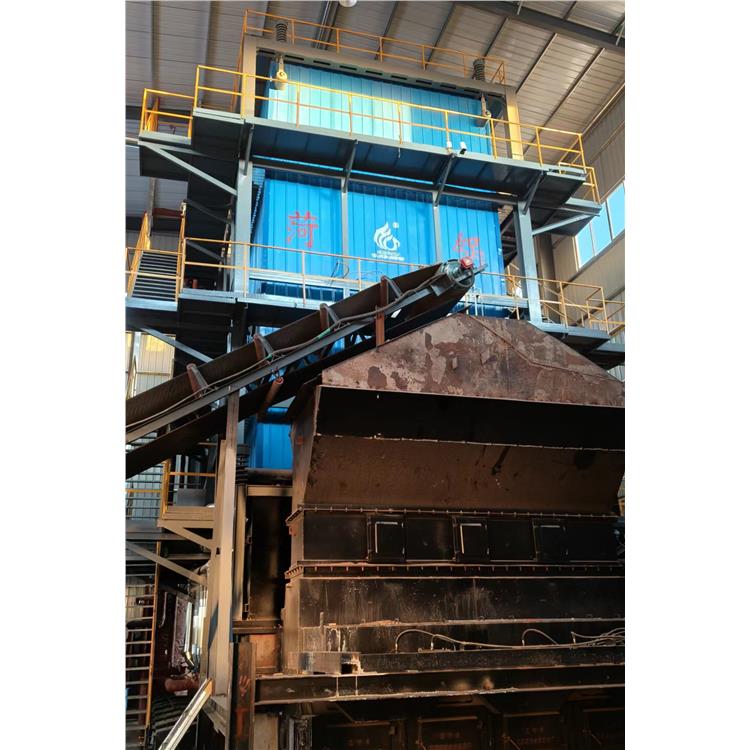
10-ton Wuhan biomass boiler, low operating costs
