


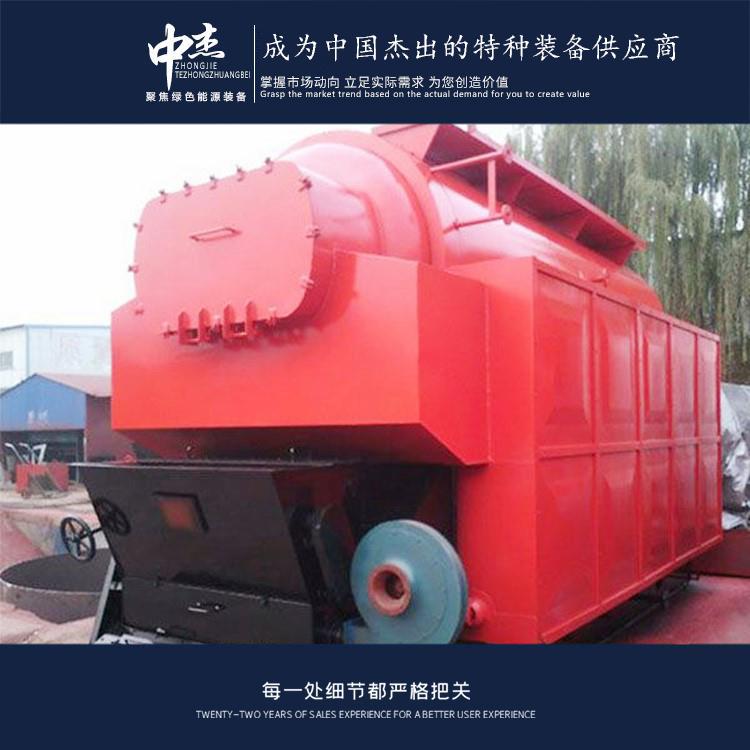
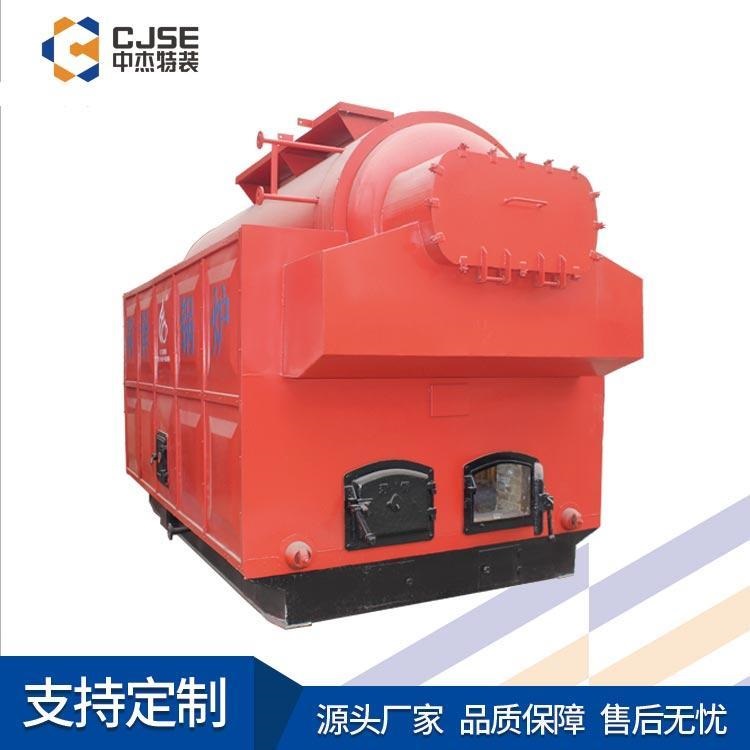
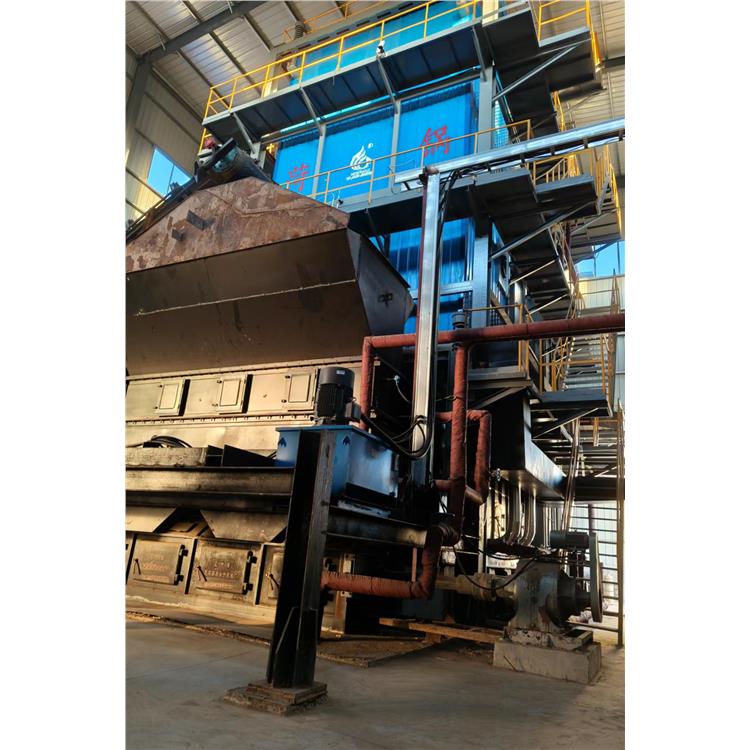
Shandong Zhongjie Special Equipment (formerly Heze Boiler Factory Co., Ltd.) was established in 2001, located at No. 2218 Jinnan Road, Economic Development Zone, Heze City, with a registered capital of 50 million yuan and total assets of 500 million yuan. The company has 7 business centers: boilers, deep-freeze containers, pressure vessels, central air conditioning, engineering installation, international trade, and the Internet of Things. It has three factory areas on Jinnan Road, East Yangtze Road, and Bohai Road, covering a total area of 200,000 square meters, with the main workshop spanning 83,000 square meters. It currently employs 710 people, including 247 engineering technicians and 82 middle-level technical personnel. In December 2016, it was recognized as a "High-Tech Enterprise" by the Science and Technology Department. In June 2021, it was identified as a "Specialized and New Enterprise in Shandong Province" by the Department of Industry and Information Technology. In June 2022, it was recognized as a "Gazelle Enterprise in Shandong Province" and in August 2022, as a "Specialized and New Small Giant Enterprise" by the Ministry of Industry and Information Technology.
To reduce the emissions of nitrogen oxides (NOx) from biomass boilers, the following measures can be taken:
Combustion Control Optimization: By optimizing the combustion process, controlling the combustion temperature and oxygen supply, and reducing NOx emissions. Adjustments can be made to the burner's structure and parameters to make the combustion more thorough and even, minimizing the formation of local high-temperature areas.
Combustion Chamber Design Enhancement: Improved design of biomass boiler combustion chambers, increasing mixing and residence time for better fuel-air mixture, thereby reducing NOx emissions.
SNCR Technology: Selective Non-Catalytic Reduction (SNCR) technology involves adding a reductant, such as urea, during the combustion process to react with NOx and convert it into nitrogen and water. This technique can effectively reduce NOx emissions, but requires system design and adjustments based on specific conditions.
SCR Technology: Selective Catalytic Reduction (SCR) technology is a NOx control method that, by adding a catalyst to flue gas such as, causes NOx to react and convert into nitrogen and water. SCR technology can achieve high NOx removal efficiency, but requires significant investment and operating costs.
Flue Gas Recirculation (FGR): This technology recycles a portion of flue gas back into the combustion process, reducing combustion temperatures and minimizing NOx emissions. NOx control can be achieved by adjusting the recirculation ratio.
Regular maintenance and cleaning: Perform regular maintenance on biomass boilers
Biomass boiler furnace soot blowing refers to the cleaning operation of the combustion area inside the furnace through a soot blowing device. The purpose of soot blowing is to remove ash and slag inside the furnace, maintain the unobstructed combustion area, and enhance combustion efficiency and the stability of the boiler's operation.
The operation of furnace ash blowing is generally divided into two methods: mechanical ash blowing and pulse ash blowing.
Mechanical Ash Blowing: Mechanical ash blowing involves using mechanical devices, such as rotating ash blowers or chain-type blowers, to clean the combustion area inside the furnace. The mechanical ash blower rotates or moves periodically, removing ash and soot from the combustion zone.
Pulse Blowing: Pulse blowing involves using high-pressure gas or compressed air to jet the gas flow into the combustion area inside the furnace through nozzles, generating impact and vibration to remove ash and soot. Pulse blowing is characterized by its effective and quick ash removal.
The impact of the furnace ash blowing operation on biomass boilers is mainly reflected in the following aspects:
Clean combustion area: The furnace ash blowing can burn the slag and ash in the combustion area, keeping the combustion area unobstructed, which is conducive to the complete combustion of fuel and improves combustion efficiency.
Reduce smoke gas resistance: The furnace ash blowing can burn the slag and accumulated ash in the combustion area, reducing the resistance in the smoke gas passage, which is conducive to the smooth exhaust of smoke gas and improves the heat exchange efficiency of the boiler.
The occurrence of oil atomization in thermal oil heaters may be related to the following operations:
Excessive oil pump pressure: If the oil pump pressure of the thermal oil furnace is set too high, exceeding the design requirements, it may lead to oil spitting. Excessive oil pump pressure increases the amount of oil sprayed by the nozzle, surpassing the combustion demand within the furnace.
Excessive nozzle orifice size: An oversized nozzle orifice in a thermal oil furnace can lead to excessive fuel injection, which in turn causes spray leakage. The nozzle orifice size should be reasonably selected based on the combustion requirements and design specifications within the furnace.
Excessive furnace temperature: Overheating in the thermal oil furnace, exceeding the design requirements, may lead to oil jetting. Excessive temperature reduces the viscosity of the thermal oil, increasing the risk of oil jetting.
Low oil level: An excessively low oil level in the thermal oil boiler can cause the oil pump to吸入 air, potentially leading to spraying. The oil level should be maintained within the normal range to prevent the oil pump from drawing in air.
Oil Pump Failure: Faults in the thermal oil furnace oil pump, such as pump blockage and oil leakage in the pump body, can lead to spray phenomena. Regularly inspect and maintain the oil pump to ensure its proper operation.
Oil Tube Clogging: Oil tube clogging in a heat transfer oil furnace, such as the accumulation of impurities or sediments inside, can lead to oil spitting. Regularly clean and maintain the oil tubes to ensure smooth oil flow.
Improper Operation: Failure to follow the correct operational procedures when handling a thermal oil furnace, such as over-adjusting the oil pump pressure or arbitrarily changing nozzles, may lead to oil spraying occurrences.
Biomass boilers, as equipment that converts thermal energy using biomass fuel, offer the following advantages:
Renewable Energy: Biomass fuel is a renewable energy source that can be continuously replenished through cultivation. Compared to fossil fuels, the use of biomass fuel has a smaller environmental impact, benefiting sustainable development.
Environmental Protection and Energy Saving: The emissions and waste from biomass combustion are relatively low, with low levels of pollutants released during combustion. Biomass fuel itself has low sulfur and low nitrogen characteristics, and the waste after combustion can be reused as organic fertilizer or biomass fuel, reducing environmental pollution.
Diversity and flexibility: Biomass fuel types are abundant, including wood chips, straw, etc. Different fuels can be chosen based on actual conditions, enhancing the substitutability and flexibility of the fuel.
Utilization: The biomass boiler employs advanced combustion technology and heat conversion equipment, maximizing the thermal energy of biomass fuel for enhanced thermal efficiency. Additionally, equipped with an economizer and flue gas recirculation system, it further boosts thermal efficiency.
Economic Efficiency: Biomass fuel is more stable and less expensive compared to fossil fuels. The investment and operating costs of biomass boilers are relatively low, offering good economic viability.
Broad Application: Biomass boilers are suitable for various fields, including industrial production, heating, and power generation. They can meet the thermal energy needs in different scenarios.
In summary, biomass boilers offer advantages such as renewable energy, environmental protection, energy conservation, diversity and flexibility, utilization, economic efficiency, and wide application, making them a sustainable thermal energy conversion option.
Shandong Zhongjie Special Equipment, welcome customers to our factory for business discussions.
Baoding 2-ton biomass boiler, over 20 years of experience for added peace of mind
