


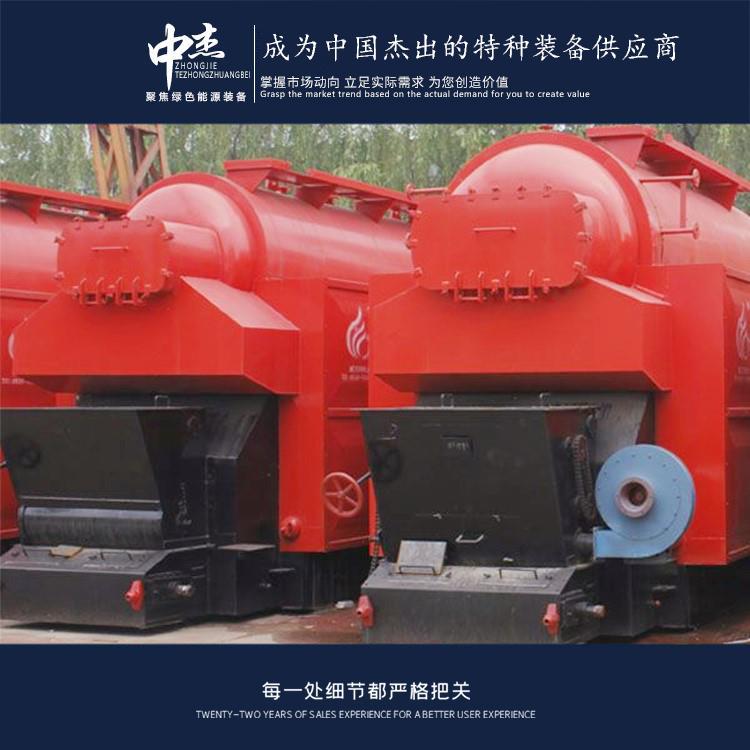
Shandong Zhongjie Special Equipment (formerly Heze Boiler Factory Co., Ltd.) was established in 2001, located at No. 2218 Jinnan Road, Development Zone, Heze City. With a registered capital of 50 million yuan and total assets of 500 million yuan, the company has 7 business centers: boilers, deep-freezing containers, pressure vessels, central air conditioning, engineering installation, international trade, and Internet of Things. It has three factory sites on Jinnan Road, East Changjiang Road, and Bohai Road, covering a total of 200,000 square meters, with the main workshop spanning 83,000 square meters. It currently employs 710 people, including 247 engineers and technicians and 82 intermediate-level technical personnel. In December 2016, it was recognized as a "High-tech Enterprise" by the Science and Technology Department. In June 2021, it was identified as a "Specialized and New Enterprise in Shandong Province" by the Ministry of Industry and Information Technology. In June 2022, it was recognized as a "Gazelle Enterprise in Shandong Province" and in August 2022, it was identified as a "Specialized and New Small Giant Enterprise" by the Ministry of Industry and Information Technology.
The use of biomass boilers holds significant importance for energy conservation and emission reduction:
Reducing Carbon Emissions: The fuel used in biomass boilers comes from organic matter such as plants, animals, and microorganisms. The carbon dioxide released during combustion can be absorbed by plants, forming a cycle. Compared to traditional fossil fuels, biomass fuel has a lower carbon emission rate, which can effectively reduce greenhouse gas emissions, playing a significant role in combating climate change.
Reduce Energy Consumption: Biomass boilers, utilizing combustion technology and a heat recovery system, can enhance energy utilization efficiency and minimize waste. By conserving energy, energy costs can be reduced and the benefits of energy use improved.
Reduce dependence on fossil fuels: Biomass, as a local renewable energy source, can decrease reliance on imported fossil fuels and enhance energy security. In areas with scarce resources, the use of biomass boilers can provide a reliable energy supply, reducing dependency on external energy sources.
Promote the development of agriculture and forestry: Fuel for biomass boilers mainly comes from agricultural by-products like straw, wood, etc., thereby fostering the sustainable development of agriculture and forestry. By effectively utilizing agricultural and forestry waste, resource wastage can be reduced, enhancing the comprehensive benefits of the agricultural and forestry industries.
Promote Environmental Protection: The combustion of biomass boilers produces relatively low emissions and ash, resulting in minimal environmental impact. Additionally, the use of biomass boilers helps reduce the exploitation and destruction of natural resources, thereby protecting the ecological environment.
In summary, utilizing biomass boilers is significant for energy conservation and emission reduction.
The methods for setting the pressure of biomass hot water boilers mainly include the following:
Regular Drainage: Regularly drain excess water from the boiler to maintain normal working pressure. By draining excess water, it prevents overpressure inside the boiler, ensuring stable operation.
Timed Operations: Perform operations at regular intervals based on the water level of the boiler to maintain normal working pressure. Pay attention to the control amount to avoid excessive operation leading to overly high boiler pressure.
Constant Pressure Control System: The installation of a constant pressure control system allows for real-time monitoring of the boiler's pressure through sensors and controllers, and automatic adjustment based on set values. In case the boiler pressure exceeds the set value, the control system automatically reduces fuel supply or releases excess water to maintain a stable working pressure for the boiler.
Pressure Regulator: Install a pressure regulator on the boiler's water inlet pipe. By adjusting the valve opening, control the water inflow to maintain the boiler's stable working pressure. The pressure regulator can automatically adjust according to the set value, keeping the boiler pressure within the appropriate range.
Pressure Regulator: Install a pressure regulator in the boiler's combustion system to control the steam pressure of the boiler by adjusting the combustion intensity of the burner. The pressure regulator can automatically adjust the operating state of the burner according to the set value to maintain a stable working pressure of the boiler.
The above outlines common methods for setting the pressure of biomass hot water boilers. Depending on the actual conditions and requirements, an appropriate pressure setting method can be chosen to maintain stable operating pressure for the boiler.
The extinguishing process and maintenance methods for the fully automatic biomass boiler are as follows:
Extinguishing Process:
Cease fuel supply: Prior to extinguishing the biomass boiler, first cease fuel supply to ensure the fuel supply pipeline is closed.
Turn off the burner: Switch the burner's switch or the extinguish button on the control panel to the off position to stop the burner from operating.
Wait for Cooling: Allow the boiler to cool to a safe temperature, which usually takes some time. Do not operate during this period to avoid any accidents.
Shut off power: After the boiler has completely cooled down, turn off the power switch of the boiler to ensure the boiler is in a power-off state.
Maintenance Instructions:
Clean Combustion Chamber: Regularly clean the combustion chamber to remove ash and dirt generated during the combustion process. Use appropriate tools and cleaning agents to ensure the chamber remains clear and clean.
Heat Exchanger Cleaning: Regularly clean heat exchangers, particularly those on the flue side. Combustion may produce particulates and slag in the flue gases, which can adhere to the heat exchanger surface, affecting heat transfer efficiency. Appropriate cleaning methods, such as mechanical or chemical cleaning, can reduce the accumulation of dirt.
Inspect and Replace Critical Components: Regularly inspect and replace critical components such as burners, valves, sensors, etc. Ensure these components operate and perform normally to avoid malfunctions and potential safety hazards.
Water Treatment: Appropriate water treatment for boiler feedwater to prevent impurities and sediments from depositing inside the boiler. Methods such as water softening, deoxygenation, and scale removal can be employed to maintain the cleanliness and stability of the supply.
Set
Biomass boilers offer several advantages:
Renewable Energy: Fuel for biomass boilers comes from organic matter such as plants, animals, and microorganisms, making it a renewable energy source. Compared to traditional fossil fuels, biomass fuel has lower carbon emissions and environmental impact, contributing to the reduction of greenhouse gas emissions and being more environmentally friendly.
Diverse fuel sources: Biomass fuel sources are widespread, including wood, straw, waste crops, food scraps, and urban solid waste. This diversity in fuel sources allows biomass boilers to be flexible and adaptable, utilizing waste and by-products from plants and animals.
Environmental friendliness: The carbon dioxide produced during the combustion process of biomass boilers can be absorbed by plants, forming a cycle that reduces air pollution. Additionally, the emissions and ash produced by biomass boilers during combustion are relatively low, resulting in less environmental impact.
Energy Security: Biomass, as a local renewable energy source, can reduce dependence on imported energy and enhance energy security. In areas with scarce resources, the use of biomass boilers can provide a reliable energy supply.
Economicity: Biomass fuel is relatively cost-effective, which can reduce energy costs. Furthermore, the technology and equipment for biomass boilers are continuously evolving and maturing, making them more economically competitive.
Waste Utilization: Biomass boilers can make use of agricultural residue such as straw and wood waste, effectively utilizing waste resources and reducing resource waste.
In summary, biomass boilers offer advantages such as renewable energy, diverse fuel sources, environmental friendliness, energy security, cost-effectiveness, and waste utilization, making them a sustainable energy solution.
Shandong Zhongjie Special Equipment, welcome customers to visit our factory for business discussions.
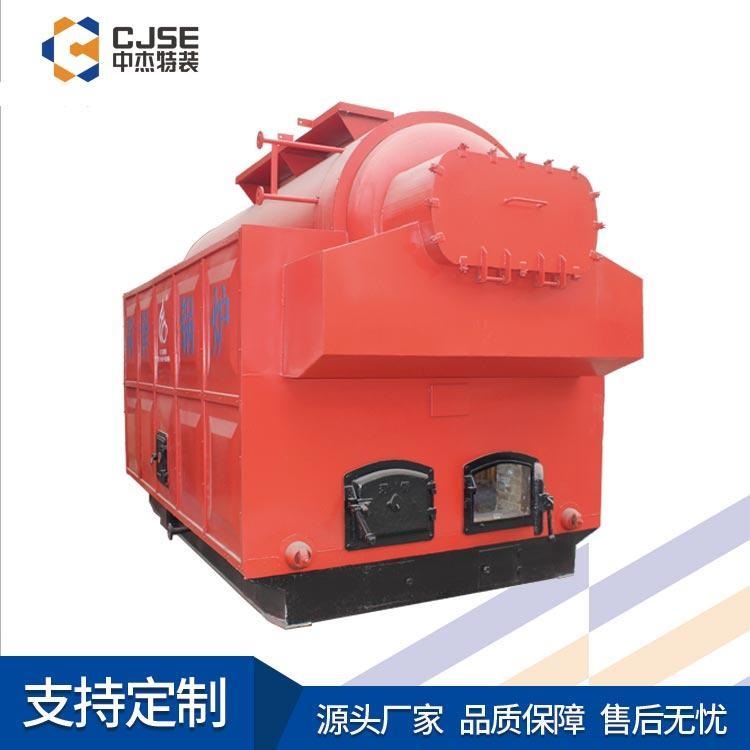
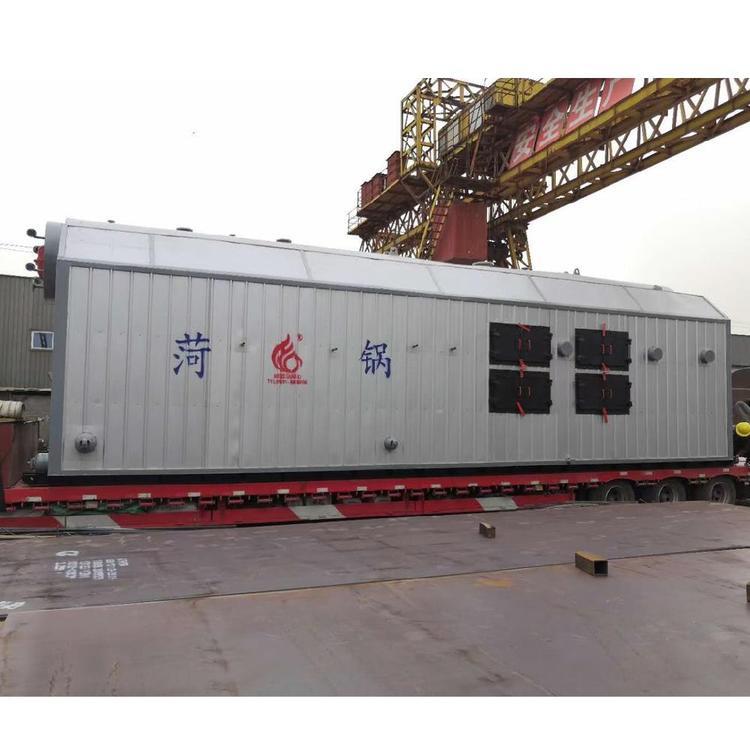
Four Ping 4-ton biomass boiler, years of industry experience
