


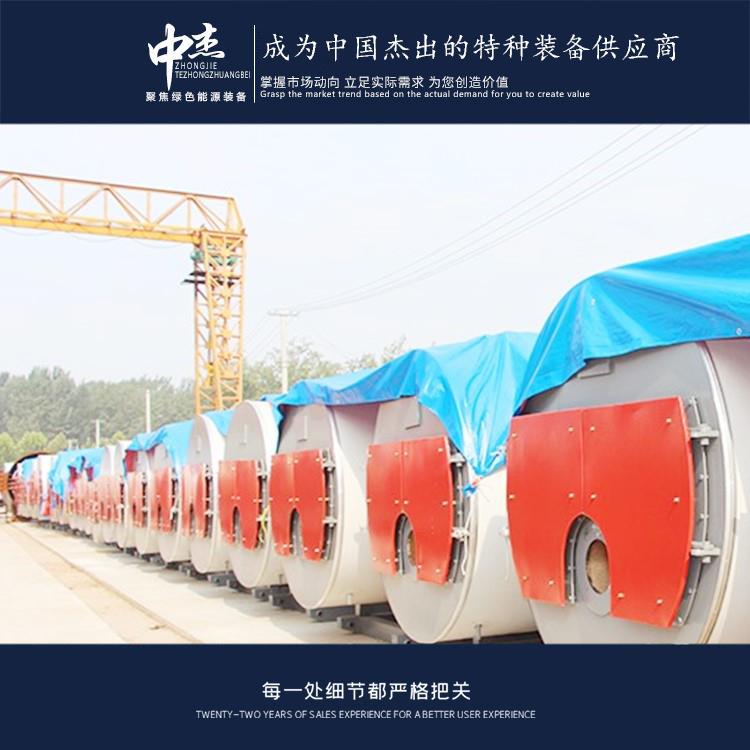
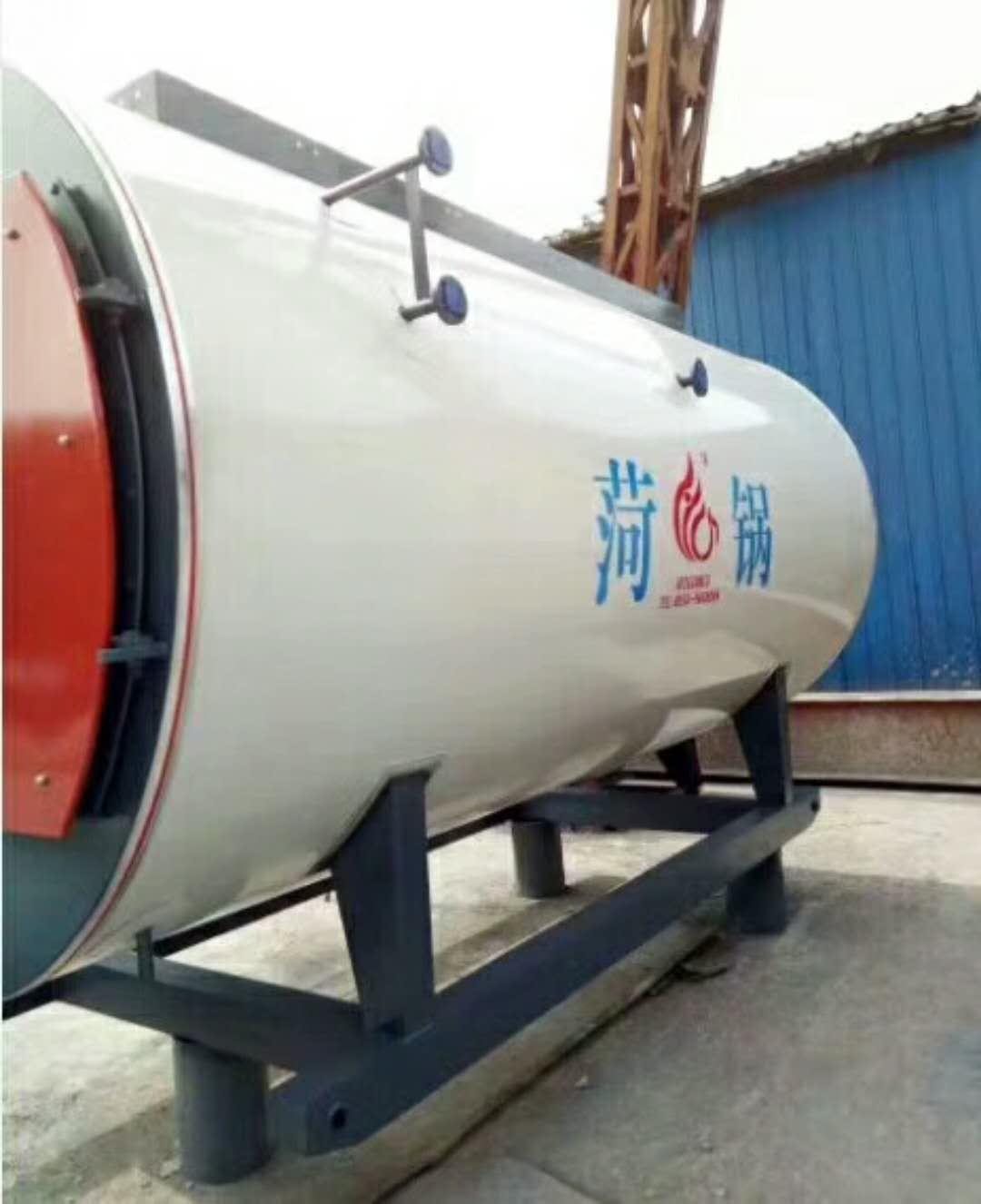
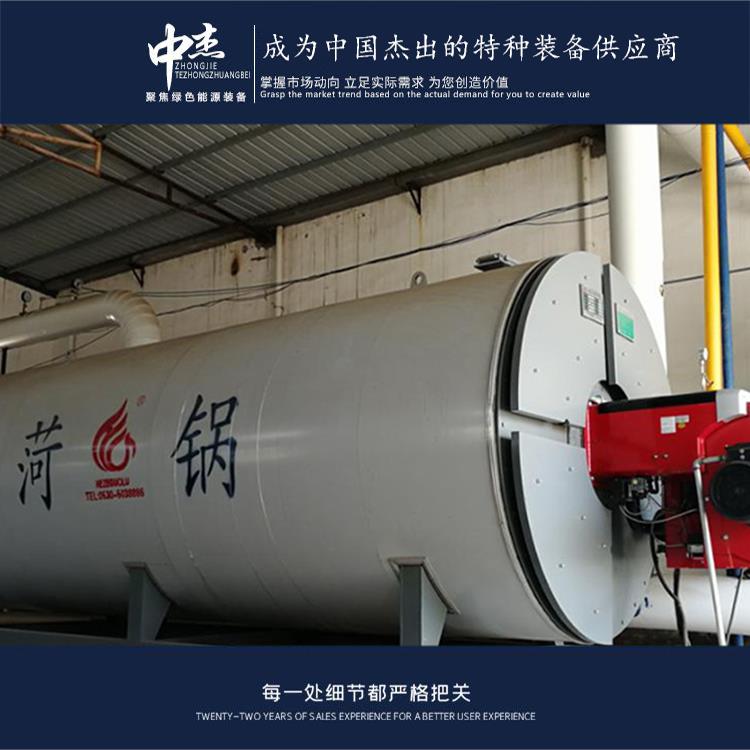
Shandong Zhongjie Special Equipment's main products include: fuel (gas) boilers, organic heat carrier boilers, biomass boilers, waste heat boilers, and other boiler products; vacuum insulation cryogenic pressure vessels such as LNG tanks, oxygen/nitrogen/argon tanks, and CO2 tanks; pressure vessel products like denitrification engineering equipment, heat storage and energy storage equipment, and complete chemical equipment sets; central air conditioning and HVAC equipment such as ground (water) source heat pumps, air source units, water-cooled screw units, and air-cooled modular units. Planned products include large-scale energy centers, LNG transport vehicles, LNG tank containers, and other green energy equipment.
Energy-saving of steam boilers is crucial for the following reasons: Energy Costs: Steam boilers typically use fuels (such as coal, gas, oil, etc.) to produce steam, with energy costs accounting for a significant portion of the boiler's operational expenses. Energy-saving measures can reduce energy consumption and lower costs. Environmental Protection: The combustion process of steam boilers generates exhaust gases and dust, causing environmental pollution. Energy-saving can decrease fuel consumption and reduce emissions, positively impacting environmental protection. Sustainable Development: Energy-saving is one of the key aspects of sustainable development. By reducing energy consumption and extending the boiler's lifespan, resources can be conserved and waste minimized, achieving sustainable development. Measures for energy-saving include: Improving Boiler Thermal Efficiency: Enhance the boiler's combustion system, optimize combustion parameters, and improve heat exchange efficiency to increase the boiler's thermal efficiency and reduce energy waste. Heat Recovery Utilization: Utilize waste heat recovery systems to capture and reuse the excess heat from the flue gases emitted by the boiler, for heating water or other processes requiring heat, thus improving energy utilization efficiency. Application of Energy-saving Equipment: Implement energy-saving equipment such as variable-frequency drives, energy-saving burners, and heat pumps to lower energy consumption and enhance efficiency.
The necessity of flow control in thermal oil heaters is mainly reflected in the following aspects:
1. Heat Transfer Efficiency: The efficiency of heat transfer in thermal oil heaters is closely related to the flow rate of the thermal oil. An appropriate flow rate ensures that heat is fully transferred in the heat exchanger, improving the efficiency of heat utilization. An excessively low flow rate may result in insufficient heat exchange and affect the heat transfer effect, while an excessively high flow rate will increase energy consumption and operating costs.
2. Temperature Control: The flow control of thermal oil heaters is also closely related to temperature control. By adjusting the flow rate of the thermal oil, the temperature inside the furnace can be controlled to ensure stable operation within the set working temperature range. An excessively low flow rate may lead to excessively high temperatures, and an excessively high flow rate may cause temperatures to drop too low, both affecting the normal operation of the equipment.
3. System Stability: Appropriate flow rates of thermal oil can enhance system stability. Flow control helps balance the supply and demand of heat energy, preventing overheating or undercooling, and maintaining stable system operation. Stable operation contributes to extending the service life of the equipment and reducing the frequency of malfunctions and repairs.
4. Safety: The flow control of thermal oil heaters is also closely related to safety. Proper flow control can prevent excessive accumulation of thermal oil in the system, reducing the risk of leaks and explosions. Additionally, flow control ensures that the system pressure remains within a safe range, avoiding overpressure and other safety issues.
In summary, flow control in thermal oil heaters is necessary for improving heat transfer efficiency, temperature control, system stability, and safety. Through reasonable flow control, the operation of thermal oil heaters can be optimized, energy utilization efficiency can be increased, operating costs can be reduced, and the safety and stable operation of the equipment can be ensured.
Possible reasons for uneven heat distribution in steam boilers may include the following aspects:
- Uneven combustion: During the combustion process, if the mixture of fuel and air is uneven, or if the burner's design and adjustment are not reasonable, it can lead to uneven combustion. This results in some areas producing more heat while others produce less.
- Pipe blockage: The presence of blockages or scale in the transmission pipes of a steam boiler can cause uneven heat transfer. Blockages or scale impede steam flow, limiting heat transfer in some areas while allowing better heat transfer in others.
- Heat exchanger issues: If the heat exchangers in a steam boiler have problems such as scaling, corrosion, or blockages, they can cause uneven heat transfer. These issues can affect the heat conduction efficiency of the heat exchangers, impacting heat transfer in certain areas.
- Water level problems: Inaccurate or unstable water level control in a steam boiler can lead to uneven steam production. Both high and low water levels can affect steam generation and distribution, resulting in uneven heat distribution.
- Boiler load changes: Changes in boiler load can also cause uneven heat distribution. When the load suddenly increases or decreases, the boiler's heat production and distribution may not adjust promptly, leading to uneven heat distribution.
To address the issue of uneven heat distribution in steam boilers, regular inspection and maintenance of boiler equipment are necessary to ensure the normal operation of combustion and heat exchange processes. Additionally, adjusting burners and control systems, maintaining stable water levels, cleaning pipes and heat exchangers, and improving...
Clean and environmental-friendly gas boilers offer several advantages: Low emissions: The exhaust emissions from gas combustion are relatively low, with fewer pollutants such as nitrogen oxides and particulates. Compared to coal-fired or oil-fired boilers, gas boilers have lower emissions levels and cause less environmental pollution. High thermal efficiency: Gas combustion has a high thermal efficiency, enabling the full utilization of fuel energy and reducing energy waste. Compared to other traditional fuels like coal and oil, gas combustion is more efficient, providing more heat energy. Clean combustion: Gas combustion does not produce ash or dust, reducing the accumulation of carbon and dirt inside the boiler and in the flue. This reduces the cleaning and maintenance work of the boiler, extending its lifespan. Combustion stability: The combustion performance of gas is stable, with no significant flame fluctuations or explosion risks during combustion. This makes gas boilers safer and more reliable in operation. Rapid start and stop: Compared to other fuels, gas boilers have faster and more flexible start-up and shutdown processes. This makes gas boilers suitable for scenarios requiring frequent start and stop, such as seasonal heating and hot water needs. Renewable energy integration: As a clean fuel, gas can be combined with renewable energy sources, such as solar hot water systems and biomass fuels. This integration can further improve energy utilization efficiency and environmental friendliness.
Our company attaches great importance to technological innovation and R&D, boasting 1 municipal-level enterprise technology center in Heze City. We have established testing facilities for non-destructive testing, physical and chemical testing, welding testing, hydrostatic testing, etc., and are equipped with over 600 various instruments and equipment, including CNC machine tools, X-ray flaw detectors, digital ultrasonic flaw detectors, mechanical property testing machines, chemical analyzers, spectrometers, tensile testing machines, plasma welding machines, and more. The key products and technologies we have developed, such as welding for temperature and pressure vessels, emissions reduction in biomass boilers, and waste heat utilization, have successively been selected for multiple Shandong Provincial Department of Industry and Information Technology science and technology projects, Shandong Provincial key projects, and Heze City innovative and excellent projects. We have cumulatively obtained 27 authorized utility models, 16 authorized inventions, participated in drafting 2 standards, 2 industry standards, and registered 15 trademarks. The technical team of our company, in collaboration with Professor Yajiang Li from Shandong University, has developed deep cryogenic container processing technology using the international plasma arc + filler wire argon arc welding (PAW-GTAW) technology. After provincial-level scientific and technological achievement appraisal, the technology level has reached an international standard in the field of deep cryogenic container manufacturing.
Choose JETSTAR Custom Solutions, let's create brilliance together!
Taizhou 10-ton gas boiler - Large, sturdy, high output
