


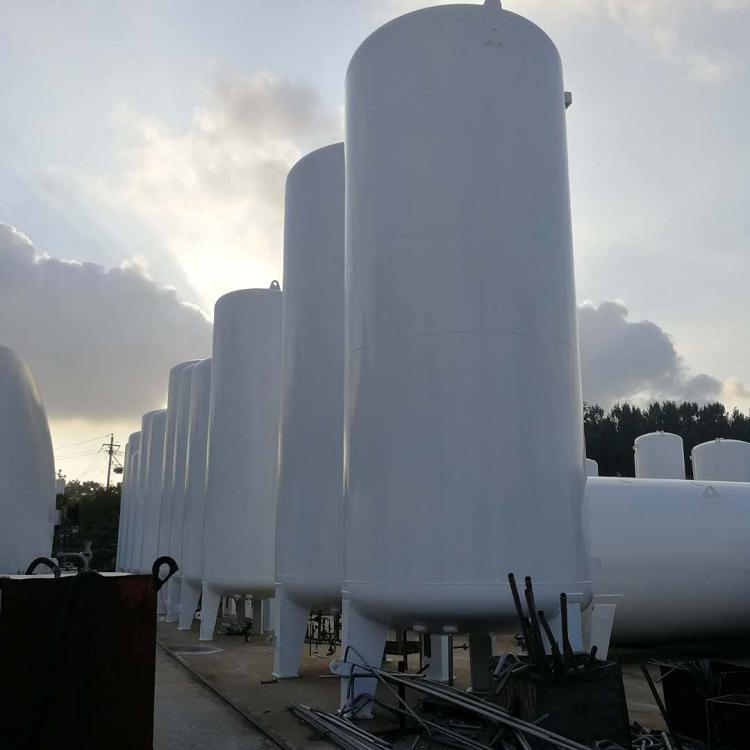
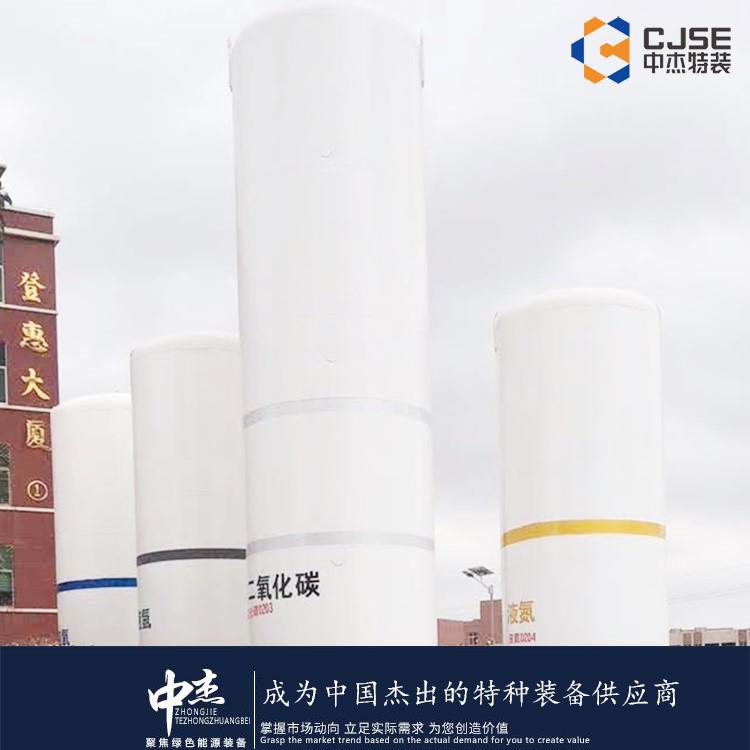
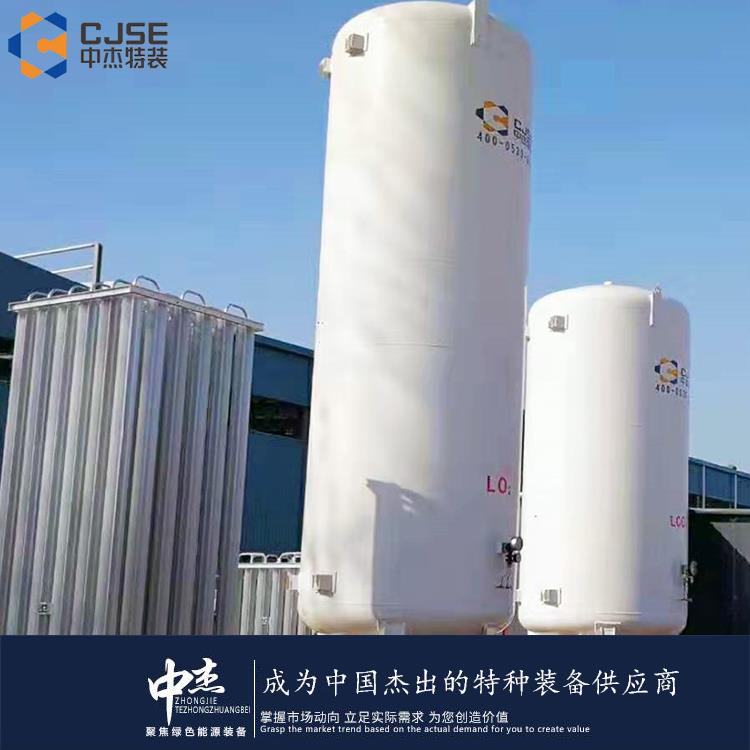
Shandong Zhongjie Special Equipment (formerly Heze Boiler Factory Co., Ltd.) was established in 2001, located at No. 2218 Jinnan Road, Economic Development Zone, Heze City. With a registered capital of 50 million yuan and total assets of 500 million yuan, the company has seven business centers: boiler, deep-freeze container, pressure vessel, central air conditioning, engineering installation, international trade, and Internet of Things. It has three factory sites on Jinnan Road, East Changjiang Road, and Bohai Road, covering a total of 200,000 square meters, with the main workshop spanning 83,000 square meters. The company currently employs 710 people, including 247 engineering and technical staff and 82 intermediate-level technical personnel. In December 2016, it was recognized as a "High-tech Enterprise" by the Science and Technology Department. In June 2021, it was identified as a "Specialized and New Enterprise in Shandong Province" by the Ministry of Industry and Information Technology. In June 2022, it was recognized as a "Gazelle Enterprise in Shandong Province" and in August 2022, it was identified as a "Specialized and New Small Giant Enterprise" by the Ministry of Industry and Information Technology.
Several reasons explain why low-temperature liquid storage tanks have been at the peak in recent years:
Increasing demand: With the development of industries such as manufacturing and scientific research, the demand for low-temperature liquids is continuously growing. Low-temperature liquid storage tanks can effectively store and supply liquefied oxygen, nitrogen, and other low-temperature liquids, meeting the needs of various fields.
Technical Advancements: In recent years, there have been continuous improvements and innovations in the manufacturing and material technology of low-temperature liquid storage tanks. The application of new insulating materials, advanced refrigeration systems, and safety control devices has enhanced the performance and safety of the tanks, making them more reliable and secure.
Enhanced Environmental Awareness: Low-temperature liquid storage tanks enable effective storage and utilization of low-temperature liquids, reducing energy waste and environmental pollution. Amidst the rising environmental awareness, low-temperature liquid storage tanks, as environmentally friendly and energy-saving equipment, have garnered more attention and applications.
Emerging Application Fields: There is an increasing demand for cryogenic liquid storage tanks in emerging application fields. For instance, the application of liquid nitrogen in frozen food, biopharmaceuticals, and semiconductor manufacturing is becoming more widespread, which has driven the development of cryogenic liquid storage tanks.
Policy Support: The government has provided support and encouragement for the development of low-temperature liquid storage tanks. Through policy guidance and financial support, the industry has been promoted and expanded.
In summary, the peak status of low-temperature liquid storage tanks in recent years is mainly due to increasing demand, technological advancements, enhanced environmental awareness, the development of new application areas, and policy support. These factors have collectively driven the rapid growth of the low-temperature liquid storage tank industry.
A hydrostatic test of a liquid nitrogen storage tank is a common method used to inspect the tank's sealing and pressure resistance performance. Below are the general steps for a hydrostatic test of a liquid nitrogen storage tank:
Preparation: Ensure the tank interior is clean and that the tank is empty of gases and liquids. Check that the tank's sealing and safety devices are functioning properly.
Fill water: Fill the tank with water, ensuring the water level is above the low water line. Pump or other appropriate methods may be used for filling.
Apply Pressure: Gradually increase the water pressure using a pressure pump or other pressure source until the predetermined test pressure is reached. The test pressure is typically 1.1 times the design working pressure of the tank.
Pressure Maintenance: After reaching the test pressure, maintain it for a period (typically 30 minutes to 1 hour), and observe for any abnormal conditions such as leakage or deformation in the tank.
Pressure Relief: Gradually release pressure to drain water from the tank until the tank is completely empty.
Inspection and Evaluation: Check for leaks, deformations, or other damage on the surface and inside of the tank. Evaluate the test results to ensure the tank meets design requirements and safety standards.
需要注意的是,液氮储罐水压试验需要由人员进行操作,并遵循相关的安全操作规程。在进行测试前,应仔细阅读和遵守储罐制造商提供的操作指南和安全注意事项。
To extend the service life of liquid argon storage tanks, the following measures can be taken:
Regular inspections and maintenance: Conduct periodic visual inspections of liquid argon tanks, checks on valves and fittings, as well as leak detection and pressure testing. Identify and repair potential issues promptly to ensure the normal operation of the tank.
Maintain Insulation: The insulation is crucial for the thermal preservation of liquid argon tanks. Regularly inspect the integrity and insulating properties of the insulation, repair or replace damaged insulation materials to ensure the tank's insulating effectiveness.
Control Liquid Argon Temperature: The temperature of liquid argon should be maintained within an appropriate range to prevent damage to the storage tank from excessive or low temperatures. Implement suitable cooling or heating measures to ensure the stable temperature of liquid argon.
Corrosion Protection: The shell and internal structure of the liquid argon tank should be protected against corrosion and oxidation. Regular inspections and maintenance of the protective coating are essential to ensure its integrity.
Avoid excessive pressure and overfilling: Prevent the internal pressure of the tank from being too high or too low, as well as overfilling with liquid argon. Excessive pressure and overfilling can lead to structural rupture or damage to the tank.
Regular cleaning and draining: Regularly clean the interior of the tank to remove accumulated impurities and dirt. Regularly drain to prevent杂质 and sediments in liquid argon from damaging the tank.
Safety Operation and Training: Ensure operators are knowledgeable and skilled in the safe operation of liquid argon tanks. Enhance safety training to boost operator safety awareness and emergency response capabilities.
Establish comprehensive management records and documents, including tank usage, inspection, and maintenance records. Regularly review and update these records to ensure safe management and maintenance of the tanks.
These measures can help extend the service life of liquid argon storage tanks, but specific operations and management should be tailored to the type and application of the tank. When performing maintenance and operation, adhere to relevant regulations and standards, and consult with experts to ensure safety and effectiveness.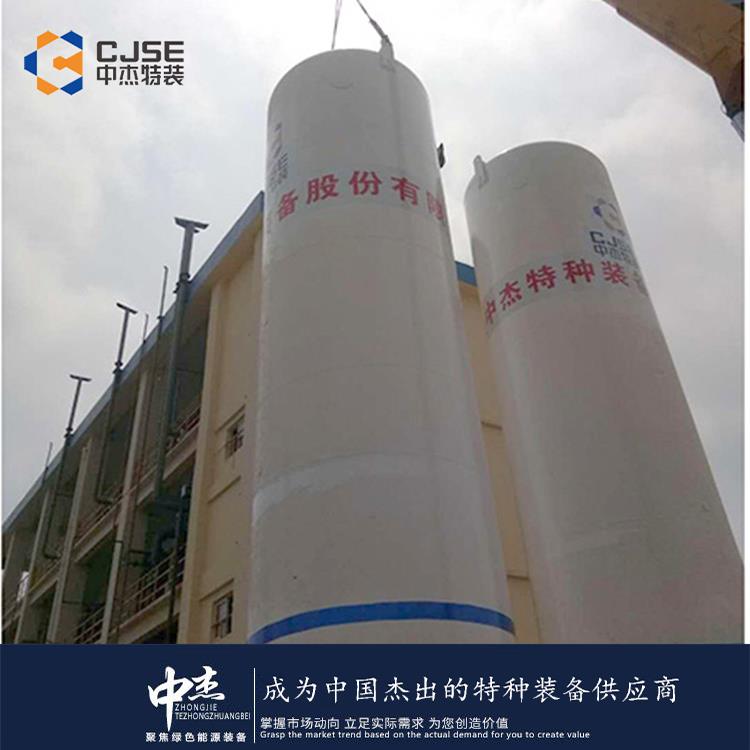
Liquid Oxygen Storage Tanks are equipment used for storing and supplying liquid oxygen. Liquid oxygen is achieved by cooling oxygen below its boiling point, converting it to a liquid state. Liquid oxygen storage tanks are typically designed with double or multi-layer structures, filled with insulating material in between to minimize heat transfer and evaporation of the liquid oxygen.
Liquid Oxygen Storage Tank Features:
High Purity: The liquid oxygen storage tank contains high-purity liquid oxygen, typically exceeding 99.5% purity. This makes the liquid oxygen storage tank crucial in applications requiring high-purity oxygen, such as medical, industrial, and research fields.
Low Temperature: As the boiling point of liquid oxygen is -183°C, the liquid oxygen storage tank must have excellent insulation properties to maintain its low temperature. Tanks are typically designed with double or multi-layer structures, filled with insulating material in between to minimize heat transfer and evaporation of the liquid oxygen.
High Pressure: Liquid oxygen tanks typically need to withstand high pressure to maintain their liquid state. The design and material selection of the tank must consider the pressure requirements of liquid oxygen to ensure the tank's safety and reliability.
Flammability: Liquid oxygen is highly flammable and supports combustion. Therefore, during the design and use of liquid oxygen storage tanks, fire prevention measures must be implemented to ensure no ignition sources are present around the tank and appropriate fire extinguishing equipment is available.
High Density: Liquid oxygen has a higher density than gaseous oxygen, allowing liquid oxygen tanks to store more oxygen. This gives liquid oxygen tanks an advantage in applications requiring large amounts of oxygen supply, such as in the field.
The use of liquid oxygen tanks must strictly adhere to relevant safety regulations and operational guidelines to ensure the safe operation and use of the tank.
Our company attaches great importance to technological innovation and R&D, with 1 municipal-level enterprise technology center in Heze City. We have established test facilities for non-destructive testing, physical and chemical testing, welding testing, hydrostatic testing, and more. We are equipped with over 600 types of instruments and equipment, including CNC machine tools, X-ray flaw detectors, digital ultrasonic flaw detectors, mechanical property testing machines, chemical analyzers, spectrometers, tensile testing machines, plasma welding machines, and more. The key products and technologies we have developed, such as temperature and pressure vessel welding, biomass boiler emission reduction, and waste heat utilization, have successively been selected for multiple Shandong Provincial Department of Industry and Information Technology science and technology innovation projects, Shandong Provincial key projects, and Heze City innovation and excellence projects. We have cumulatively obtained 27 authorized utility model patents, 16 authorized invention patents, participated in drafting 2 standards, 2 industry standards, and registered 15 trademarks. The technical team of our company, in collaboration with Professor Li Yajiang of Shandong University, has developed deep cryogenic container processing technology using the internationally recognized plasma arc + filler wire tungsten inert gas arc welding (PAW-GTAW) technology. After provincial-level scientific and technological achievement evaluation, the technical level has reached international standards in the field of deep cryogenic container manufacturing. Choose Zhongjie Special Equipment, and let's create brilliance together!
Yongzhou Liquid Oxygen Storage Tank, On-Site Installation
