


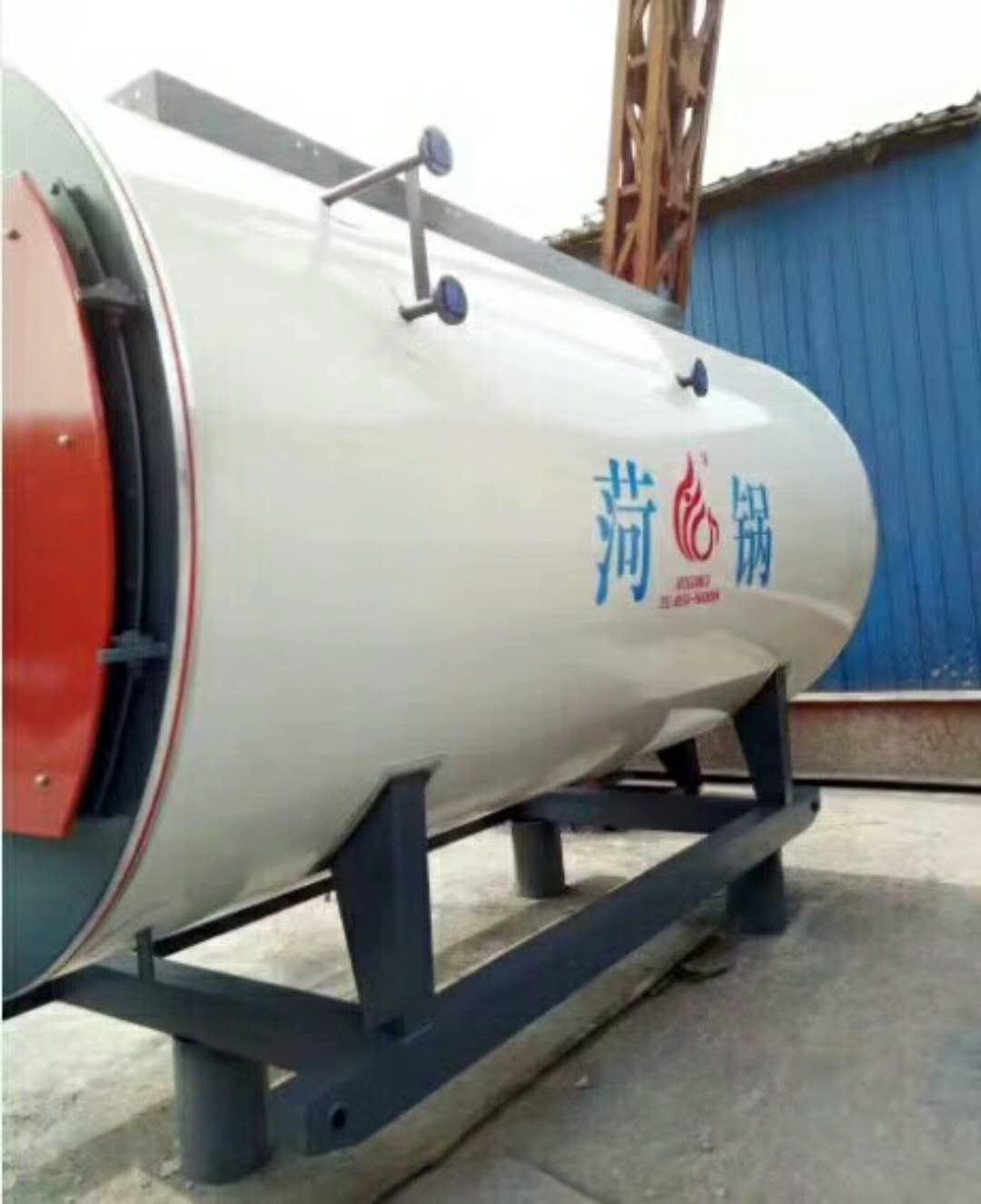
Shandong Zhongjie Special Equipment (formerly Heze Boiler Factory Co., Ltd.) was established in 2001, located at No. 2218 Jinnan Road, Development Zone, Heze City, with a registered capital of 50 million yuan and total assets of 500 million yuan. The company has 7 business centers: boilers, deep-freeze containers, pressure vessels, central air conditioning, engineering installation, international trade, and Internet of Things. It has three factory sites on Jinnan Road, East Changjiang Road, and Bohai Road, covering a total of 200,000 square meters, with the main workshop area being 83,000 square meters. It currently employs 710 people, including 247 engineers and technicians, and 82 intermediate-level technicians. In December 2016, it was recognized as a "High-tech Enterprise" by the Science and Technology Department. In June 2021, it was identified as a "Specialized and New Enterprise in Shandong Province" by the Ministry of Industry and Information Technology. In June 2022, it was recognized as a "Gazelle Enterprise in Shandong Province" and in August 2022, it was identified as a "Specialized and New Small Giant Enterprise" by the Ministry of Industry and Information Technology.
Prior to using the liquid oxygen storage tank, the following preparations must be made:
Safety Inspections: Ensure the tank and its surrounding environment are safe. Check for any damage, leaks, or other safety hazards in the tank. Make sure there are no flammable materials or other hazardous items around the tank.
Tank Preparation: Inspect the tank's exterior, including the shell, welds, valves, and fittings. Ensure there are no obvious damages or corrosion. Check that the insulation layer is intact and undamaged.
Liquid Oxygen Filling: Utilize liquid oxygen transfer equipment to fill the tank with liquid oxygen. Ensure that the flow rate and pressure of the liquid oxygen are maintained within safe limits during the filling process.
Pressure Control: Storage tanks should be equipped with pressure control devices to ensure the internal pressure of the tank remains within a safe range. Inspect and adjust the pressure control devices to ensure proper operation.
Valve Operation: Check that the valves and connections on the tank are functioning properly. Ensure the valves open and close smoothly and reliably. Adjust the opening and closing status of the valves as needed.
Safety Equipment: Inspect the safety equipment around the storage tanks, such as fire isolation zones and alarm systems, to ensure they are functioning properly.
Operator Training: Ensure operators are proficient in the safe operation of liquid oxygen storage tanks.
A 50 cubic meter liquid oxygen tank refers to a storage tank with a capacity of 50 cubic meters. Liquid oxygen tanks are commonly used for storing and supplying liquid oxygen for applications such as experiments and research.
Key features and configurations of a 50 cubic meter liquid oxygen storage tank may include the following aspects:
Volume: A 50 cubic meter liquid oxygen tank can store a large quantity of liquid oxygen.
Structure: Liquid oxygen tanks are typically designed with double or multi-layer construction, filled with insulating material in between to minimize heat transfer and evaporation of the liquid oxygen. The tank material is usually stainless steel or aluminum alloy, offering excellent corrosion and low-temperature resistance.
Insulation Layer: The insulation layer of liquid oxygen storage tanks typically employs multi-layered insulation materials such as polyethylene foam, glass fiber, and vacuum layers, to reduce heat transfer and the evaporation of liquid oxygen.
Temperature Control System: Liquid oxygen tanks are typically equipped with a temperature control system to regulate the tank's temperature, maintaining the low-temperature state of the liquid oxygen.
Safety Equipment: Liquid oxygen tanks are typically equipped with safety devices such as pressure sensors, temperature sensors, and safety valves to ensure safe operation of the tank.
It is crucial to adhere strictly to the relevant safety regulations and operating guidelines when using liquid oxygen tanks to ensure their safe operation and use. Liquid oxygen is highly flammable, so fire prevention measures must be taken and it is essential to ensure there are no ignition sources nearby the tank.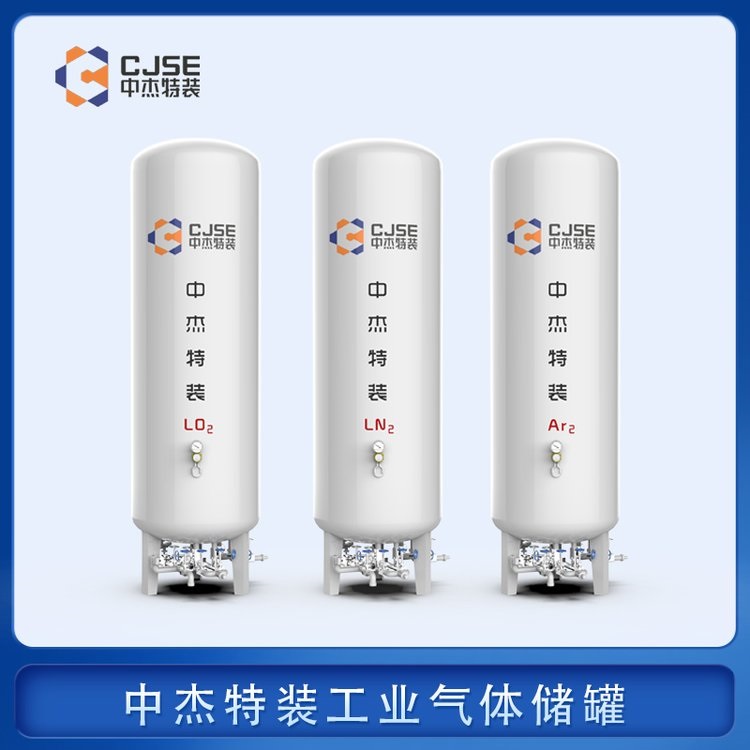
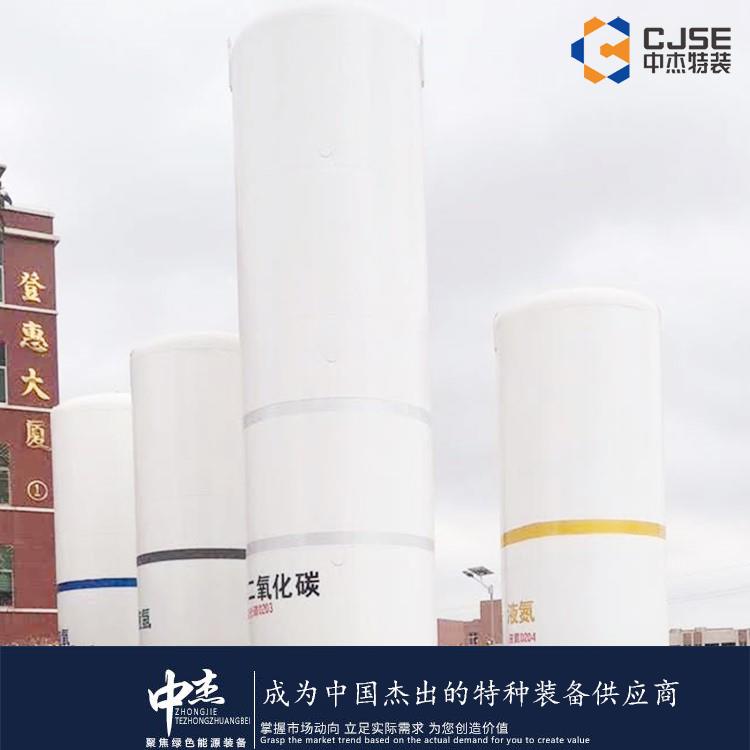
Low-temperature liquid storage tanks are equipment designed for storing low-temperature liquids, commonly used for storing liquid oxygen, liquid nitrogen, liquid argon, and other low-temperature liquids. These liquids are in a gaseous state at room temperature but are cooled to a liquid state at low temperatures for better storage and usage. Low-temperature liquid storage tanks are typically made of high-strength materials such as stainless steel or aluminum alloys to withstand low temperatures and high pressures. The tanks usually have an insulating layer inside to minimize evaporation and maintain low temperatures. Applications of low-temperature liquid storage tanks include but are not limited to the following areas: They are widely used in rocket engines and propulsion systems, such as liquid oxygen, liquid nitrogen, and liquid hydrogen tanks, for storing and supplying low-temperature liquids as fuel and oxidizers to propel and operate the engines. Industrial Production: These tanks are used in industrial production to store and supply low-temperature liquids like liquid oxygen, liquid nitrogen, and liquid argon, serving as coolants, feedstock for gas separation, and raw materials for chemical reactions. Medical Applications: Low-temperature liquid storage tanks are used in the medical field to store and supply liquid oxygen for oxygen therapy, inhalation therapy, and operating rooms. Laboratory Research: In scientific research and laboratories, these tanks provide low-temperature liquids as coolants and refrigerants, used for cooling laboratory equipment, material research, superconductivity, and low-temperature physics. In summary, low-temperature liquid storage tanks have extensive applications in aerospace, industrial production, and laboratory research, for storing and supplying low-temperature liquids to meet the needs of various fields.
Safety guidelines and considerations for the handling and transportation of liquid oxygen storage tanks include:
Safety Usage Instructions:
Tank Selection: Choose liquid oxygen tanks that comply with regulations and standards, ensuring their quality and safety performance.
Tank Installation: Tanks should be installed on a sturdy foundation to ensure stability. Additionally, good ventilation around the tank should be maintained, and it should be kept away from flammable materials and heat sources.
Seal Integrity Inspection: Regularly inspect the tank's sealing performance to ensure there are no leaks at valve and pipe connections.
Pressure Control: Tanks should be equipped with pressure gauges and safety valves, and regularly inspected and maintained to ensure pressure is within safe limits.
Fire Protection Measures: Liquid oxygen contains a high concentration of oxygen, which is highly flammable. Set up fire barriers around the storage tanks, ban smoking and open flames, and ensure safety.
Static Protection: During the transportation and use of liquid oxygen, static electricity can cause sparks, increasing the risk of fire. Measures such as using static-conductive materials and anti-static equipment are taken to reduce the accumulation and release of static electricity.
Shipping Precautions:
Transportation Vehicle Selection: Choose a transportation vehicle that meets the requirements for liquid oxygen transport, ensuring the vehicle's safety and seal integrity.
Loading and unloading: During the transportation of liquid oxygen, appropriate loading and unloading procedures should be adopted.
ZJ Special Equipment upholds the grand vision of "realizing employees' dreams, creating value for customers, and striving for the prosperity and strength of our motherland," and is dedicated to the development of the green energy equipment industry. We commit to society with high-quality products and services at competitive prices!
15 cubic meters nitrogen storage tank, high cost-performance
