


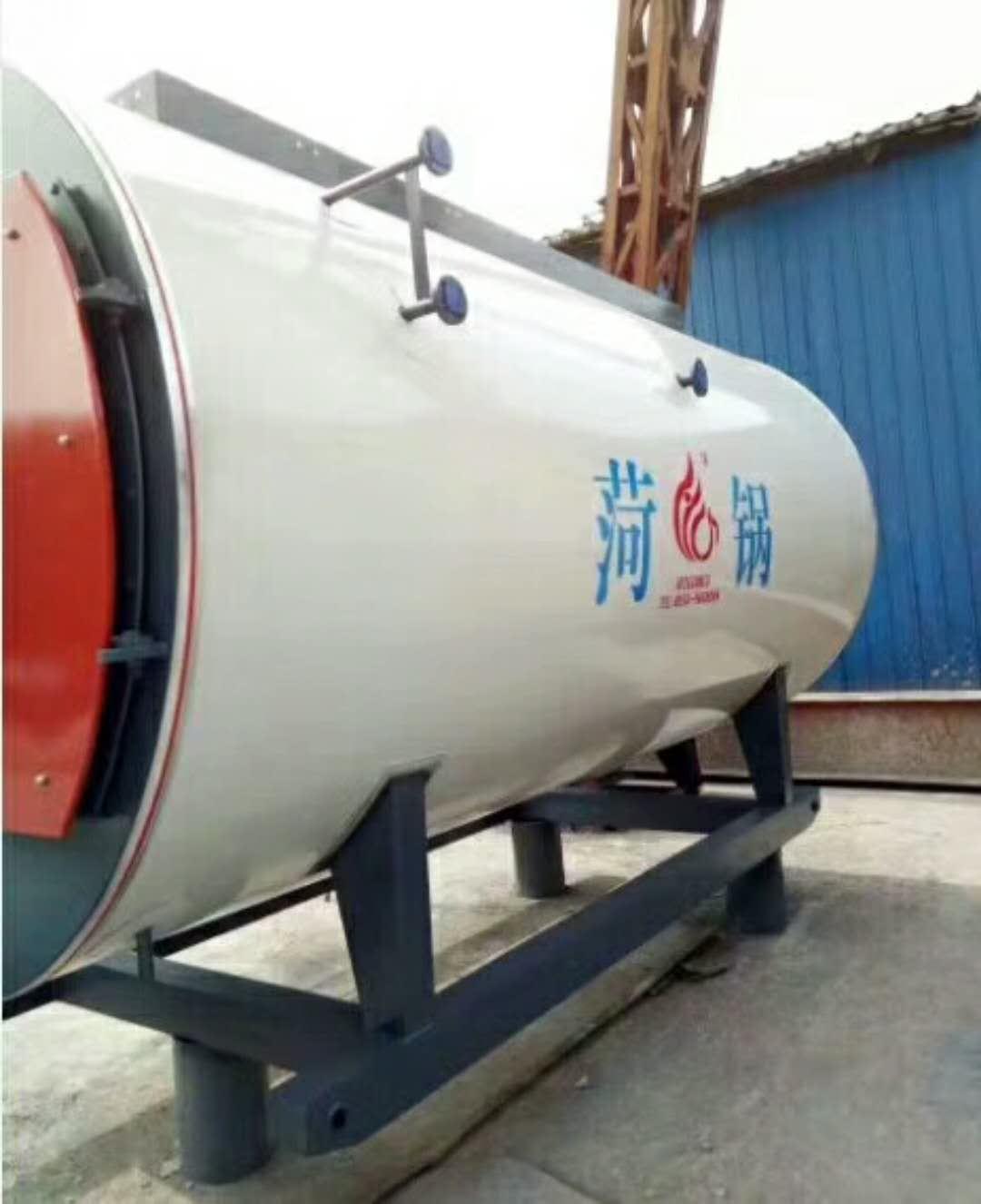
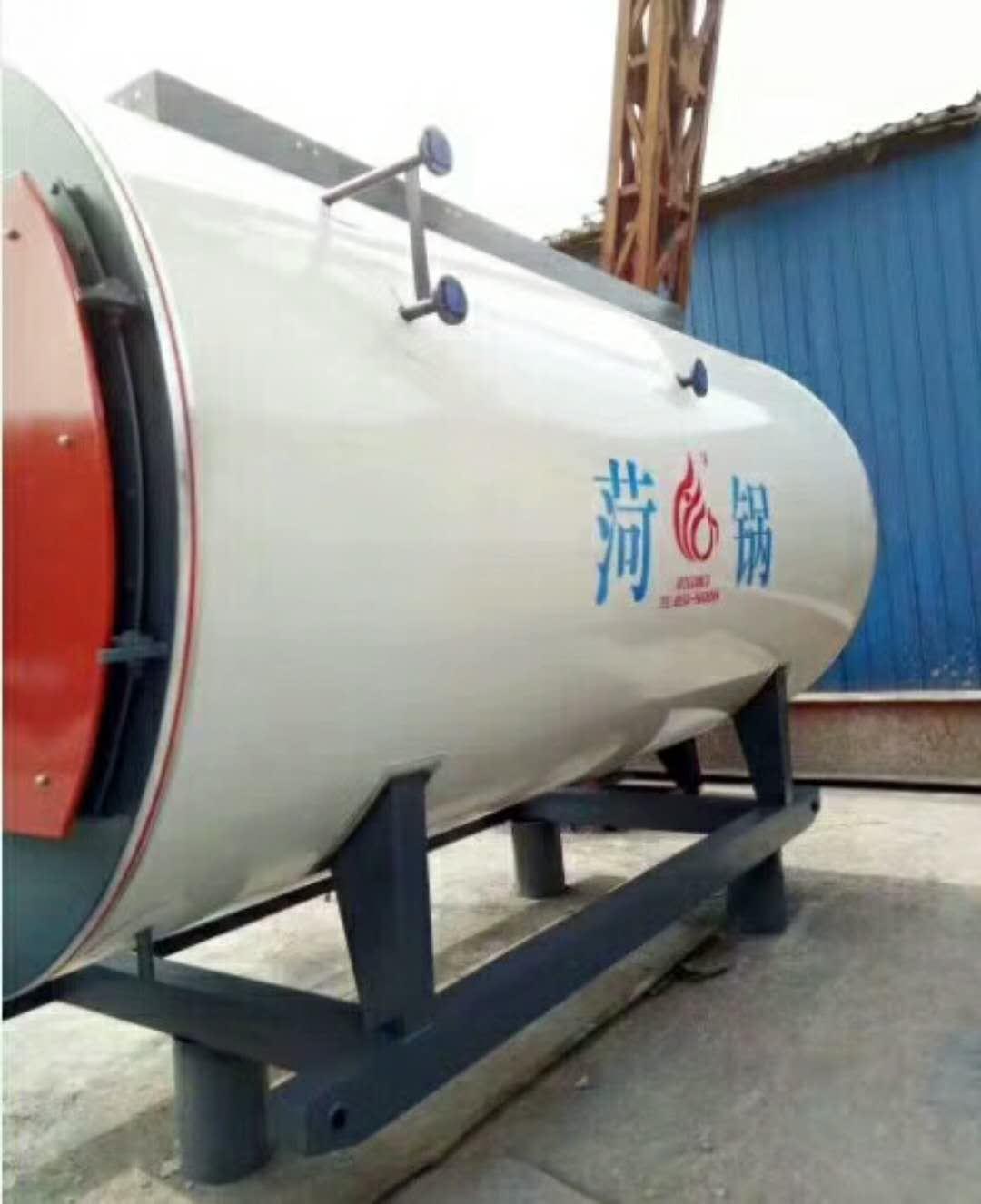
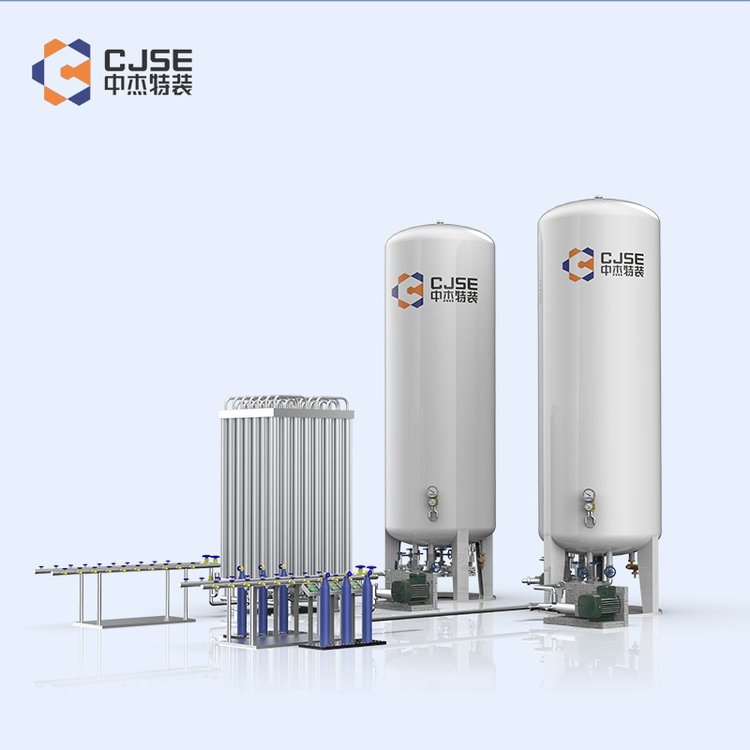
Shandong Zhongjie Special Equipment (formerly Heze Boiler Factory Co., Ltd.) was established in 2001, located at No. 2218 Jinnan Road, Development Zone, Heze City, with a registered capital of 50 million yuan and total assets of 500 million yuan. The company has 7 business centers: boilers, deep-freezing containers, pressure vessels, central air conditioning, engineering installation, international trade, and Internet of Things. It has three factory sites on Jinnan Road, East Changjiang Road, and Bohai Road, covering a total of 200,000 square meters, with the main workshop spanning 83,000 square meters. It currently employs 710 people, including 247 engineers and technicians, and 82 intermediate-level technicians. In December 2016, it was recognized as a "High-tech Enterprise" by the Science and Technology Department. In June 2021, it was identified as a "Specialized and New Enterprise in Shandong Province" by the Ministry of Industry and Information Technology. In June 2022, it was recognized as a "Gazelle Enterprise in Shandong Province" and in August 2022, as a "Specialized and New Small Giant Enterprise" by the Ministry of Industry and Information Technology.
The reason for occasional venting of liquid oxygen tanks is primarily to maintain the safe pressure range within the tank and to prevent excessive pressure buildup. Here are several situations where liquid oxygen tanks may occasionally vent:
Pressure Control: During the operation of the liquid oxygen storage tank, due to the evaporation of liquid oxygen and temperature changes, the pressure inside the tank will vary. To maintain a safe pressure range within the tank, regular venting is required to control the tank's pressure within the safe limits.
Prevent Overpressure Accumulation: During oxygen filling or usage, external factors or operational errors may cause the pressure inside the liquid oxygen tank to exceed the safe limit. To prevent overpressure accumulation, timely venting is required to alleviate the pressure within the tank.
Prevent Gas Accumulation: Liquid oxygen tanks may contain some gas impurities, such as air and water vapor. These gases can condense into liquids or solids at the low temperatures of liquid oxygen, blocking pipelines or affecting the normal operation of the tank. Regularly releasing gas can expel these impurities, maintaining the tank's cleanliness and unobstructed flow.
It is important to note that the venting operation of liquid oxygen should be carried out by authorized personnel and strictly adhere to the relevant operational procedures and safety measures. During the venting process, precautions should be taken to prevent leaks of liquid oxygen and contact with it, ensuring the safety and reliability of the operation.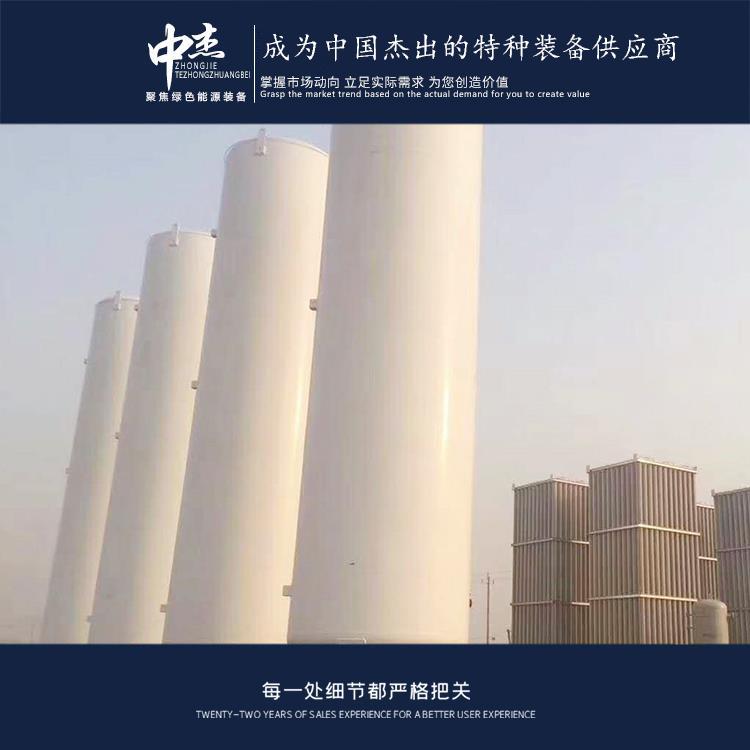
The installation of the safety valve in a liquid oxygen tank is a crucial component to ensure that the tank can release pressure in a timely manner during overpressure situations, thereby protecting the tank and associated equipment. The following are the steps for installing the safety valve of the liquid oxygen tank:
Determine the rated pressure of the safety valve: Select an appropriate safety valve based on the design pressure and flow requirements of the liquid oxygen tank. Ensure that the rated pressure of the safety valve meets the tank's specifications and complies with relevant safety standards and regulations.
Valve Installation Location: Select a suitable location for installing the safety valve. Typically, the safety valve should be mounted on the top or side of the liquid oxygen storage tank to allow for timely pressure release in the event of overpressure.
Ready for installation interfaces: Prepare the appropriate interfaces based on the type of connection of the safety valve. This may include welding joints, threaded joints, or flange joints, etc. Ensure the tightness of the interfaces and secure connections.
Install the safety valve: Mount the safety valve onto the prepared interface. Follow the installation instructions for the safety valve to ensure it is correctly connected and securely fastened.
Adjustment and Testing: After installation, adjust and test according to the requirements of the safety valve. Ensure the opening and closing pressures of the safety valve meet the design specifications, and conduct a leakage test to ensure its sealing.
Connect discharge piping: The discharge piping of the safety valve should be properly connected to the outlet of the safety valve. The discharge piping should have sufficient diameter and flow capacity to ensure effective discharge of overpressure gas when the safety valve is opened.
Identification and Record: Label safety valves and discharge pipes with relevant information such as rated pressure, flow rate, and installation date. Additionally, record the installation details and test results of the safety valves for future reference and maintenance.
When installing the safety valve on the liquid oxygen storage tank, it is imperative to follow relevant safety regulations and operation guidelines. If you lack the necessary experience and knowledge, it is advisable to seek assistance and guidance from experts to ensure the correct installation and reliable operation of the safety valve.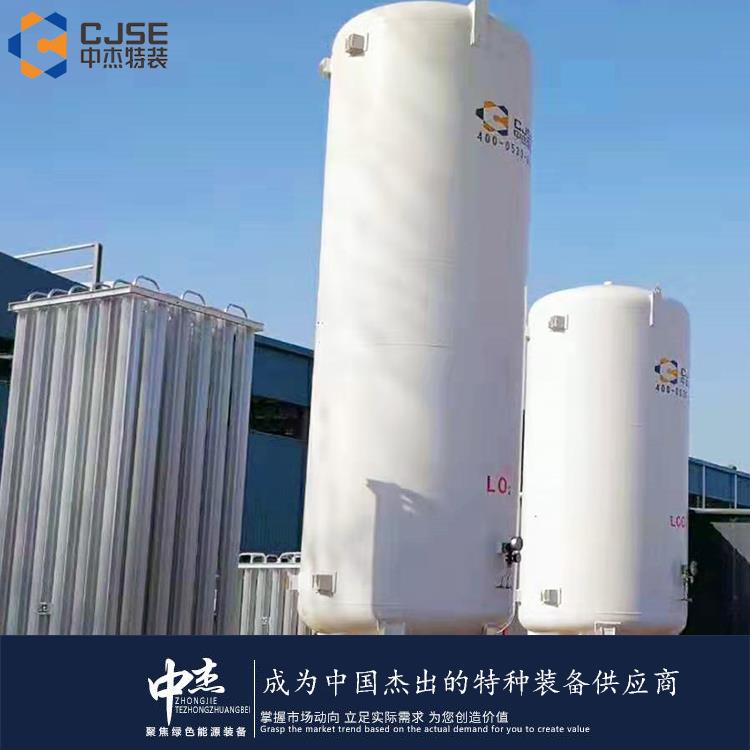
Oxygen storage tanks and liquid oxygen storage tanks are equipment used for storing oxygen, but they have some distinctions: Storage Form: Oxygen storage tanks are typically used for storing gaseous oxygen, while liquid oxygen storage tanks are for storing liquid oxygen. Oxygen is in a gaseous state at room temperature but is cooled to a liquid state at low temperatures for more efficient storage and use. Storage Pressure: Oxygen storage tanks usually store high-pressure oxygen, with pressures around 200-300 bar. Liquid oxygen storage tanks store liquid oxygen at lower pressures, generally around 2-5 bar. Storage Capacity: Oxygen storage tanks usually have smaller capacities, suitable for personal or small-scale use. Liquid oxygen storage tanks have larger capacities, suitable for industrial or large-scale use. Storage Method: Oxygen storage tanks store oxygen in a gaseous form, via compressed gas storage. Liquid oxygen storage tanks store oxygen in a liquid form, converting it to a liquid state by cooling it below its boiling point. Safety Requirements: Due to the high oxidizing nature of liquid oxygen, liquid oxygen storage tanks require stricter safety requirements in design and use. They typically need to have good thermal insulation, leak control, and fire prevention measures to ensure safe operation. It should be noted that the specific design and specifications of oxygen storage tanks and liquid oxygen storage tanks may vary depending on different regions and application sites. When using these tanks, it is necessary to follow applicable regulations, standards, and safety guidelines, and to cooperate with local regulatory authorities and personnel to ensure the safety and reliability of the tanks.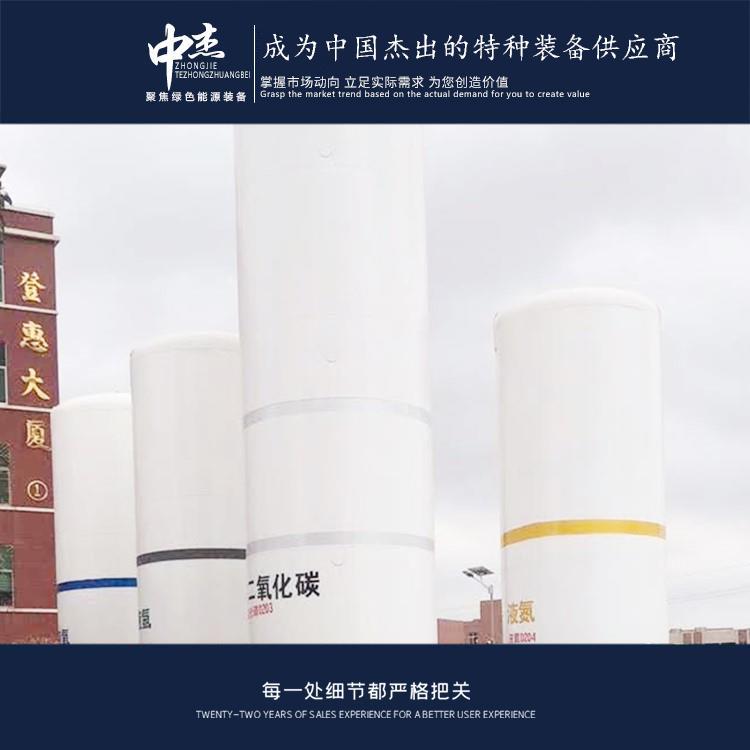
Proper installation of the liquid oxygen tank safety valve is a crucial step in ensuring the safe operation of the liquid oxygen tank. Here are the installation steps for the liquid oxygen tank safety valve:
Select the appropriate safety valve: Choose a suitable safety valve based on the design pressure and flow requirements of the liquid oxygen storage tank. Ensure that the rated pressure and flow of the safety valve meet the tank's specifications and comply with relevant safety standards and regulations.
Valve Installation Location Selection: Choose a suitable location for installing the safety valve. Typically, the safety valve should be mounted on the top or side of the liquid oxygen tank to ensure timely pressure release in the event of overpressure.
Ready for installation interfaces: Prepare the corresponding interfaces based on the type of connection for the safety valve. This may include welding joints, threaded joints, or flange joints, etc. Ensure the tightness of the interfaces and the firmness of the connections.
Install the safety valve: Mount the safety valve onto the prepared fitting. Follow the installation instructions for the safety valve to ensure proper connection and tightness.
Adjustment and Testing: After installation, adjust and test according to the safety valve specifications. Ensure the opening and closing pressures of the safety valve meet the design requirements and conduct a leakage test to ensure its seal integrity.
Labeling and Documentation: Identify relevant information on the safety valve, such as rated pressure, flow rate, and installation date. Additionally, record the installation details and test results of the safety valve for future reference and maintenance.
When installing the liquid oxygen storage tank safety valve, it is imperative to follow relevant safety regulations and operational guidelines. If lacking in relevant experience and knowledge, it is advisable to seek assistance and guidance from experts to ensure the correct installation and reliable operation of the safety valve.
Our company attaches great importance to technological innovation and R&D design. We have one municipal-level enterprise technology center in Heze City, equipped with testing facilities for non-destructive testing, physical and chemical testing, welding testing, hydrostatic testing, etc. We have over 600 types of equipment, including CNC machine tools, X-ray flaw detectors, digital ultrasonic flaw detectors, mechanical property testing machines, chemical analyzers, spectrometers, tensile testing machines, plasma welding machines, and more. The key products we have developed, such as welding technology for temperature and pressure vessels, emissions reduction for biomass boilers, and waste heat recovery, have successively been shortlisted for multiple Shandong Provincial Department of Industry and Information Technology science and technology projects, key projects in Shandong Province, and Heze City innovation and excellence projects. We have accumulated 27 authorized utility models, 16 authorized inventions, participated in drafting 2 standards, 2 industry standards, and registered 15 trademarks. Our technical team, in collaboration with Professor Yajiang Li from Shandong University, has developed deep cryogenic container processing technology using the international plasma arc + filler wire tungsten inert gas arc welding (PAW-GTAW) technology. This technology has been appraised as reaching international standards in the field of deep cryogenic container manufacturing at the provincial level. Choose Zhongjie Special Equipment, and let's create brilliance together!
Dongguan Oxygen Storage Tank, Factory Direct Supply
