


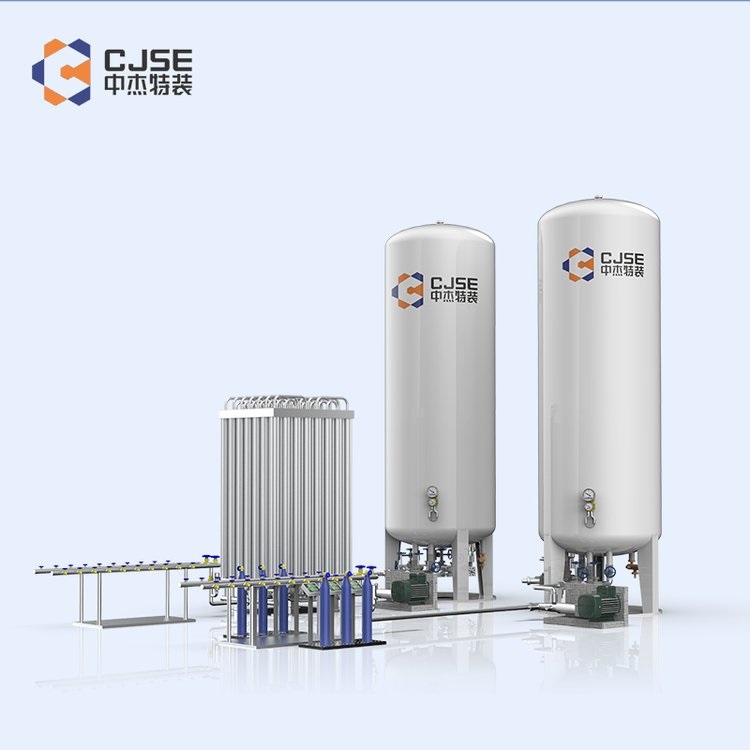
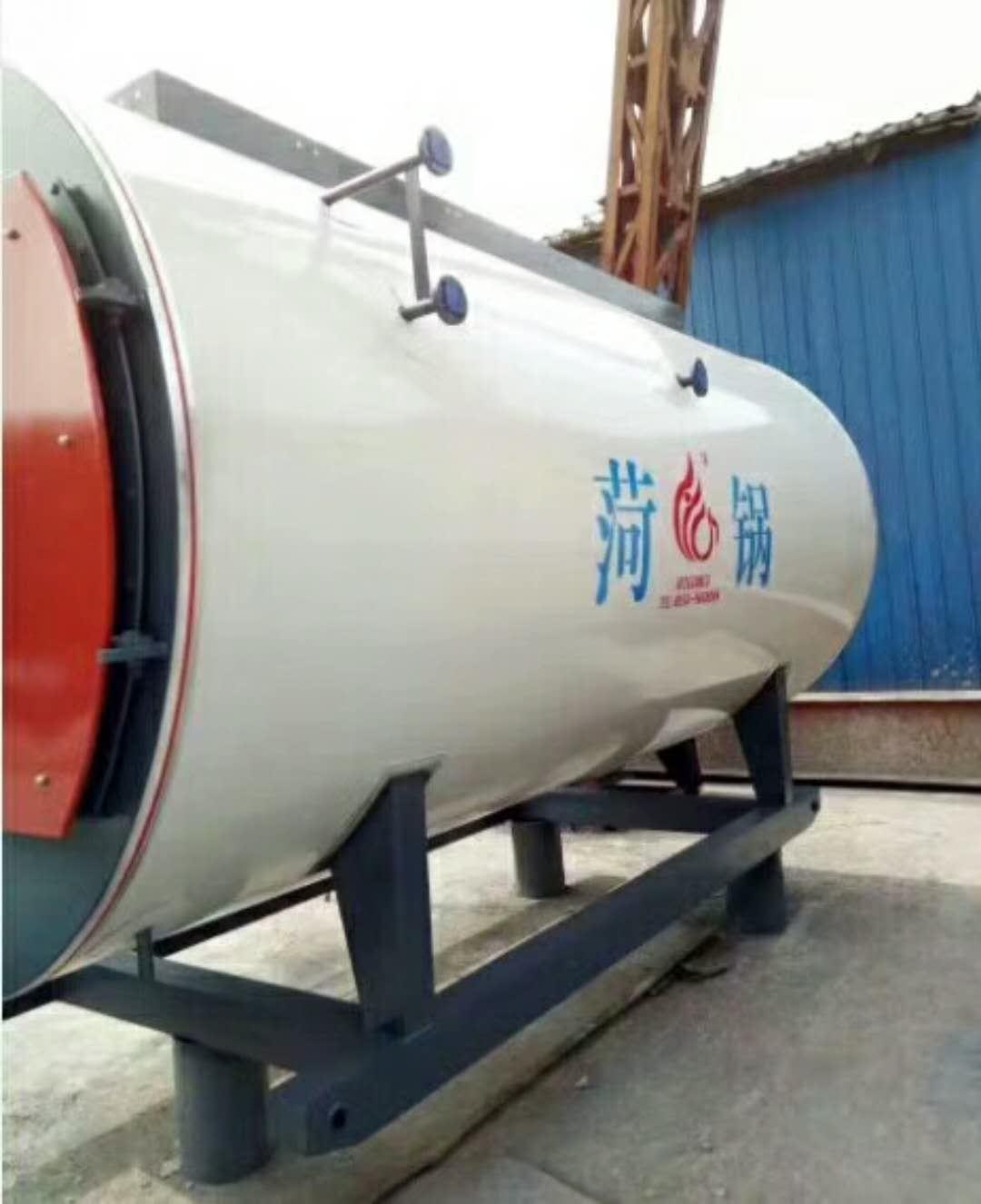
Shandong Zhongjie Special Equipment (formerly Heze Boiler Factory Co., Ltd.) holds an A-grade boiler manufacturing license and an A2-grade pressure vessel manufacturing license, an A2-grade pressure vessel design license, a B-grade boiler installation license, and GB2/Class and GC2/Class pressure pipeline installation licenses, as well as a qualification for electromechanical equipment installation contracting. It is a member of the China Boiler and Water Treatment Association, the China Chemical Equipment Association, and the council member of the Shandong Equipment Manufacturing Association. The company has also passed certifications for the ISO9001 Quality Management System, ISO14001 Environmental Management System, OHSAS18001 Occupational Health and Safety Management System, and the American ASME/U2 certification.
The oxygen-filling process for liquid oxygen tanks must adhere to specific operational procedures and safety measures. Here are the steps for filling liquid oxygen tanks:
Preparation: Ensure the tank and oxygen-filling equipment are in good working condition, check the tank's sealing and the proper functioning of the safety valve.
Connect equipment: Attach the oxygenation equipment to the storage tank, ensuring the connection is sealed reliably.
Prepare liquid oxygen: Transfer liquid oxygen from the storage container to the oxygen storage tank of the filling equipment. During the transfer, be cautious to avoid any leakage or contact with the liquid oxygen.
Oxygen Filling Operation: Open the valve of the oxygen filling equipment and fill liquid oxygen from the storage tank into the storage tank. During the filling process, control the filling speed and pressure to avoid excessive pressure and temperature rise in the storage tank.
Monitoring and Control: During the aeration process, the tank's pressure and temperature must be monitored to ensure they remain within safe limits. In the event of any anomalies, aeration should be stopped immediately and appropriate actions taken.
Oxygen Filling Completed: Close the valve of the oxygen filling equipment and stop the filling operation once the tank reaches the required oxygen level or pressure.
Safety Handling: After the oxygenation is complete, safety handling is required, which includes closing relevant valves and emptying any remaining liquid oxygen from the oxygenation equipment.
Note that liquid oxygen is highly oxidizing and flammable. The oxygen filling process must strictly adhere to relevant safety operating procedures and standards. Operators should receive training and strictly follow the operational procedures and safety measures to ensure the safety and reliability of the filling process.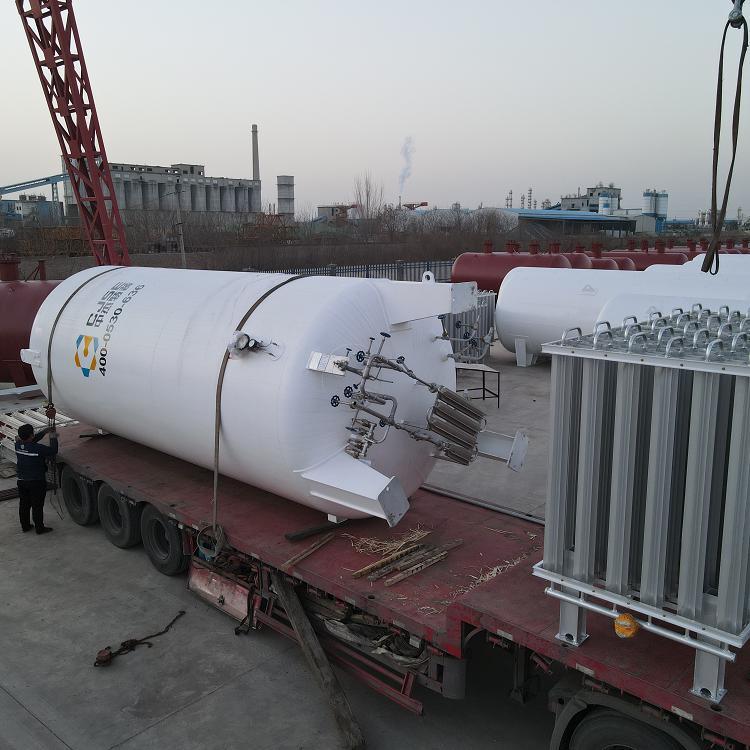
To extend the service life of liquid argon storage tanks, the following measures can be taken:
Regular inspections and maintenance: Conduct regular visual inspections, valve and fitting checks, and leak detection and pressure testing on liquid argon tanks. Promptly identify and repair potential issues to ensure the normal operation of the tanks.
Maintain the Insulation Layer: The insulation layer is crucial for the thermal insulation of liquid argon tanks. Regularly inspect the integrity and insulation performance of the insulation layer, repair or replace damaged insulation materials, to ensure the tank's insulation effectiveness.
Regulate Liquid Argon Temperature: Maintain the liquid argon temperature within an appropriate range to prevent damage to the storage tank from excessive or low temperatures. Implement suitable cooling or heating measures to ensure stable liquid argon temperature.
Corrosion Protection: The outer shell and internal structure of the liquid argon tank should be protected against corrosion and oxidation. Regularly inspect and maintain the protective coating to ensure its integrity.
Avoid excessive pressure and overfilling: Prevent the internal pressure of the tank from being too high or too low, as well as overfilling with liquid argon. Excessive pressure and overfilling can lead to structural rupture or damage of the tank.
Regular cleaning and drainage: Periodically clean the interior of the tank to remove accumulated impurities and dirt. Regularly drain to prevent杂质 and sediments in liquid argon from damaging the tank.
Safety Operations and Training: Ensure operators are equipped with knowledge and skills for safe handling of liquid argon tanks. Enhance safety training to boost operators' awareness and emergency response capabilities.
Manage records and documents: Establish comprehensive management records and documents, including tank usage, inspection logs, maintenance records, etc. Regularly review and update the management records to ensure safe management and maintenance of the tanks.
These measures can help extend the service life of liquid argon storage tanks, but specific operations and management are required based on the type and application of the tank. When performing maintenance and operation, please adhere to relevant regulations and standards, and consult with experts to ensure safety and effectiveness.
During the use of low-temperature liquid storage tanks, the following points should be noted:
Protective Gear: When handling low-temperature liquid storage tanks, it is mandatory to wear appropriate protective gear, including gloves, protective suits, and non-slip shoes. This gear safeguards the skin from injuries caused by low-temperature liquids.
Avoid direct contact: Low-temperature liquids can be cold and cause discomfort. Therefore, it is essential to avoid direct contact with low-temperature liquids, especially with the skin. Use tools or equipment for handling to prevent direct hand contact with low-temperature liquids.
Ventilation Requirements: In the operational area of low-temperature liquid storage tanks, adequate ventilation must be ensured to expel gases produced by the evaporation of low-temperature liquids. Maintain air circulation to avoid excessive oxygen concentration and reduce the risk of fire and explosion.
Prevent Leaks: Regularly inspect low-temperature liquid storage tanks for leaks and equip with leak detection and alarm systems. In case of a leak, take immediate action to control and repair it. Avoid harm to personnel and the environment from the leakage of low-temperature liquids.
Fire Prevention Measures: Due to their low boiling and freezing points, low-temperature liquids are prone to cause fires. To prevent and contain fires, fire barriers should be set up around low-temperature liquid storage tanks, and fire-retardant coatings should be applied.
Static Dissipation: Handling low-temperature liquids can generate static electricity, increasing the risk of sparks causing fires. Measures such as using static-conductive materials and anti-static equipment should be taken to reduce the accumulation and release of static electricity.
Regular Inspections and Maintenance: Conduct regular checks on the condition of low-temperature liquid storage tanks and related equipment, including valves, pipes, pressure gauges, etc. Ensure the equipment is in perfect condition and promptly repair or replace any damaged parts.
Waste Gas Treatment: During the process of using low-temperature liquids, waste gas is produced, and appropriate waste gas treatment measures must be taken to minimize environmental impact.
Above are the precautions to be taken when using low-temperature liquid storage tanks, ensuring safe operation and normal tank performance. During operation, it should be strictly adhered to the relevant operational procedures and safety operation requirements, avoiding...
Prior to cooling the liquid oxygen tank, the following preconditions must be met:
Clean Vessels: Ensure the interior of the tank is clean, free of impurities and contaminants. The tank should be properly cleaned and flushed to maintain its internal cleanliness.
Drainage and Exhaust: Empty the tank of gases and expel them through the exhaust system to reduce the gas content within the tank. This minimizes interference from the gases on the cooling process.
Safety Precautions: Prior to cooling the liquid oxygen tank, necessary safety precautions must be taken. Liquid oxygen is highly flammable and has low-temperature characteristics. Operators should wear appropriate protective suits, gloves, and other personal protective equipment to ensure safe operation.
Temperature Control: During the cooling process of the liquid oxygen storage tank, it is necessary to control the temperature of the tank. Typically, low-temperature media such as liquid nitrogen are used to cool the tank, ensuring that the temperature gradually drops below the boiling point of liquid oxygen.
Insulation and Heat Retention: Liquid oxygen tanks are typically designed with double or multi-layer structures, filled with insulating material in between to minimize heat transfer and evaporation of the liquid oxygen. Ensure the integrity and good insulation of the insulation layer to enhance the cooling efficiency of the tank.
Under the above preconditions met, cooling operations of the liquid oxygen tank can be performed. The cooling process must strictly adhere to relevant safety regulations and operational guidelines to ensure the safe operation and use of the tank.
ZJ Special Equipment upholds the great vision of "realizing employees' dreams, creating value for customers, and striving for the prosperity and strength of our motherland," and is dedicated to the development of the green energy equipment industry. We commit to society with high-quality products and services at competitive prices!
Chongqing 5 cubic meter nitrogen storage tank, on-site installation
