


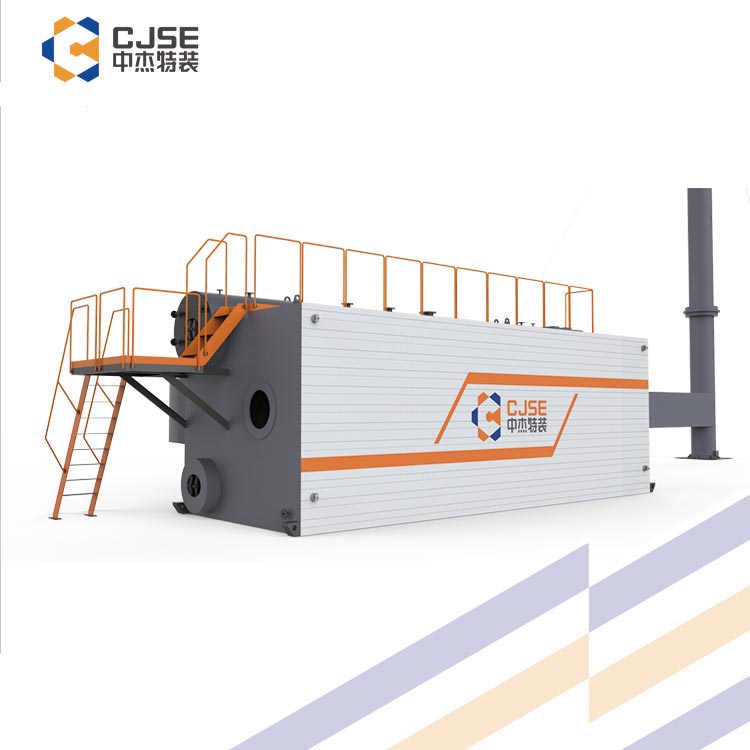
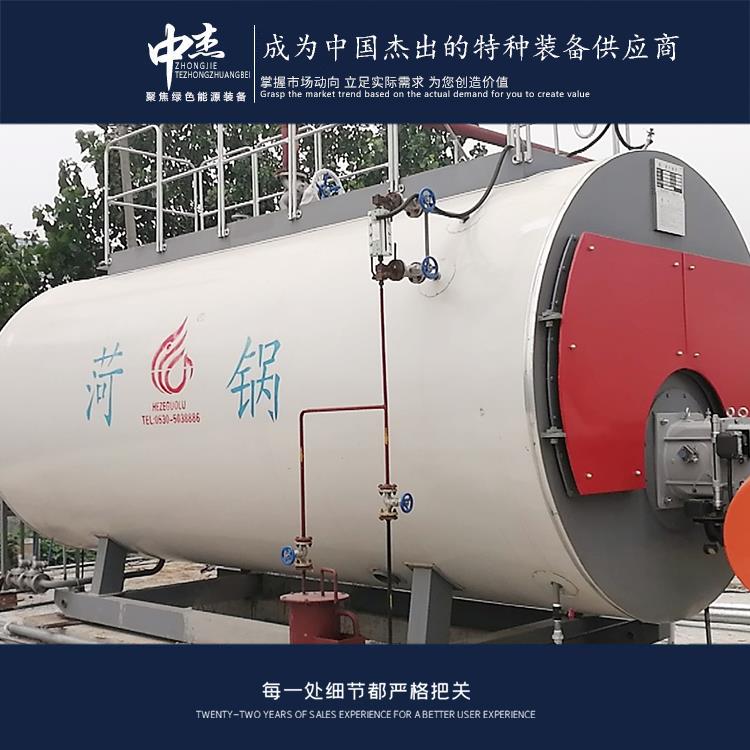
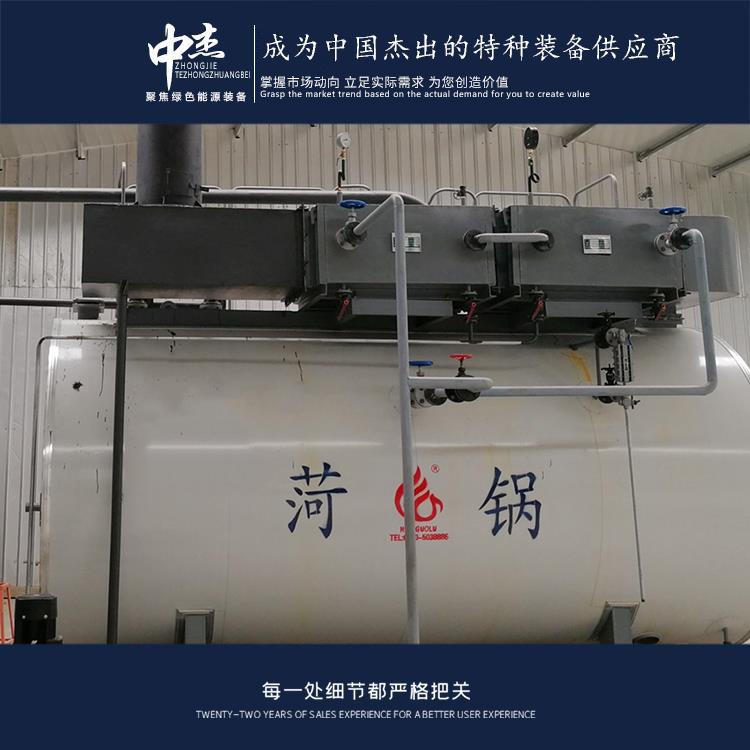
Shandong Zhongjie Special Equipment Co., Ltd. (formerly Heze Boiler Factory Co., Ltd.) was established in 2001, located at No. 2218 Jinnan Road, Development Zone, Heze City. With a registered capital of 50 million yuan and total assets of 500 million yuan, the company has 7 business centers: boilers, deep-freeze containers, pressure vessels, central air conditioning, engineering installation, international trade, and Internet of Things. It has three factory sites on Jinnan Road, East Changjiang Road, and Bohai Road, covering a total of 200,000 square meters. The main workshop spans 83,000 square meters. It currently employs 710 staff, including 247 engineers and technicians and 82 intermediate-level technicians. In December 2016, it was recognized as a "High-Tech Enterprise" by the Science and Technology Department. In June 2021, it was identified as a "Specialized and New Enterprise in Shandong Province" by the Ministry of Industry and Information Technology. In June 2022, it was recognized as a "Gazelle Enterprise in Shandong Province." In August 2022, it was identified as a "Specialized and New Small Giant Enterprise" by the Ministry of Industry and Information Technology.
When selecting a steam boiler, several key factors should be taken into account:
- Steam Demand: First, determine the steam requirements of the factory or project, including steam pressure, flow rate, and quality. Choose the appropriate boiler model and specifications based on actual needs to ensure they meet the process and production requirements.
- Boiler Type: There are various types of steam boilers, such as fire-tube boilers, water-tube boilers, and gas boilers. Select the suitable boiler type based on the factory's actual conditions and needs. Also, consider the fuel type of the boiler, such as coal, gas, or biomass, and choose a fuel type that complies with the factory's energy supply and environmental protection requirements.
- Boiler Efficiency: The efficiency of the boiler directly affects energy utilization efficiency and operating costs. Understand the boiler's thermal and combustion efficiency and choose a steam boiler with higher efficiency to reduce energy consumption and operating costs.
- Quality and Reputation: Choose a supplier with a good reputation to ensure the quality and reliability of the steam boiler. Refer to customer reviews, industry certifications, and third-party evaluations to understand the supplier's reputation and product quality.
- Technical Support and After-Sales Service: Select a supplier that can provide comprehensive technical support and after-sales service. Ensure the supplier can offer installation guidance, training, maintenance, and troubleshooting support to ensure the normal operation and maintenance of the steam boiler.
- Cost and Budget: Finally, select a steam boiler that fits within your budget based on economic considerations. Consider the purchase cost, operating cost, and maintenance cost, and choose a steam boiler with a high cost-performance ratio.
It's important to note that the above factors are just some of the key considerations when purchasing a steam boiler. The specific choice should be determined based on the actual conditions and needs of the factory. It is recommended to communicate and compare with multiple suppliers to gather more information and advice for an informed decision.
Choose a trusted gas boiler supplier, it's crucial. Consider the following factors:
- Reputation: Understand the reputation and market reputation of the gas boiler supplier. Obtain relevant information by reviewing customer reviews, industry reports, and certifications from institutions.
- Quality and Performance: The quality and performance of the gas boiler directly affect its reliability and efficiency. Learn about the supplier's quality control system, product certifications, and technical support capabilities to ensure their products meet standards and meet factory requirements.
- Technical Support and After-Sales Service: Choosing a supplier that offers comprehensive technical support and after-sales service is vital. Ensure the supplier can provide training, installation guidance, maintenance, and troubleshooting support to ensure the normal operation of the gas boiler.
- Cost-Effectiveness: Besides product quality and performance, consider the cost-effectiveness of the gas boiler. Consider the purchase cost, operating cost, and maintenance cost to choose a supplier that offers reasonable pricing and value for money.
In the end, choosing a trusted gas boiler supplier requires considering these factors and making decisions based on the specific needs and conditions of the factory. It is recommended to communicate and compare with multiple suppliers to gather more information and advice for an informed choice.
To ensure proper safety procedures for industrial boilers, attention should be given to the following aspects:
- Adhere to laws and regulations: Understand and comply with relevant laws, regulations, and standards, including those governing boiler safety management and boiler operation and maintenance standards. Ensure compliance with legal requirements throughout the process.
- Establish a comprehensive management system: Develop a robust industrial boiler safety management system, define responsibilities and authorities, and standardize operational procedures and safety measures. Create operational guidelines and emergency response plans to ensure orderly safety procedures.
- Training and education: Provide training and education for personnel involved in industrial boiler safety procedures, enhancing their safety awareness and skill levels. This includes training for boiler operators, maintenance staff, and management personnel.
- Regular inspections and maintenance: Conduct regular inspections and maintenance of industrial boilers to ensure proper equipment operation and safety performance. This includes checking and maintaining key components such as the combustion system, water level control, safety valves, and pressure gauges.
- Safety equipment and facilities: Equip necessary safety equipment and facilities, such as safety valves, pressure gauges, water level indicators, and burners. Ensure the proper operation and effectiveness of these facilities.
- Regular inspections and assessments: Conduct regular inspections and assessments of industrial boilers to ensure compliance with safety requirements. This includes regular pressure tests, water quality inspections, and combustion efficiency evaluations.
- Safety records and document management: Establish a comprehensive system for safety records and document management, documenting the operation, maintenance records, and accident reports of industrial boilers. Ensure timely updates and preservation of relevant safety documentation.
- Regular drills and emergency response plans: Organize regular safety drills and emergency response training to improve the ability to respond to emergencies and enhance the efficiency of emergency handling.
These are some fundamental points for ensuring proper safety procedures for industrial boilers. Specific operations should be tailored to actual circumstances and requirements.
Hot water boilers and steam boilers are two common types of boilers, differing in their working principles, application scenarios, and operating parameters:
Working Principle: Hot water boilers provide heat by heating water and then circulating it through the heating system. Steam boilers generate steam by heating water, which is then sent to the heating system.
Operating Temperature and Pressure: Hot water boilers typically operate at temperatures between 60°C and 100°C with lower pressure. Steam boilers usually operate at temperatures between 100°C and 200°C with higher pressure, generally between 0.7MPa and 2.5MPa.
Heating Method: Hot water boilers circulate hot water through the system using a pump, with heating primarily through conduction and convection. Steam boilers transport steam through pipes to the heating system, with heating primarily through steam conduction.
Application Scenarios: Hot water boilers are suitable for heating, bathing, swimming pool heating, and other scenarios where hot water is needed in industrial production. Steam boilers are used in industrial processes requiring steam, such as power plants, chemical factories, and textile mills.
Equipment Structure: Hot water boilers are generally simpler and have a smaller structure and footprint. Steam boilers are typically more complex, with a larger structure and footprint.
It's important to note that hot water and steam boilers may overlap in certain specialized applications, such as industrial processes that require both hot water and steam. Therefore, when selecting a boiler type, it's crucial to consider specific needs and application scenarios.
Zhejiang JieTec adheres to the grand vision of "realizing employees' dreams, creating value for customers, and striving for the prosperity and strength of our motherland," devoting itself to the development of green energy equipment industry with products and services that offer high performance at a competitive price, contributing to society!
Yancheng 15-ton Gas Boiler, Low Nitrogen Emission, Environmental Protection and Energy-saving
