



Shandong Zhongjie Special Equipment (formerly Heze Boiler Factory Co., Ltd.) holds an A-grade boiler manufacturing license, A2-grade pressure vessel manufacturing license, A2-grade pressure vessel design license, B-grade boiler installation license, GB2 and GC2 class pressure pipeline installation licenses, and electromechanical equipment installation contracting资质. It is a member of the China Boilers and Water Treatment Association, the China Chemical Equipment Association, and the director unit of the Shandong Equipment Manufacturing Association, and has passed the ISO9001 Quality Management System, ISO14001 Environmental Management System, OHSAS18001 Occupational Health and Safety Management System certifications, and the U.S. ASME/U2 certification.
The pressure maintenance design for a 15-cubic-meter liquid argon storage tank should take into account the following aspects:
Tank Pressure: Determine the design pressure of the tank to meet the storage and supply requirements for liquid argon. Establish an appropriate design pressure range based on the characteristics and usage conditions of liquid argon.
Pressure Regulation System: Select an appropriate pressure regulation system to maintain stable pressure within the storage tank. The pressure regulation system typically includes components such as pressure regulators, pressure sensors, and control valves, which are used for monitoring and adjusting the pressure inside the tank.
Pressure Sensor: Install a pressure sensor to monitor the pressure changes inside the storage tank in real-time. The sensor transmits pressure signals to the pressure regulation system, allowing for timely adjustment of the control valve to maintain stable pressure within the tank.
Control Valve: Select a suitable control valve for regulating the gas flow and pressure within the storage tank. The control valve should have excellent regulating performance and stability to ensure the pressure within the tank remains within the set range.
Safety Valve: Install a safety valve to automatically release gas when the pressure inside the tank exceeds the set value, preventing overpressure. The safety valve should be selected and installed based on the tank's design pressure and capacity.
Voltage Stabilization System Control: Equipped with an appropriate control system for monitoring and managing the operation of the voltage stabilization system. The control system enables automatic adjustment and alarm functions to ensure stable and safe pressure within the storage tank.
Note that the design of the voltage regulation system should be tailored to the specific engineering requirements and operating conditions of the liquid argon storage tank, adhering to relevant local regulations, standards, and specifications. When designing and installing the voltage regulation system, it is recommended to consult with an engineer or a relevant institution for guidance to ensure the reliability and safety of the system.
Liquid nitrogen tanks are widely used in various industries, primarily in the following aspects:
Industry: Liquid nitrogen tanks are used for storing and supplying liquid nitrogen, which is employed in low-temperature cryopreservation of biological samples, cells, tissues, and vaccines. These tanks are widely used in biopharmaceutical research institutions and biobanks, among other organizations.
Experimental Research: Liquid nitrogen tanks are used in scientific research and laboratories to provide low-temperature environments, for cryopreservation and cryogenic experiments. They play a crucial role in experimental research across various fields, including physics, chemistry, biology, and materials science.
Metalworking Industry: Liquid nitrogen tanks are used in the metalworking and welding industries for providing low-temperature cooling, used in processes such as metal cutting, welding, and heat treatment. Liquid nitrogen tanks can provide low temperatures to achieve the required hardness and toughness of the metal during processing.
Food Industry: Liquid nitrogen tanks are used in the food industry for freezing and refrigerating foods, such as frozen meats, frozen fruits, and frozen seafood. The low temperature of liquid nitrogen can quickly freeze foods, preserving their freshness and quality.
Semiconductor Industry: Liquid nitrogen tanks are used in semiconductor manufacturing and the electronics industry to provide low-temperature environments for the freezing and preparation of semiconductor materials. The low temperature of liquid nitrogen can enhance the purity and performance of semiconductor materials.
The configuration of liquid nitrogen tanks typically includes the following aspects:
Vessel Structure: Liquid nitrogen vessels typically feature a double or multi-layered construction, filled with insulating material in the middle to minimize heat transfer and evaporation of the liquid nitrogen. The vessel material is usually stainless steel or aluminum alloy, offering excellent corrosion resistance and low-temperature performance.
Insulation Layer: The insulation layer of liquid nitrogen tanks commonly uses multi-layer insulating materials such as polyethylene foam, glass fiber, and vacuum layers to reduce heat transfer and evaporation of liquid nitrogen.
Temperature Control System: Liquid nitrogen tanks are typically equipped with a temperature control system to regulate the tank's temperature and maintain the liquid state.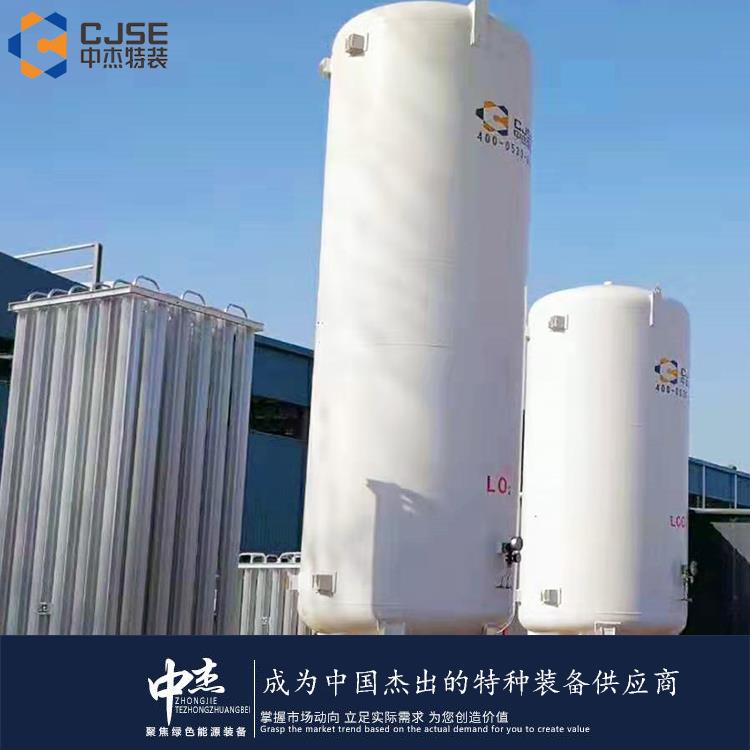
The reason for occasional venting of liquid oxygen tanks is primarily to maintain the safe pressure range within the tank and prevent excessive pressure buildup. Here are several scenarios where liquid oxygen tanks may vent occasionally:
Pressure Control: During the operation of the liquid oxygen tank, pressure inside the tank may change due to evaporation of liquid oxygen and temperature variations. To maintain a safe pressure range within the tank, regular venting is required to control the tank's pressure within the safe limits.
Prevent Excessive Pressure Buildup: During oxygen charging or usage, the liquid oxygen tank may experience pressure exceeding the safe limit due to external factors or operational errors. To prevent excessive pressure buildup, timely venting is required to alleviate the pressure inside the tank.
Prevent Gas Accumulation: Liquid oxygen tanks may contain some gas impurities, such as air and water vapor. These gases can condense into liquid or solid at the low temperatures of liquid oxygen, blocking pipelines or affecting the normal operation of the tank. Regularly venting the tank can expel these impurities, maintaining the tank's cleanliness and unobstructed flow.
Note that the degassing operation of liquid oxygen should be performed by authorized personnel and strictly adhere to the relevant operational procedures and safety measures. During the degassing process, precautions should be taken to prevent leaks of liquid oxygen and contact with it, ensuring the safety and reliability of the operation.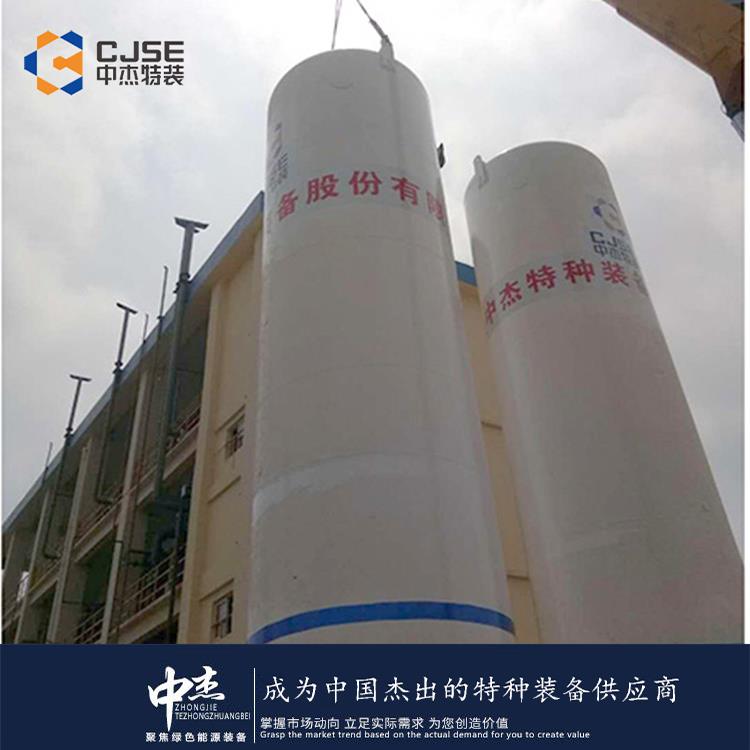
Possible reasons for increased liquid nitrogen loss in storage tanks may include:
Evaporation Loss: Nitrogen is a low-temperature liquid with a boiling point of -196 degrees Celsius. Even under good insulation conditions, nitrogen will evaporate. Therefore, the primary source of liquid loss in nitrogen storage tanks is due to evaporation. If the tank's insulation is damaged or its insulating performance is poor, evaporation loss will increase.
Leakage: Leaks in liquid nitrogen storage tanks can also lead to increased liquid loss. Leaks may occur at the tank's interfaces, valves, pipes, and other parts. Leaks can be caused by equipment aging, material fatigue, improper operation, and other reasons.
Improper Operation: Incorrect operation and maintenance may also lead to increased liquid nitrogen tank liquid loss. For example, frequently opening the tank's lid, keeping the lid open for extended periods, and failing to repair leaks in a timely manner.
Environmental Factors: Environmental elements can also affect the liquid nitrogen tank's liquid loss. For instance, high-temperature environments can decrease the tank's insulating performance, thereby increasing evaporation loss.
To minimize liquid nitrogen loss in storage tanks, the following measures can be taken:
Ensure the insulation of the tank is intact and perform regular inspections and maintenance.
Regularly inspect the tank's interfaces, valves, pipelines, etc., to ensure good sealing performance and prevent leaks.
Strictly control the frequency and duration of tank openings to prevent unnecessary liquid evaporation.
Avoid using liquid nitrogen tanks in high-temperature environments, or take cooling measures to maintain a low temperature around the tank.
It should be noted that liquid nitrogen tank liquid loss is inevitable, but with proper operation and maintenance, it can be minimized to a low extent.
ZJ Special Equipment adheres to the great vision of "realizing employees' dreams, creating customer value, and striving for the prosperity and strength of our motherland," and is dedicated to the development of the green energy equipment industry. We offer society high-value products and services!
Anshan 5 cubic meter liquid oxygen tank, over 20 years of experience for added peace of mind
